
Russia has assembled a fleet of tankers in the Arctic to transport oil via the Northern Sea Route
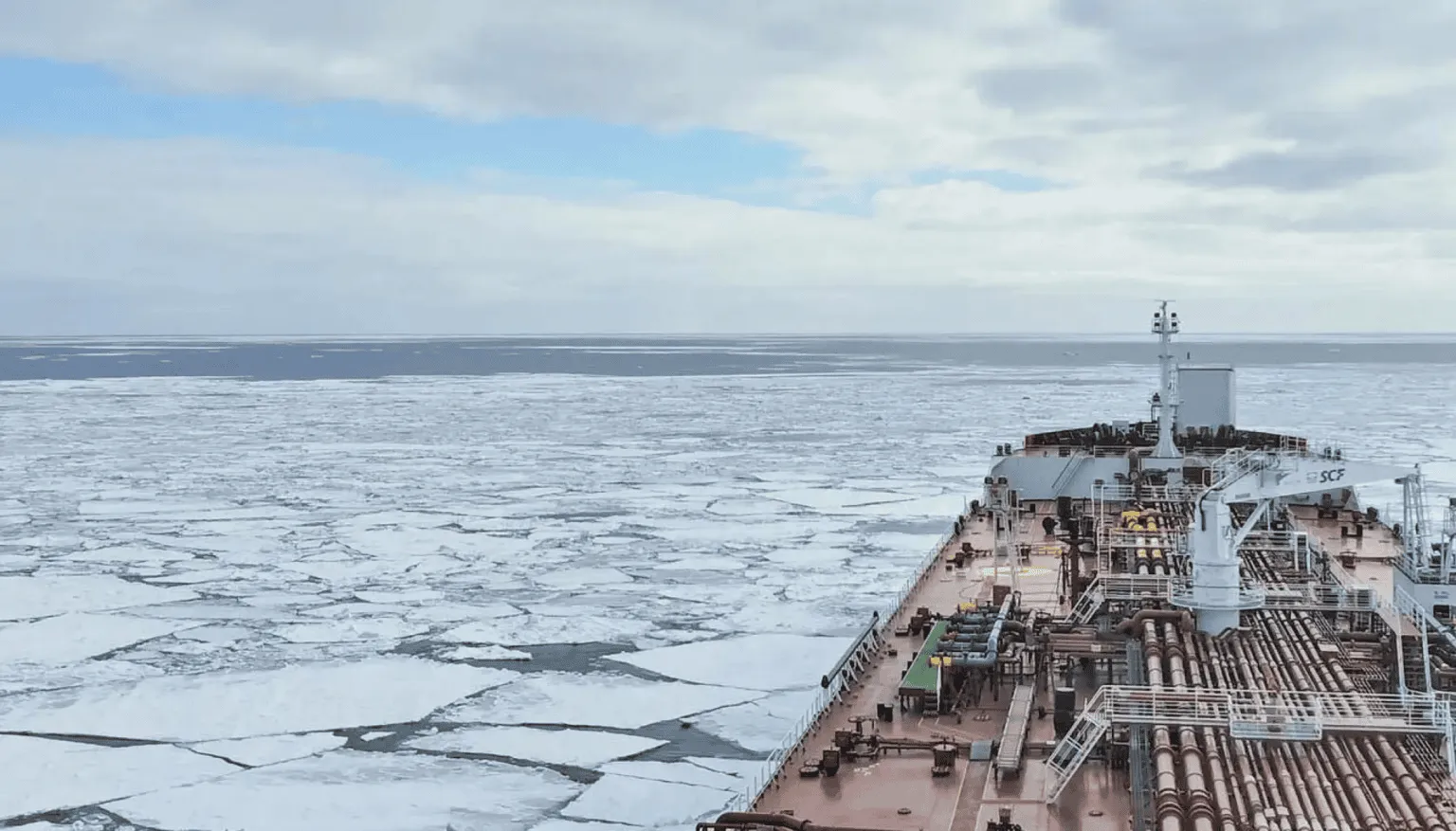
Russia has assembled an unprecedentedly large fleet of about a dozen and a half tankers to transport nearly 8 million barrels of oil via the Northern Sea Route (NSR) to Asian countries. This volume accounts for approximately 60% of the total amount of crude oil delivered via this route during the entire navigation period last year.
The growing importance of the Arctic corridor is due to Ukrainian drone attacks on Russian vessels in the Black and Azov Seas, as well as the seizure of “shadow fleet” tankers by Western countries.
Most of the tanker group is currently concentrated in the Kara Sea between Novaya Zemlya and Taymyr, where it is awaiting the arrival of nuclear-powered icebreakers or an improvement in ice conditions to continue its journey eastward. In total, three nuclear-powered icebreakers have been deployed to escort the vessels. At the same time, the lack of a domestic ice-class tanker fleet—caused by restrictions imposed by Western sanctions—remains a key obstacle to further increasing such shipments.
Source: gCaptain.
Earlier, new oil slicks were detected in the Sea of Azov following attacks on Russia’s shadow fleet.
On July 22, Commander of the Unmanned Systems Forces Robert “Madyar” Brovdi reported that 13 more targets had been destroyed during Operation “MoLoChKa,” which was directed against Russian shadow fleet assets and other targets.
Over the course of two days, Ukraine’s Unmanned Systems Forces struck 18 energy facilities in the temporarily occupied territories of Ukraine. Most of the targets were located in Crimea.


