
Russian drones equipped with optical fiber can now fly more than 40 km
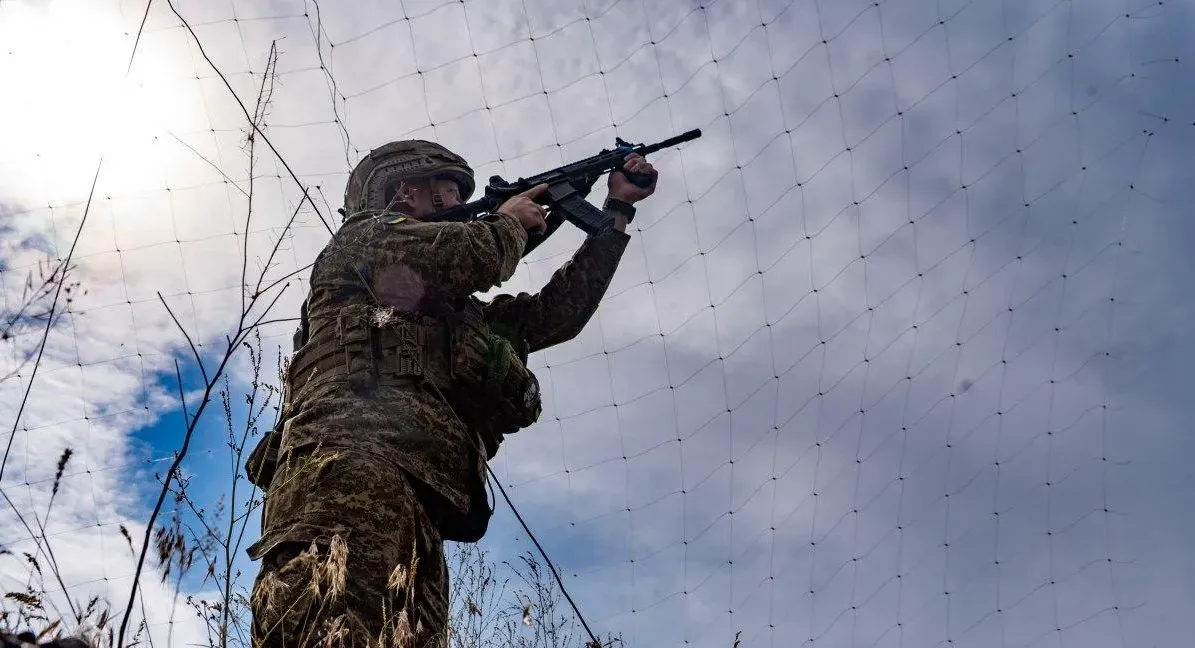
Russia is upgrading its fiber-optic FPV drones, and they can now travel over 40 kilometers. This was stated by Kharkiv Mayor Ihor Terekhov, who emphasized that Russian drones are constantly being improved. According to him, the development of such technologies poses new challenges for Ukraine.
Russian troops continue to modernize the drones they use in the war against Ukraine. Specifically, this refers to fiber-optic FPV drones. According to Kharkiv Mayor Ihor Terekhov, these Russian drones can now travel distances of over 40 kilometers. “Drones using fiber-optic cables are already flying over 40 kilometers. Unfortunately, the Russians are upgrading their drones; war and technology don’t stand still,” said the mayor of Kharkiv.
Why fiber-optic drones are hard to stop
FPV drones using fiber-optic cables differ from conventional drones in the way they are controlled. The operator controls such a drone via a thin cable that unrolls behind it during flight. The main feature of this technology is that the control signal does not travel via a radio channel. Because of this, traditional electronic warfare methods cannot simply jam the connection between the operator and the drone.
This is precisely why fiber-optic FPVs have become a vital tool on the front lines. Ukrainian and Russian military forces are actively using them, and manufacturers are constantly working to increase the flight range and other capabilities of these drones. At the same time, this technology has a weakness. The drone remains physically connected to the operator by a cable. If the fiber-optic cable is damaged or breaks during flight, control of the drone may be lost.
According to Bohdan Yanush, deputy commander of the airborne battalion of the 79th Separate Airborne Assault Brigade, damage to the cable can also prevent the remote detonation of the drone.
Russian drones have already been spotted near Kharkiv
The increased range of these drones is particularly important for Kharkiv and other cities located near the Russian border. In February 2026, a Russian fiber-optic drone reached Kharkiv for the first time. The drone was detected in the city’s Kyivskyi district. It crashed into a tree.
That incident demonstrated that fiber-optic FPVs can be used not only directly near the front lines. As technology advances, the area in which they pose a potential threat may expand.
Kharkiv Prepares for the New Heating Season
During the meeting, Terekhov also spoke about Kharkiv’s preparations for the new heating season. According to him, the city has essentially been working on this nonstop since the start of Russia’s full-scale invasion. “Our preparations actually began in 2022 with the start of the war, and we haven’t stopped them. As soon as one heating season ends, we immediately begin preparing for the next,” the mayor noted.
For Kharkiv, preparing for winter remains particularly important due to regular Russian attacks on energy and civilian infrastructure. The city continues to prepare its systems to operate under conditions of potential strikes and damage. Meanwhile, the development of drones remains one of the key aspects of modern warfare. Ukraine and Russia are constantly improving drones, their control systems, and methods of countering them. Terekhov’s statement about a range exceeding 40 kilometers indicates that the Russian side continues to work on increasing the capabilities of such FPV drones. Terekhov spoke about this in a comment to Novosti.LIVE during the annual YES meeting.
Throughout the day, Russian invaders attacked five districts of the Dnipropetrovsk region more than 40 times, using drones, artillery, and aerial bombs. As a result of the enemy strikes, three people were killed and five others were wounded.
On the morning of September 17, Russian troops struck the “Epicenter” shopping mall in Kharkiv. As a result of the attack, the building sustained significant damage and caught fire.
The enemy attacked a passenger bus in the Kosmichnyi district of Zaporizhzhia using an FPV drone. At the time of the attack, there were people inside the bus who were traveling on their daily errands.


