
Russian jet drones can home in on a target without a satellite signal
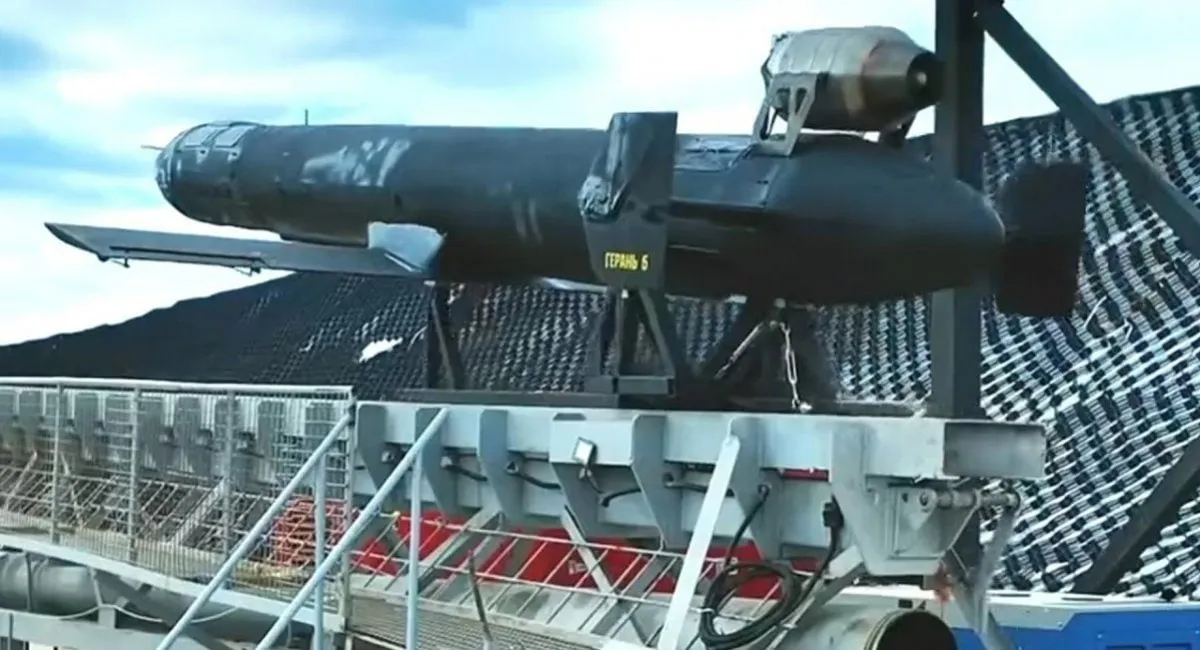
Analysts explained how the navigation system works that the Russian military uses to guide jet-powered drones to targets even without satellite communication.
Thanks to the new navigation system, the drones are more resistant to electronic warfare (EW) measures. The upgraded drones are designated “Geran-5.K5.” They are equipped with a module featuring autonomous optoelectronic navigation called DSMAC (Digital Scene Matching Area Correlation). This system continuously compares reference satellite images with the imagery from the drone’s camera. As a result, the new version of the guidance system operates only during daylight hours.
It is noted that the "Geran-5 K5" can determine its coordinates even in the absence of satellite navigation. “However, DSMAC should not be viewed as a full-fledged replacement for satellite navigation, as it is less accurate; therefore, it is exclusively a backup system,” the analysts added.
They added that a similar navigation system was installed on Russian X-101 cruise missiles. Prior to that, such systems were installed on American BGM-109 Tomahawk cruise missiles. Moreover, a similar system is being installed on Ukrainian drones that carry out strikes deep inside Russia.
Among the system’s drawbacks is the fact that it requires bright daylight. Furthermore, it operates only at certain times of day because it is sensitive to the length of shadows.
This is reported by analysts at Defense Express.
Ukraine is negotiating with Raytheon regarding the production of missiles for the Patriot system.
President Volodymyr Zelenskyy stated that after the war ends and his term as head of state concludes, he hopes to continue living in Ukraine and be able to walk freely through its streets.
Taganrog could have been left without air defense after Ukraine’s strikes.




