
Russian troops on the Kinburn Spit found themselves trapped
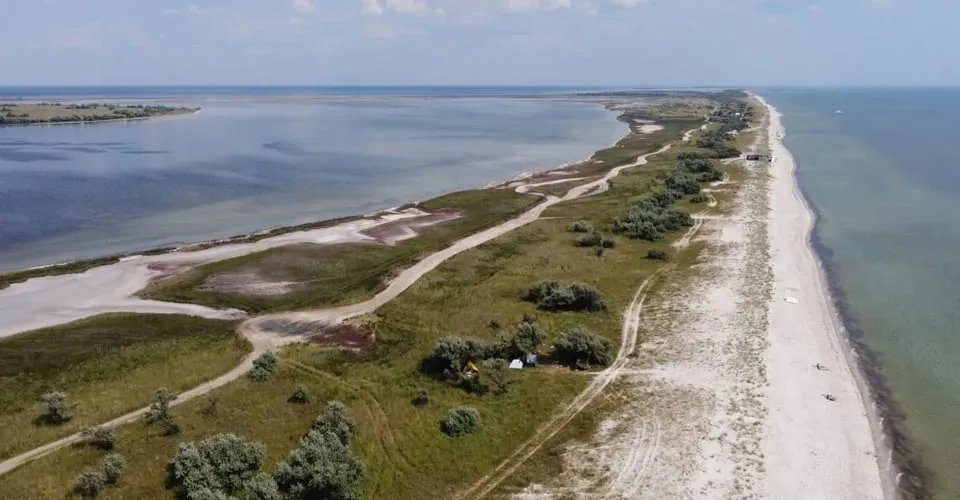
Russian units stationed on the Kinburn Spit are effectively blockaded and forced to hold a static defense. Ukrainian forces do not have a physical presence on the peninsula, but they fully control it with their firepower, said the commander of the “Odessa” Operational-Tactical Group.
Currently, the Kinburn Spit is primarily occupied by servicemen of the Russian Federation’s 337th Separate Assault Regiment. At the same time, these units, which are formally designated as assault units, are in fact carrying out territorial control missions.
Nosikov noted that the Defense Forces are delivering artillery and airstrikes against Russian positions in coordination with other units.
Due to logistical problems and casualties, Russian troops were forced to withdraw from the northern and western sections of the spit deeper into the peninsula. Ukrainian forces are also recording numerous instances of Russian soldiers fleeing their positions.
“They are trying to take advantage of any opportunity—for example, weather conditions. Just the day before yesterday, they tried to bring in eight vehicles, hoping to hide them somehow and transport supplies. All eight vehicles were destroyed. We are constantly documenting instances—and on a massive scale—of them fleeing from there: they are not receiving ammunition, food, or water; the fire is relentless; they are moving from one foxhole to another and constantly witnessing the deaths of their comrades. We can clearly hear and see all this chaos on the radio. Due to the regular mining of supply routes—particularly with anti-personnel mines—they are not always able to escape. So for them, this is a veritable trap," the commander explains.
Ukraine is deploying robotic systems
According to the commander, the Defense Forces are using more than just artillery and drones on the Kinburn Spit. The Ukrainian military is also delivering ground-based robotic systems to the shore using unmanned boats.
Such systems can carry out combat missions in mined territory without the direct involvement of military personnel.
Nosikov noted that one of the robotic systems can, in particular, enter the Russian military’s shelters.
The commander stated that it was on the Kinburn Spit that the Ukrainian military, for the first time in the history of warfare, delivered a ground-based robotic system using an unmanned maritime boat.
According to him, this technology allows missions to be carried out without risking the lives of Ukrainian servicemen, since the spit and the coastline are heavily mined.
“Given the extensive mining, our robotic systems reach the area on unmanned surface vessels, are deployed, and carry out their missions. For the enemy, this is an additional source of panic: the area is mined, the rank-and-file soldier doesn’t understand what’s happening, and he is killed. The same thing happens to their anti-tank missile system crews, who are supposed to counter these attacks,” the commander explains.
There are over 2,500 Russian troops on the spit
According to the commander of the “Odessa” Operational-Tactical Group, there are currently over 2,500 Russian troops on the Kinburn Spit.
“They’re spread out more or less across the entire territory of the Kinburn Spit—in various shelters and dugouts. Every day, we destroy about 20 dugouts with enemy personnel inside. We cannot calculate with 100% accuracy how many occupiers have been eliminated there, since, in addition to aviation and artillery, absolutely all units are engaged, but the losses are very heavy,” says Colonel Nosikov.
According to Nosikov, Russia is attempting to redeploy reserves to the spit from the Orikhiv and Melitopol sectors. However, the Ukrainian military is striking these forces.
Why the Kinburn Spit Is Important to Russia
The Kinburn Spit is of strategic importance to Russian forces. From there, the occupiers can control and shell the southern coast of the Mykolaiv region.
In addition, the spit’s territory provides the ability to influence the Dnipro-Bug Estuary and gives Russia a positional advantage near the routes to the Kherson region and occupied Crimea.
Nosikov noted that the distance from the Kinburn Peninsula to the Kherson region and Crimea is about 40–50 kilometers. This allows for the use of medium-range drones to strike logistics facilities and other targets in the occupied territories.
“Losing the spit will open the way for us to advance, and then things will get very difficult for them in Crimea,” said the commander of the “Odessa” Operational-Tactical Group.
Denis Nosikov, commander of the “Odessa” Operational-Tactical Group, spoke about this in an interview with Radio Free Europe/Radio Liberty.
As a reminder, the Ukrainian company DG Industry, which specializes in the development of unmanned systems, presented the “Bronislav,” a multifunctional wheeled ground-based robotic complex with independent suspension. The platform is designed for logistics and evacuation missions and is capable of carrying over 300 kg of payload.
The Ukrainian military presented the Pegasus unmanned ground vehicle for off-road operations.


