
Syrsky Explained How Ukraine Is Shooting Down "Shaheds"
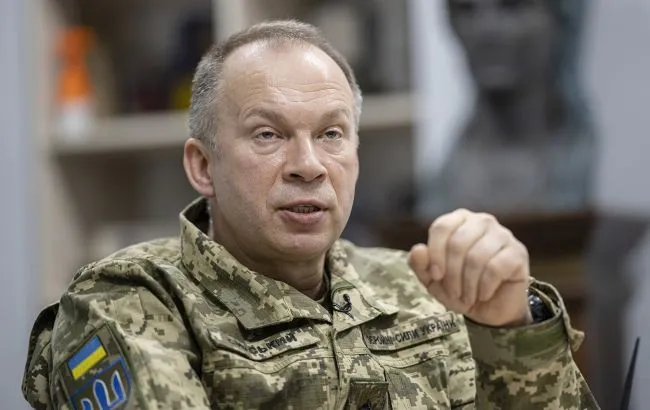
In June, the Ukrainian Armed Forces destroyed nearly 5,000 Russian Shahed-type attack drones and other drones of this class. According to Oleksandr Syrskyi, Commander-in-Chief of the Armed Forces of Ukraine, interceptor drones, automated turrets, and army aviation are playing an increasingly important role in defending Ukrainian airspace.
Russia continues to attack Ukrainian cities with attack drones almost every night. In response, the Armed Forces are constantly improving their air defense system, increasing the number of assets capable of destroying enemy drones while they are still approaching. Oleksandr Syrskyi, Commander-in-Chief of the Armed Forces of Ukraine, reported on the results of operations for June. According to him, in just one month, the Ukrainian military destroyed nearly 5,000 Shahed-type drones and other attack UAVs of this class.
The crews of the first-line interception units made the greatest contribution to this result. “55% of all destroyed attack UAVs were taken down by first-line interception crews. First and foremost, these are interceptor drones, the number of which we are constantly increasing along with the training of their crews,” Syrskyi said.
According to the commander-in-chief, interceptor drones are becoming one of the most effective tools for combating Russian “Shaheds.” Ukraine is not only increasing their numbers but also training new crews and constantly analyzing combat experience to make the system even more effective. Separately, Syrskyi provided data on the Kyiv region. There, in June alone, interceptor drones destroyed more than 500 aerial targets, and overall, air defense forces neutralized more than 600 Russian air attack assets.
Operational interaction and coordination centers also play a crucial role in repelling attacks. They facilitate faster information exchange, enable rapid decision-making, and allow for more effective command and control of all forces involved in defending the airspace. In addition to interceptor drones, Ukraine is actively developing another area—automated turrets.
Syrsky reported that in June alone, such systems destroyed 26 Russian aerial targets. At the same time, the military is deploying a network of remote control stations, which allows for a faster response to the appearance of enemy drones and strengthens the overall interception system. The Army Aviation of the Ground Forces has also done a great deal of work.
According to the commander-in-chief, combat helicopters destroyed 338 aerial targets in June. To make the aviation units even more effective, helicopters are being equipped with modern missile launchers, new optoelectronic stations, and video surveillance systems.
At the same time, Syrskyi warned that Russia has not abandoned its strategy of massive attacks. He said the occupiers continue to stockpile missiles, attack drones, and other airborne weapons. In addition, the Russian army is increasingly using jet-powered drones and loitering munitions. In response, Ukraine continues to strengthen its air defense system, expand its electronic warfare capabilities, and enhance its means of providing direct cover for troops and populated areas.
Furthermore, the Defense Forces are striking military facilities on Russian territory where air-attack weapons are manufactured, stored, or launched. As Syrskyi emphasized, the Ukrainian military is constantly refining its tactics for countering Russian drones. At the same time, domestic manufacturers are increasing production of new interception capabilities and defense systems, which are already helping to more effectively protect Ukrainian airspace from massive attacks. This was reported by Oleksandr Syrskyi, Commander-in-Chief of the Armed Forces of Ukraine.
On the morning of July 4, Russian troops attacked one of the Naftogaz Group’s gas production facilities in the Poltava region with drones. The strike caused a fire at the facility, and operations there were temporarily suspended.
On the morning of July 4, Russian forces carried out a drone attack on one of the industrial facilities in the Poltava region. The strike occurred in the Poltava district.
In addition, Russian forces attacked Sumy with guided aerial bombs, injuring an elderly woman. Damage to civilian infrastructure has been reported in the city, and emergency services are assessing the extent of the damage caused by the strike.
As a result of a massive Russian strike on the capital, a leased humanitarian warehouse belonging to the Ukrainian Red Cross was completely destroyed; it had stored over 320,000 items of cargo and equipment with a total value of more than 79 million hryvnias.
As a result of Russian shelling and a fire at one of the capital’s enterprises, fuel and lubricants flowed into Kyrylivskyi Lake in Kyiv through the storm sewer system.


