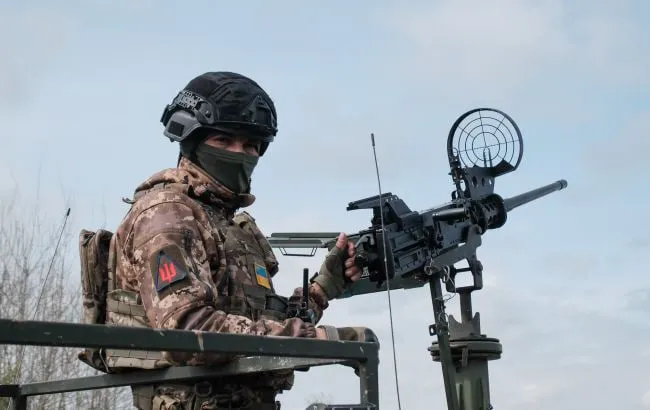
In May, Ukraine’s air defense forces demonstrated high effectiveness in repelling Russian attacks, intercepting over 90% of aerial targets. Despite an increase in the number of drone and missile launches by Russia, Ukraine’s air defense forces improved their interception rates. At the same time, one of the main challenges remains the shortage of missiles for systems capable of destroying ballistic targets, which pose one of the greatest threats during air attacks.
According to the agency, during massive attacks in May, the enemy deployed 8,351 aerial attack vehicles. For comparison, there were about 6,700 in April.
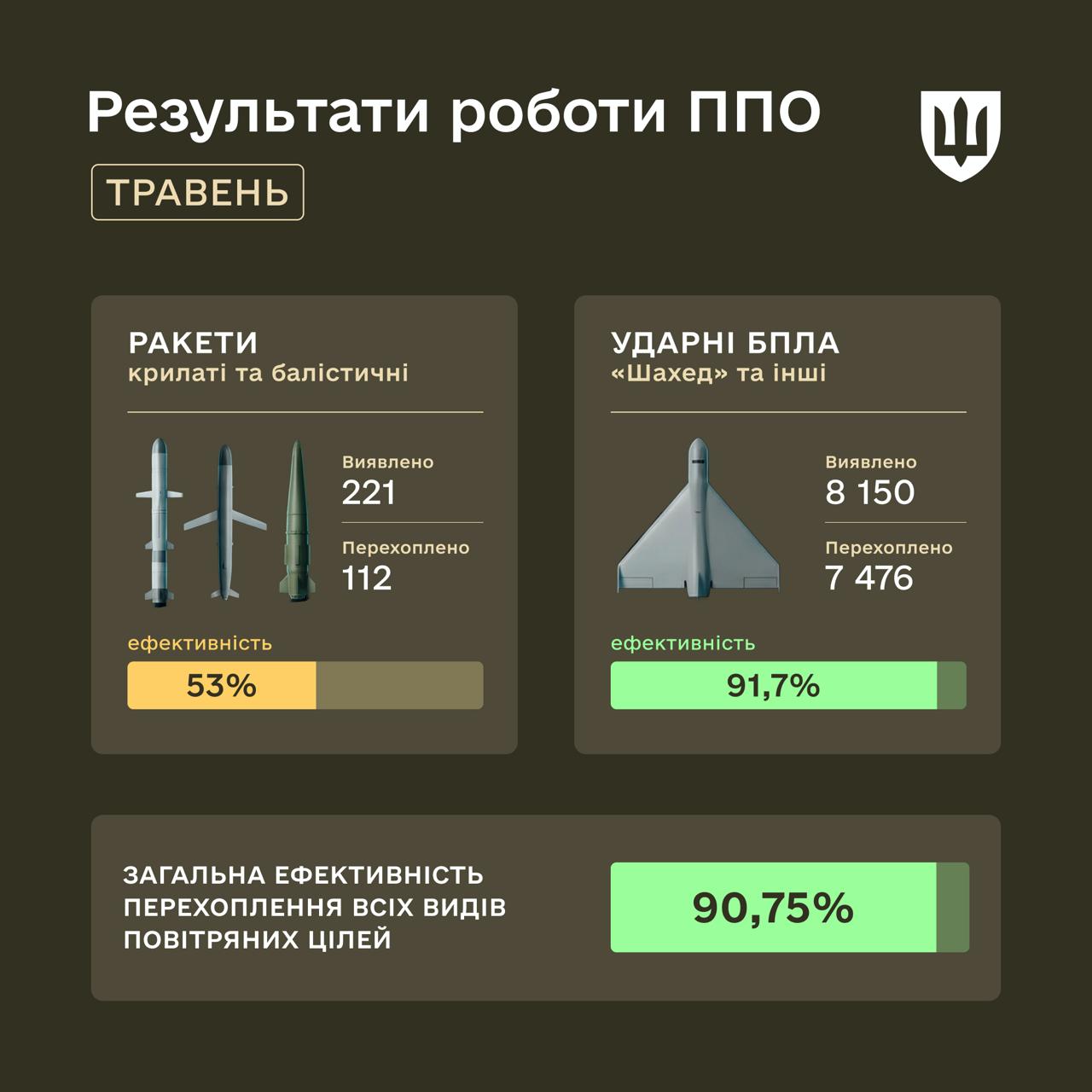
Of the 8,150 Shahed, Gerbera, and Italmas-type drones, 7,476 were intercepted, or 91.73%.
Of the 211 cruise and ballistic missiles, 112 were intercepted, or over 53%.
The overall interception rate of air targets during massive strikes reached 90.75%.
Among the missiles destroyed in May:
2 X-47 M2 "Kinzhal" aeroballistic missiles, which are extremely difficult to shoot down;
50 Kh-101 cruise missiles;
10 Iskander-M/KN-23 ballistic missiles;
11 Kalibr cruise missiles;
14 X-59/69 guided air-to-ground missiles;
24 Iskander-K cruise missiles.
"But under conditions of record-breaking operational loads, missiles capable of intercepting ballistic missiles are critically needed. Therefore, Ukraine is counting on the support of its partners in procuring PAC-3 missiles for the Patriot air defense systems, which are capable of intercepting ballistic missiles," the Ministry of Defense noted.
Syrskyi inspected the air defense operations in the south and issued orders to the military.
Syrsky and the Norwegian Chief of Defense visited combat units in the south
The Armed Forces of Ukraine have liberated approximately 590 square kilometers since the beginning of the year
Ukraine, together with its German partners, is expanding drone production in Germany. This involves not only increasing the number of drones for the front lines but also creating backup sites in case of attacks, disruptions, or other force majeure events.
The Ministry of Defense of Ukraine, together with NATO member states, announced the launch of the first competition for the development of next-generation defense technologies. The initiative is being implemented as part of the UNITE – Brave NATO program.