
Ukrainian Starlink terminals end up in enemy hands due to complicated routes
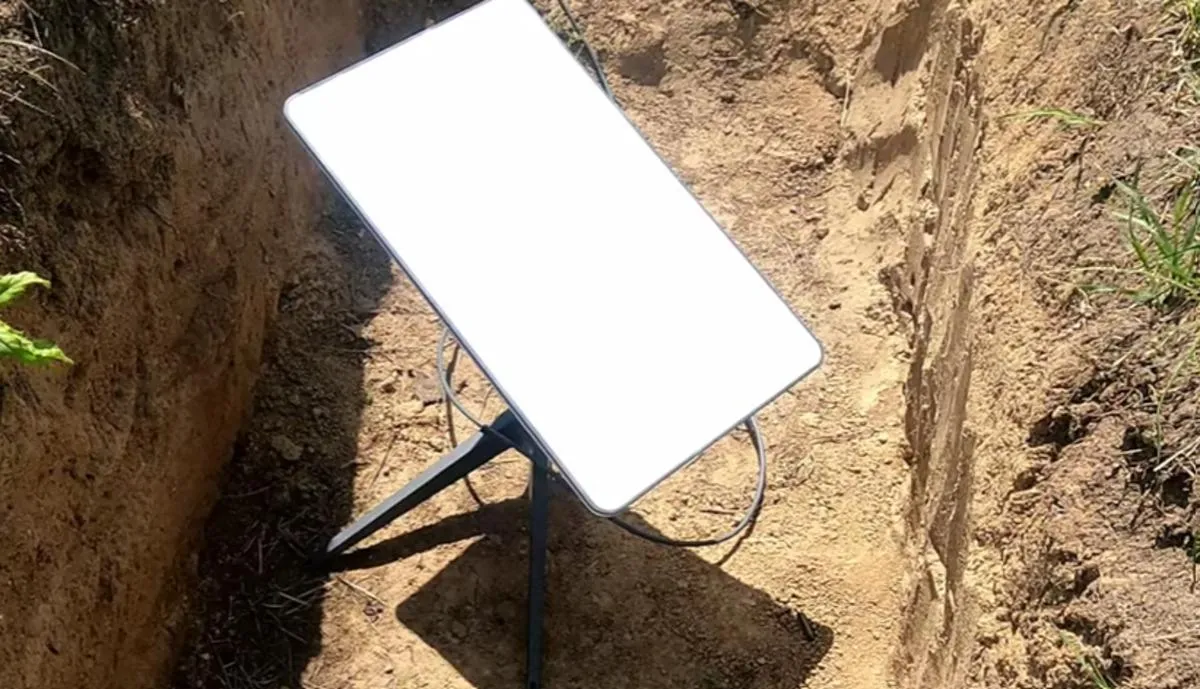
According to a journalistic investigation, Russian military personnel continue to use Starlink terminals on the front lines, despite efforts to block and restrict their operation. This involves complex schemes for smuggling equipment, which is initially registered under civilian names and then, through a series of intermediaries and third countries, ends up in Russia and the occupied territories. As a result, internet connectivity—which was supposed to be restricted—remains partially available to the Russian military. Journalists from the publication "Verstka" conducted an investigation to determine how the terminals end up in enemy hands.
According to the investigation, sellers offering such devices are actively operating on Telegram channels. The scheme works as follows: first, the terminal is registered to Ukrainian citizens, after which it is sent by mail within the country, and then it ends up in Moscow via intermediaries and transit routes.
The article also notes that not all such devices work reliably. One Russian soldier told journalists that they “bought ‘white’ Starlink devices, but only a few actually worked,” which may indicate partial blocking or access control.
Additionally, it is noted that some of the terminals may have fallen into the hands of the Russian military via captured Ukrainian drones. This was reported by Sergey Flesh, an expert in radio technology, as cited by Ukrainian media.
According to him, the Ukrainian military has already documented cases where Starlink, previously used by the Ukrainian side, was found on downed or intercepted drones. “A drone equipped with Starlink flew toward our troops. Unlike other UAVs, it was clear that it was operational. An inspection showed that this Starlink had previously been installed on our drone,” Flash explained.
Ukrainian defense officials emphasize that in cases where equipment is lost or captured by the enemy, requests to deactivate the terminals should be submitted promptly to prevent their further use.
Additionally, Russian tankers in the “shadow fleet” coordinate their actions and maintain communication with their owners using Starlink satellite systems.


