
AFU Advances in Dnipropetrovsk Region: Russia Loses Key Advantage for Summer Offensive
10 March 2026 20:30Since the beginning of the year, Ukraine has regained 460 sq. km of its territory. The most significant gains were made by the Defense Forces in Dnipropetrovsk region, where the occupiers’ army was pushed back by more than 400 sq. km. Some analysts even suggested that the Russian front in the Oleksandrivka direction had “crumbled.”
Despite positive developments in Dnipropetrovsk, the enemy continues to apply pressure on other sectors of the front, attempting to seize strategically advantageous positions to ensure further advancement.
UA.News interviewed Ukrainian military experts on the strategic significance of counterattacks in Dnipropetrovsk for Ukraine’s defensive line, the broader context of peace negotiations, and the directions where Russian forces are maintaining offensive momentum.
Defense Forces reclaim territory
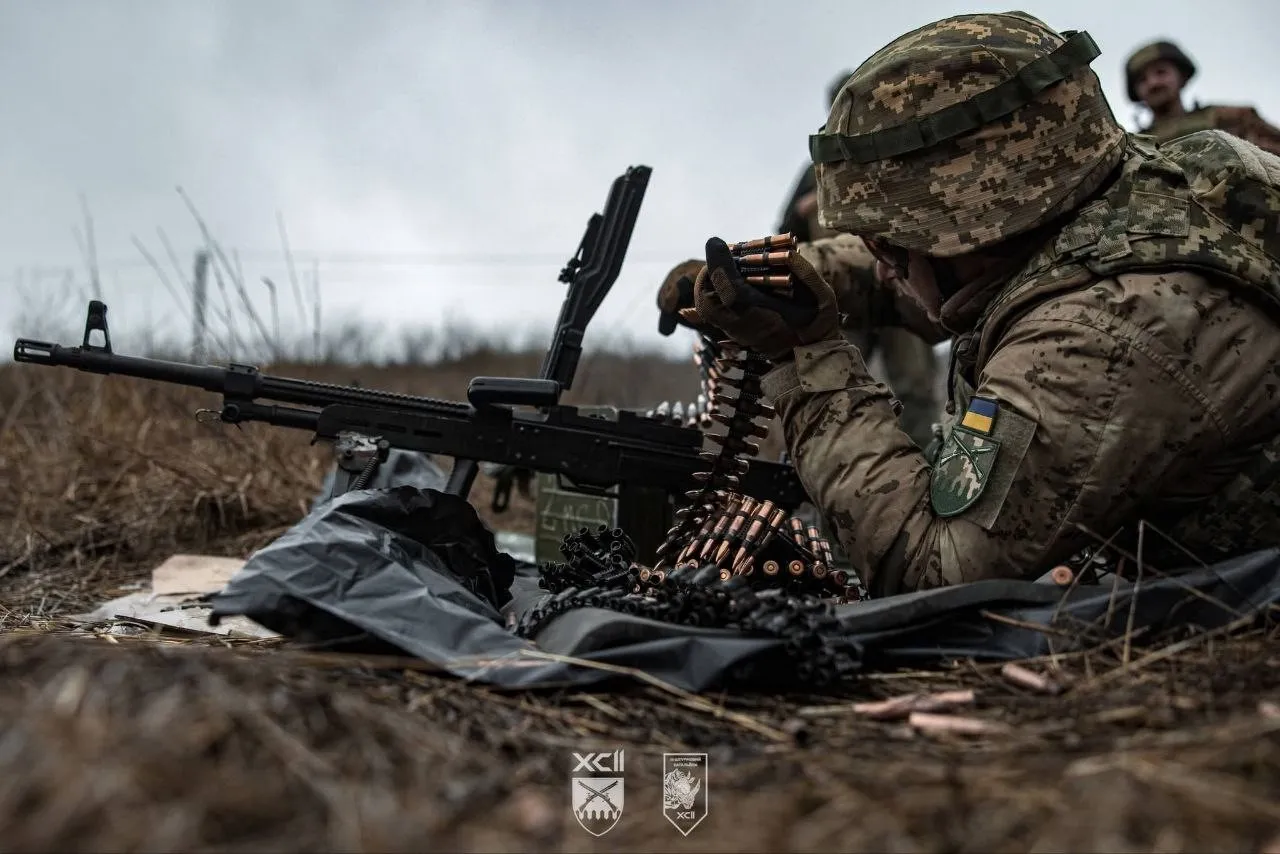
The Ukrainian Defense Forces continue counteroffensive operations at the junction of Dnipropetrovsk, Donetsk, and Zaporizhzhia regions, conducted by Air Assault troops and supported by mechanized brigades. Progress on the Oleksandrivka axis has been especially successful, with almost full restoration of control over occupied areas of Dnipropetrovsk. On March 9, Major General Oleksandr Komarenko, head of the Main Operational Directorate of the General Staff, reported the liberation of over 400 sq. km of territory.
The general noted that “three small settlements remain to be cleared and two more to be secured.” Thanks to active operations in February, the Defense Forces liberated more territory than had been lost.
According to Ukrainian and Western analysts, the success was facilitated by operational reserves, particularly assault and air-assault units, favorable weather allowing for mass drone use, and chaos in Russian communications caused by the Starlink terminal block from February 1. This effect was compounded by the ban of the Telegram messenger, which had been a primary means of communication between Russian units.
Another factor was Russia’s reliance on infiltration tactics, sending small infantry groups behind Ukrainian lines without consolidating or fortifying captured positions. This left them vulnerable and slowed their advance.
Russian advances slowed
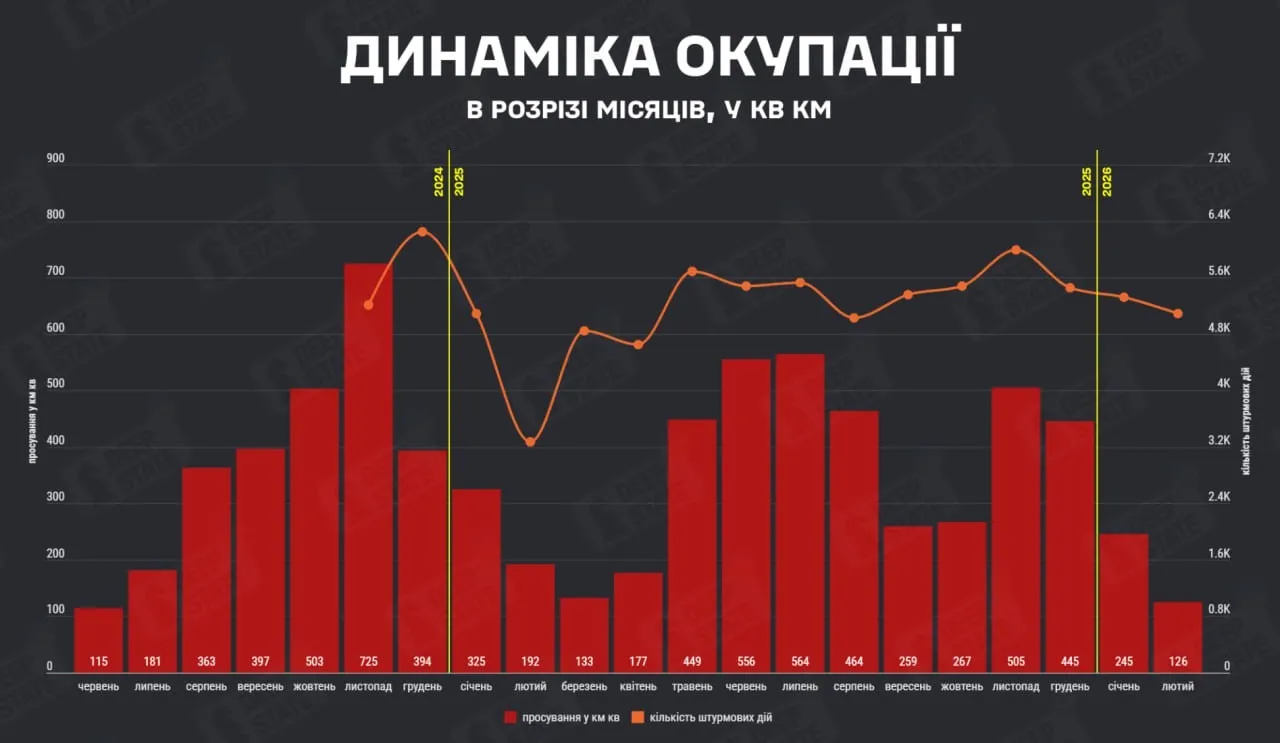
Analysts at DeepState note a general slowdown in Russian progress. In February, the territory gained by Russian forces was 126 sq. km — half of January’s gains and the lowest since July 2024. The number of assaults did not decrease, but their intensity and the number of troops involved were lower.
The most active Russian advances in February occurred on the Pokrovsk axis (32% of captured territory), followed by Sloviansk and Kramatorsk sectors (23% and 16% respectively). Combined, these areas account for 39% of total territorial gains, with only 9% of attacks. The Kostiantynivka axis accounted for 21%, and Sumy region for 7%.

Oleksandr Kovalenko: AFU disrupted conditions for Russia’s summer offensive
It is too early to claim that the Russian front in the Oleksandrivka direction has “crumbled.” The Ukrainian Defense Forces (AFU) are conducting tactical counterattacks rather than a full-scale offensive that would break enemy lines, explains military-political analyst Oleksandr Kovalenko of the “Information Resistance” group.
“The AFU are carrying out systematic tactical counterattacks. This does not cause the Russian front to collapse, but it deprives the enemy of advantageous positions needed for the spring-summer offensive in the southern Donbas, specifically in Zaporizhzhia and Dnipropetrovsk regions,” Kovalenko said.
Full clearance of Dnipropetrovsk has not yet been completed. Some enemy positions remain, but the key locations required for long-term defensive operations are now under Ukrainian control. The completion of these tactical actions further south, into Zaporizhzhia, is only a matter of time. On this axis, Russian forces are unable to withstand ongoing Ukrainian attacks and are being forced to retreat.
Kovalenko predicts that AFU initiative will continue, preventing Russian forces from reaching the outskirts of Pokrovsk along the H-15 highway. The occupiers had planned to capture the town during the spring-summer offensive to secure two major strongpoints in southern Donbas — Huliaipole and Pokrovsk.
“Russians have effectively failed to reach Pokrovsk — they will not achieve this during the spring-summer campaign,” he emphasized.
The AFU are currently conducting systematic tactical counterattacks rather than a large-scale operation. These counterattacks improve Ukrainian positions and prevent Russia from preparing for its planned offensive.
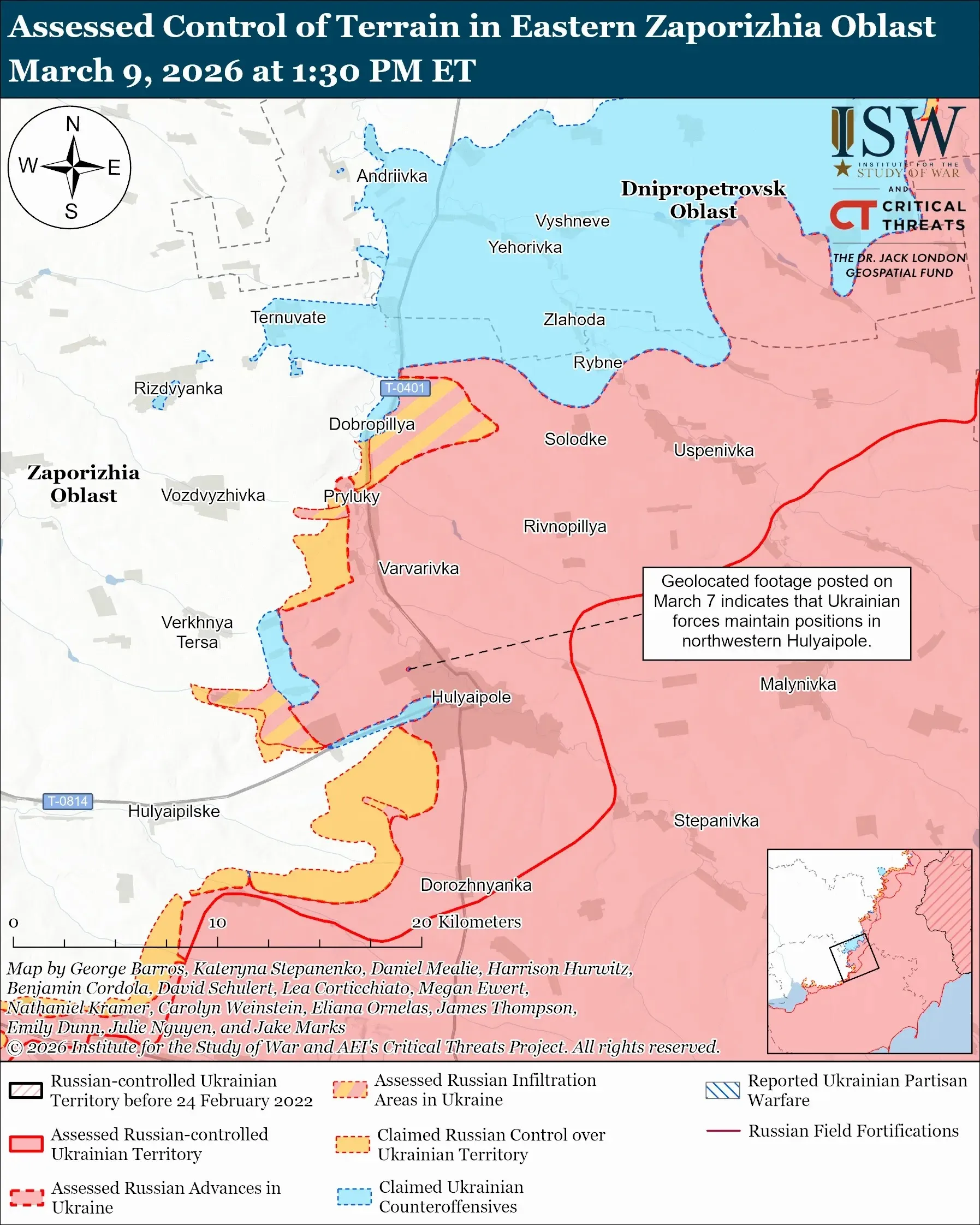
The contested front stretches over 45 km from Huliaipole along the Haichur River to the confluence with the Vovcha Vorona River, covering both Zaporizhzhia and Dnipropetrovsk regions. Russian forces had planned to fully capture Huliaipole by early February-March but have only reached its western outskirts. Ukrainian forces now control the right bank of the Haichur River, including Ternove, and are carrying out counterattacks along the R-85 highway.
Russian plans to advance on Pokrovsk, control the R-85 and H-15 routes, and push west along the Haichur River to the left bank of the Verkhnyaya Tersa River have been disrupted. Ukrainian counterattacks forced the enemy to abandon advantageous positions, revise timelines, and restructure their offensive plan in Zaporizhzhia. The occupiers are unlikely to recover and conduct large-scale territorial advances as originally intended.

Dmytro Snihiriov: Russia lost leverage for territorial exchange
Military analyst Dmytro Snihiriov emphasizes that Russia sought to use the Dnipropetrovsk region purely as a political leverage point in negotiations with Ukraine. The plan involved creating a buffer zone in Dnipropetrovsk, effectively expanding the theater of operations into territory that, according to Putin’s 2022 decree, does not belong to Russia. This also aimed to establish a precedent for territorial exchange.
“What were the Russians proposing? To swap the temporarily occupied territories of Dnipropetrovsk, Sumy, and Kharkiv regions for areas of Donetsk controlled by Ukrainian forces,” Snihiriov explained.
Accordingly, the de-occupation of the Dnipropetrovsk region has effectively shattered the Russian side’s plans. Note that after the successful counteroffensive actions, the timelines for negotiations between the Ukrainian and Russian delegations were postponed.
Primarily, this shift was not influenced by events in the Middle East. It was dictated by the fact that the Russian Federation no longer had leverage to pressure Ukraine through successful operations in territories not included in the occupying country’s jurisdiction,” emphasized Snihiriov.
The military analyst also stressed that Russian forces attempted to expand their presence in the Sumy region ahead of the announced March 11 meeting in Istanbul. However, there are no grounds to claim that the enemy has implemented plans to establish a broad buffer zone. Snihiriov recalled that the Russians themselves acknowledged the failure of the latest “Truba” operation in Sumy, which involved attempting to infiltrate Ukrainian units through underground gas pipelines. This operation resulted in significant losses among enemy personnel. At the same time, the analyst highlighted other “hot spots” along Ukraine’s defensive line and explained their roles in the overall theater of operations:
"Kharkiv region: Vovchanskyi khutory is the most problematic section along the Kharkiv direction. These are commanding heights, which explains the intensified fighting in this area. The occupiers are trying to seize them to maintain fire control over Ukraine’s rear logistics.
Kupiansk: Practically fully under the control of Ukrainian forces. Small Russian assault groups of 20–40 soldiers are effectively blocked in the town center, near apartment complexes and the central hospital, cut off from ground logistics. Their neutralization is only a matter of time. It is also important that Ukrainian forces fully control the Kupiansk transport hub. This prevents Russia from using it to redeploy operational reserves by rail from the territory of the Russian Federation and occupied areas of Luhansk for further formation of strike groups to advance toward Sloviansk along the Oskol River.
Pokrovsk direction: The situation is difficult. The main fighting occurs near the villages of Hryshyne and Rodynske, which are key logistical hubs for Ukrainian forces. Fighting also continues around the outskirts of Pokrovsk and Myrnohrad, in the industrial “promok” area. There is no zone of sustained presence of our units in Pokrovsk; actions are carried out via raid methods by assault groups. However, a wide fire control zone has been created, preventing the occupiers from advancing further into Ukrainian territory. This effectively forms a trap for Russian occupation forces, given that Pokrovsk and Myrnohrad are under total fire control of Ukrainian forces. Accordingly, the main focus on the Pokrovsk axis will shift to the Dobropillia direction. The occupiers plan to capture this industrial city.
Kostiantynivka direction: The situation is also difficult here. The occupiers attempt to act through infiltration of small assault groups directly into the city. Additionally, they achieve some tactical successes on the flanks of the Ukrainian grouping, particularly in the areas of Chasiv Yar and Stupochky. In Chasiv Yar, additional redeployment of enemy operational reserves has been recorded to establish full control over the settlement. The situation is complicated by the fact that Kostiantynivka is located in a lowland, while the occupiers control the commanding heights in Chasiv Yar and Toretsk, effectively on the flanks. This gives them the ability to maintain fire control over Ukrainian positions, which is a significant challenge for the Ukrainian grouping in Kostiantynivka.
Sloviansk-Kramatorsk agglomeration: The occupiers have achieved certain successes along the Lyman direction, advancing along the right bank of the Siverskyi Donets toward Zakitne. There is a threat of capturing this strategic settlement, which holds an important commanding height. There is also advancement near Platonivka and Riznykivka, giving the occupiers access to commanding heights near Kryva Luka and Kalenivka, where several key transport crossroads intersect. At the same time, the occupiers are attempting to infiltrate along the Bakhmut–Sloviansk route. After “Solidar,” the occupiers are approaching the village of Rai-Oleksandrivka (Kramatorsk district).
The main danger of this situation is that Rai-Oleksandrivka is only 7 km from the Sloviansk TPP, and from the TPP to Sloviansk itself is 5 km. Thus, the distance to Sloviansk is approximately 12–14 km, and to Kramatorsk approximately 16 km. The occupiers are expected to use a tactic of first establishing fire control over Ukrainian positions, then attempting to gain direct control, creating a threat of operational encirclement".


