
Video: A study on Russia's ideological influence in the occupied territories was presented in Kyiv — Ukrinform
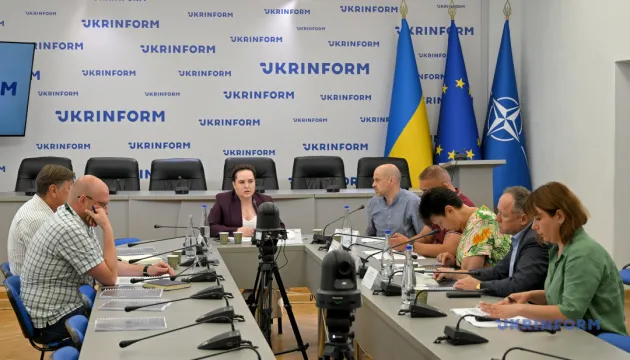
On August 12, an analytical report titled “The Russian Federation’s Ideological Influence in the Temporarily Occupied Territories of Ukraine,” covering the period from 2014 to 2026, was presented in Kyiv. The study was prepared by the NGO “Eastern Human Rights Group” and the Pavlo Lysiansky Institute for Strategic Studies and Security.
During the presentation, Vira Yastrebova, director of the “Eastern Human Rights Group,” stated that the authors sought to conduct a comprehensive study of the mechanisms of Russian information influence on residents of the temporarily occupied territories, those carrying out this influence, violations of international law, and possible consequences.
According to Maksym Butchenko, deputy director of the Pavlo Lysiansky Institute for Strategic Studies and Security, the researchers identified six interrelated components of the Russian system of ideological influence. These include information isolation, centralized production of propaganda narratives, criminalization of dissent against the occupying authorities, rewriting of history, suppression of the Ukrainian language and culture, as well as forced passportization and the extension of Russian jurisdiction.
The researchers found that 134 Russian-controlled media outlets are operating in the temporarily occupied territories. According to Butchenko, some of these outlets employ people recruited from Moscow and other regions of the Russian Federation.
Russian propaganda, in particular, promotes narratives of “reunification,” “defense,” and the glorification of participants in the war against Ukraine, targeting young people in particular.
Another tool of influence is a network of civil society organizations. According to the study, more than 2,000 such organizations operate in the temporarily occupied territories and receive Russian grant funding. The total amount of grants mentioned in the report reaches 340 million rubles.
The authors of the study emphasize that information isolation, the Russification of education, persecution for Ukrainian identity, and the rewriting of history are elements of a unified, systematic policy of the Russian Federation. In their view, the goal of this policy is to supplant the Ukrainian national presence and integrate the occupied territories into Russia’s political, legal, and information space.
The study also includes a legal assessment of the documented practices from the perspective of international law, as well as recommendations for Ukraine and its international partners. The source base consists of materials from the UN, UNESCO, the International Criminal Court, Ukrainian government agencies, human rights organizations, and journalistic investigations.
Source: Ukrinform
Earlier, Ukraine announced the liberation of 745 square kilometers in the Dnipropetrovsk region.


