
Zelenskyy imposed sanctions on 44 individuals in connection with Russia's elections in the occupied territories
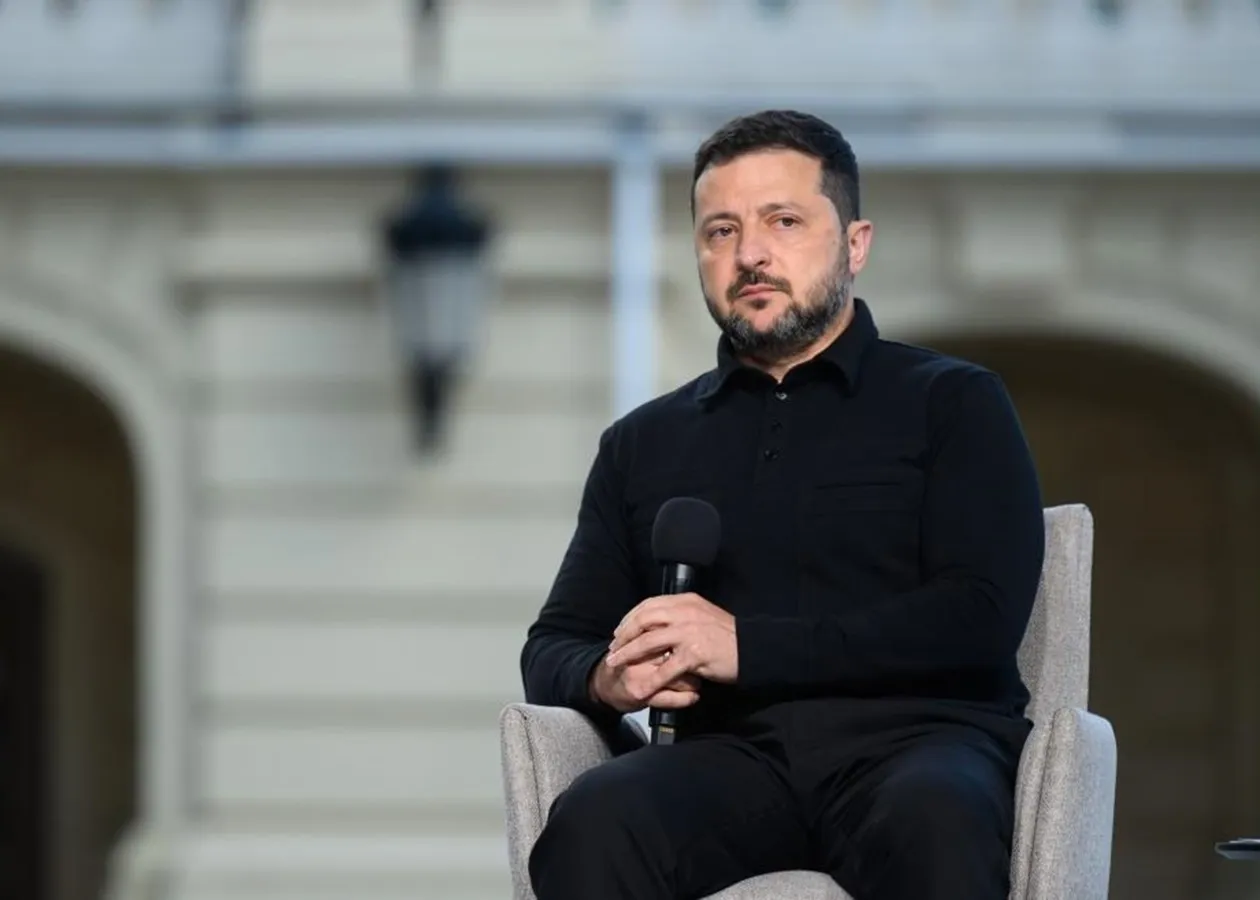
On September 26, Ukrainian President Volodymyr Zelenskyy enacted a decision by the National Security and Defense Council of Ukraine to impose sanctions against individuals involved in conducting illegal “elections” to the State Duma of the Russian Federation in the temporarily occupied territories of Ukraine.
Sanctions have been imposed on 44 individuals who, according to the Ukrainian side, are acting in the interests of Russia and facilitating the occupation of Ukrainian territories.
According to the NSDC decision, the restrictions include, in particular, the freezing of assets, the suspension of trade operations, a ban on technology transfers, and a number of other sanctions measures.
These are individuals whom Ukraine links to the organization of and participation in Russia’s illegal “elections” in the temporarily occupied territories of the Donetsk, Luhansk, Kherson, and Zaporizhzhia regions, as well as in Crimea and Sevastopol.
Among the well-known figures on the sanctions list is Irina Kuksenkova, a Russian propagandist and war correspondent for “Channel One.”
According to the Main Intelligence Directorate, Kuksenkova systematically worked in the occupied territories of Ukraine, specifically filming reports in Hostomel and Mariupol. Ukrainian intelligence claims that she supports Russian aggression and disseminates Kremlin propaganda narratives.
Yuriy Onyshchuk was also added to the sanctions list. After the occupation of Melitopol, he began collaborating with the Russian side. Onishchuk currently heads the regional branch of the Russian party “Fair Russia – For the Truth” in the occupied part of Zaporizhzhia Oblast and serves as a deputy in the “legislative assembly” created by Russia.
The sanctions list also includes candidates nominated by Russian political parties in the illegal elections held in occupied Crimea.
In particular, the document names Maksym Kabanov, Roman Yukhnenko, Oleksandr Baranov, Petro Vakulenko, Ivan Pavlychenko, and others.
Russian sources confirmed their nomination in Crimean constituencies by the parties “Fair Russia,” the Communist Party of the Russian Federation (CPRF), “New People,” the Liberal Democratic Party of Russia (LDPR), and other political forces in the Russian Federation.
Ukraine emphasizes that the “elections” held by Russia in the temporarily occupied territories have no legal force and violate international law.
The Ministry of Foreign Affairs of Ukraine should inform the European Union, the United States, and other states about the sanctions imposed and raise the issue of international partners applying similar restrictions.
Vladislav Vlasyuk, the President’s Advisor on Sanctions Policy, stated that the occupation does not grant Russia sovereignty over the seized territories.
According to him, no “elections” or “referendums” held in the occupied territories, nor the districts created by the Russian side, alter their internationally recognized status.
Zelenskyy signed the corresponding decree on September 26, according to the Office of the President.
Voting has begun in Ukraine’s temporarily occupied territories for the so-called elections to the Russian State Duma, which Ukraine does not recognize. At the same time, Russian propaganda is spreading stories about alleged high voter turnout at polling stations and attempting to create the impression of “mass support” for Russia.
Through its Foreign Intelligence Service, Russia has launched a new propaganda campaign to create the illusion of legitimacy for the September “elections” to the State Duma. A statement from the SVR claims that the EU, PACE, and Western intelligence agencies are allegedly planning destabilization efforts, cyberattacks, and provocations, as well as enlisting the Russian opposition to discredit the vote.
Earlier, the Center for Political Analysis explained why Putin is terrorizing Kyiv and the surrounding region.




