
September 23, 2026 — Lithuania Honors the Victims of the Holocaust: The History of Remembrance Day
On September 23, 2026, Lithuania observes the Day of Remembrance for the Victims of the Genocide of Lithuanian Jews. This date was established to commemorate the liquidation of the Vilnius Ghetto in 1943, when the Nazi occupation authorities destroyed the ghetto and thousands of its inhabitants were killed or sent to concentration camps. On this day, Lithuania holds memorial ceremonies, moments of silence, educational events, and activities dedicated to the memory of the victims of the Holocaust.
The Day of Remembrance for the Victims of the Genocide of Lithuanian Jews is observed annually on September 23 in Lithuania. In 2026, this date falls on a Wednesday. It is an official day of remembrance associated primarily with the tragedy of Lithuanian Jews during the Nazi occupation. It was on September 23, 1943, that the liquidation of the Vilnius Ghetto began. The process was completed on September 23–24, and its inhabitants were sent in several directions. Men and women of working age were sent to concentration camps in Estonia and Latvia, while the elderly, children, and some women were transported to their deaths.
In 1994, the Lithuanian Parliament designated September 23 as the Day of Remembrance for the Victims of the Genocide of Lithuanian Jews. Since then, this date has been observed annually to honor the victims and serve as a reminder of the crimes of the Holocaust. It is important to note that this date is dedicated specifically to the memory of Lithuanian Jews who fell victim to the Nazi genocide. At the same time, memorial events also address the broader context of the Holocaust and the people who helped those being persecuted.
What Happened to the Jews of Lithuania During the Holocaust
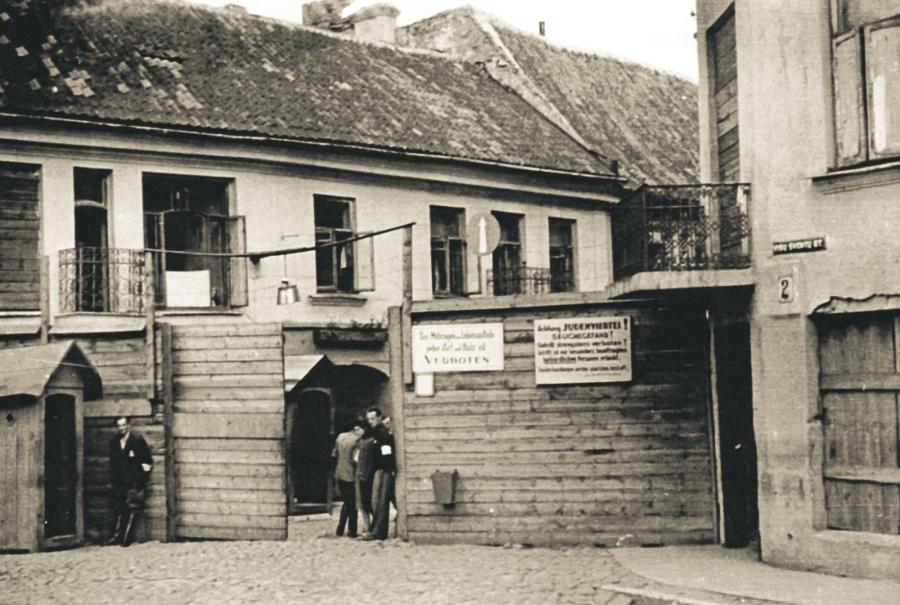
The persecution of Jews in Lithuania began after the Nazi occupation in 1941. People were deprived of their jobs, their movement was restricted, they were forced to wear special badges, and their property was confiscated. Jews were arrested en masse, imprisoned, and transported to execution sites. One of the main sites of mass killings was Paneriai, near Vilnius.

According to the Lithuanian Genocide and Resistance Research Center, approximately 90% of Lithuania’s Jewish population was exterminated during the Holocaust. In total, the country lost approximately 190,000 of its Jewish citizens. Some official Lithuanian sources provide a broader estimate—about 190,000 Jewish citizens of Lithuania were killed, and the total number of Jews murdered on the country’s territory was even higher due to refugees from other countries.
Before the war, the Jewish community was an important part of life in Lithuania. Jews lived in Vilnius, Kaunas, Šiauliai, Panevėžys, and many other cities. They contributed to the development of trade, education, medicine, culture, publishing, and the arts. Therefore, the Holocaust destroyed not only a vast number of human lives but also a significant part of the country’s centuries-old Jewish culture. Today, Lithuanian authorities emphasize that the memory of this tragedy is part of Lithuania’s own history. In 2026, the country will mark the 85th anniversary of the beginning of the genocide of Lithuanian Jews.
The Vilnius Ghetto and the Events of 1943
The Vilnius Ghetto was established by the Nazi occupation authorities after they captured the city. Tens of thousands of Jews were forcibly relocated there. People lived in extremely harsh conditions, and many residents were forced to work at German factories and military facilities. Gradually, the number of people in the ghetto dwindled due to shootings, deportations, and other punitive operations. In 1943, the Nazi authorities received orders to liquidate the ghettos in the occupied territories of Eastern Europe. The liquidation of the Vilnius Ghetto became one of the most tragic stages in the destruction of the city’s Jewish community.

On September 23–24, 1943, the ghetto was liquidated. Able-bodied people were sent to forced-labor camps and concentration camps, particularly in Estonia and Latvia. About 3,500 elderly people, women, and children were transported to death camps in occupied Poland. Several hundred more elderly and sick people were shot in Paneriai during the liquidation of the ghetto. According to the Lithuanian Genocide and Resistance Research Center, there were more than 24,000 Jews in the Vilnius ghetto at the time of its liquidation. Of the approximately 58,000 Jews in Vilnius who lived in the city before the war, only 2,000–3,000 remained by the end of the Nazi occupation. It is these events that served as the primary historical reason for choosing September 23 as a day of remembrance.
Paneriai—One of the Main Sites of Remembrance
Paneriai is a forested area near Vilnius that, during the Nazi occupation, became one of the largest sites of mass murder in Lithuania. Jews, Poles, prisoners of war, and other persecuted people were shot there. The largest-scale shootings of Jews took place specifically between 1941 and 1944. According to historical data, by the end of 1941, at least 21,000 Jews may have already been killed in Paneriai. The shootings continued in the following years. It is difficult to determine the exact number of victims, but researchers estimate tens of thousands of deaths.
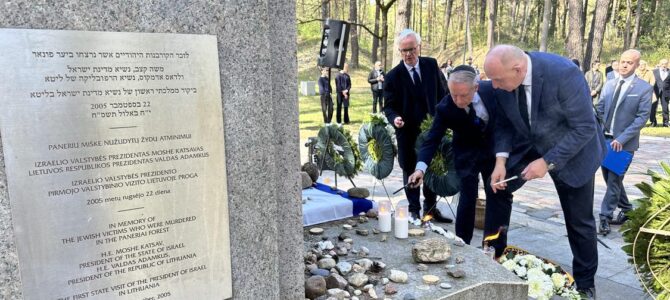
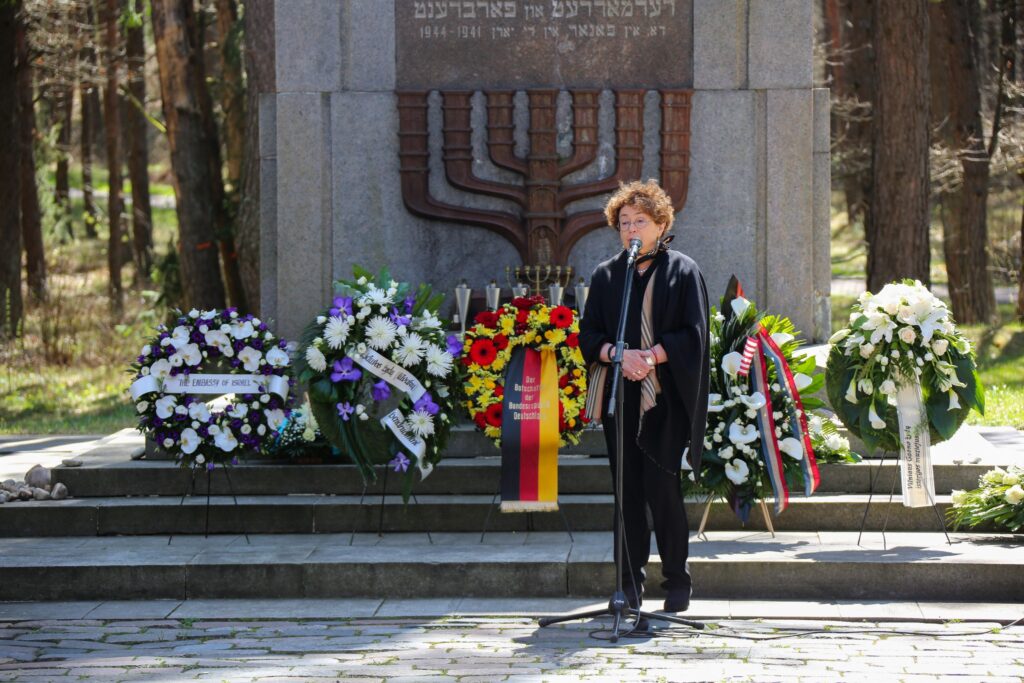
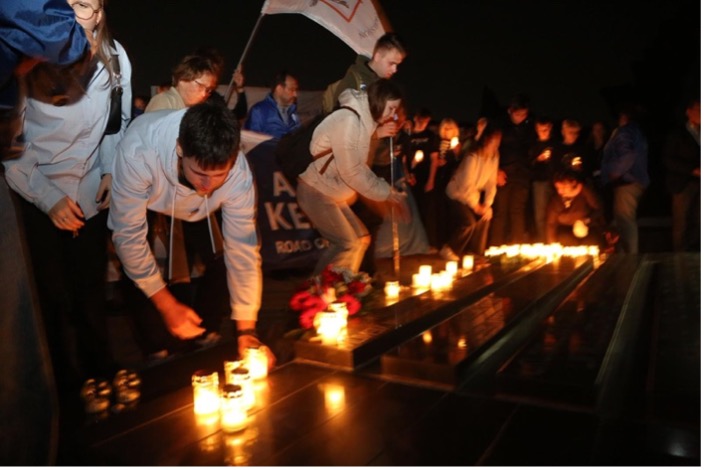
Today, the Paneria Memorial stands on this site. Within its grounds are monuments dedicated to various groups of victims, including murdered Jews, Poles, Lithuanians, and Soviet prisoners of war. There is also an information center and a museum exhibition dedicated to the history of the mass killings. On Remembrance Day, Paneriai becomes the main venue for official ceremonies. Here, representatives of the government, the Jewish community, diplomats, and civic activists lay flowers and wreaths and honor the victims with a moment of silence.
How Remembrance Day Is Observed
This day in Lithuania is not a holiday. Its main purpose is to preserve the memory of those who perished and to remind people of the consequences of the Nazi genocide. One of the main traditions is memorial ceremonies. In Paneriai, government officials and members of the public lay flowers at monuments to the victims. There are also moments of silence and speeches dedicated to the history of the Holocaust.
Separate educational events are held for schoolchildren and young people. Students learn about the history of Lithuania’s Jewish community, the Vilnius Ghetto, and the fates of those who survived the persecution. Such events help shed light on the tragedy not only through statistics but also through personal stories. Exhibitions, lectures, concerts, film screenings, and other cultural events take place in various cities. Museums, schools, local communities, and representatives of the Jewish community participate in these events. Commemorative events may also take place outside of Lithuania at the country’s diplomatic missions.
“The Path of Remembrance” and Other Events
One of the well-known traditions is the “Path of Remembrance”—a memorial march that connects sites associated with the history of the Holocaust. Participants follow routes that Jews may have taken during the Nazi occupation before their imprisonment or execution. In 2026, the program of commemorative events was extended by several days—from September 22 to 24. On September 22, a “Path of Remembrance 1941–2026” march is scheduled in Vilnius, starting at the Paneriai Memorial and proceeding to the Paneriai train station, and then from the Vilnius train station to Rudninkų Square.
On September 23, the main official ceremony will take place at the Paneriai Memorial. In 2026, it is scheduled for 12:30 p.m. That same evening, a concert commemorating Remembrance Day will be held in Vilnius as part of the Vilnius Shalom Festival. On September 24, commemorative events will continue in Kaunas. A choral suite titled “Ilgesiui ir vilčiai” is scheduled at the Museum of Fort IX, and in the evening, a ceremony honoring the victims of the genocide of Lithuanian Jews will take place.
These events demonstrate that remembrance of the Holocaust in Lithuania is not limited to a single official day. Over the course of several days, people can visit memorials, listen to historians, participate in cultural events, and learn more about the history of the Jewish community.
Why this day commemorates more than just the victims
Remembrance Day is not dedicated solely to those who perished. During memorial events in Lithuania, people who helped Jews survive the Nazi occupation are also honored. Among them were Lithuanians who hid Jews, helped them with documents, food, or escape. Some of these people risked their own lives and the lives of their families. Helping the persecuted could lead to arrest or execution.
The names of many rescuers are preserved today in historical documents. The State of Israel confers the title of Righteous Among the Nations upon such individuals. The Lithuanian Ministry of Foreign Affairs reported that more than 700 Lithuanian citizens have been recognized as Righteous Among the Nations. Therefore, memorial ceremonies can be dedicated not only to those who perished but also to those who tried to save others. This helps to portray the history of the Holocaust not only through tragedy but also through examples of courage and humanity.
Interesting Facts About Remembrance Day
September 23 is linked to the Vilnius Ghetto. It was the liquidation of the ghetto in September 1943 that led to the selection of this date.
Remembrance Day was established in 1994. This means that Lithuania has been officially observing it for over 30 years.
Paneriai was the site of mass shootings. Not only Jews were killed there, but also members of other groups persecuted by the Nazi regime.
The memory of the Jewish tragedy was suppressed for a long time. During the Soviet era, the victims in Paneriai were often described generally as “Soviet citizens” or “civilians,” without emphasizing that the majority of those killed were Jews.
In 1991, a separate memorial to the murdered Jews was erected in Paneriai. It bears inscriptions in Lithuanian, Hebrew, and Yiddish.
The year 2026 marks the 85th anniversary of the beginning of the genocide of Lithuanian Jews. That is why this year’s program of commemorative events in Lithuania is of particular significance.
Why This Day Is Important Today
The memory of the Holocaust in Lithuania today is not limited to the history of World War II. Authorities and civil society organizations also use this date to address issues of antisemitism, hatred, and the dangers of discrimination. The Lithuanian Ministry of Foreign Affairs emphasizes that honoring the victims should serve as a reminder of the need to counteract manifestations of hatred in modern society. Remembrance helps us understand the consequences that can result from the systematic deprivation of people’s rights and human dignity.
It is also important to preserve not only the memory of death, but also the life stories of those who were killed. The Jewish community has been part of Lithuania’s history for centuries, and its culture has left a noticeable mark on the country’s cities. In 2026, Lithuanian institutions are paying special attention to the preservation of this cultural heritage. For example, parts of the collections of the YIVO Jewish Research Institute survived the Holocaust. The so-called “Paper Brigade,” made up of prisoners from the Vilnius Ghetto, secretly saved books, manuscripts, and documents, risking their lives. Today, the preserved archive contains approximately 4.1 million pages of materials that help researchers study the lives of Lithuanian Jews before the Holocaust.
That is why September 23 in Lithuania is not just a date on the calendar. It is a day when the country remembers the destroyed Jewish community, honors the victims, speaks of the people who tried to save them, and reminds us of the importance of preserving historical memory.




