
500 turtles helped restore vegetation on the edge of the Sahara after a tree-planting effort failed
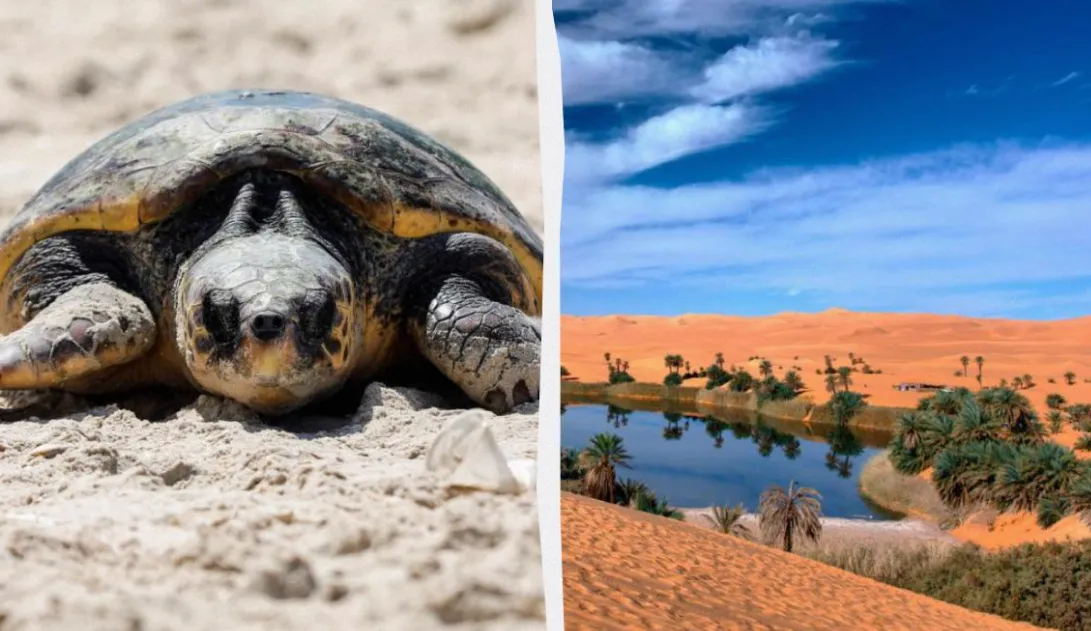
In the Sahel region on the southern edge of the Sahara, an unusual ecological experiment involving 500 spur-thighed tortoises has helped partially restore vegetation on degraded land where previous attempts to plant trees had failed.
These are spur-thighed tortoises of the species Centrochelys sulcata, which are naturally adapted to life in hot and dry conditions.
The secret to this effect lay in the animals’ natural behavior—they dig deep burrows that break up the hard crust of parched soil. As a result, rainwater began to seep into the ground instead of evaporating immediately, and dormant seeds were given a chance to sprout.
A few years later, satellite images captured the emergence of green patches in areas where there had previously been only sand.
Ecologists call these animals “ecosystem engineers” because they physically alter the environment in ways that help other species recover.
At the same time, scientists emphasize that tortoises are not a universal solution to the problem of desertification. The success of such projects also depends on rainfall, livestock grazing control, and long-term land management.
The spur-thighed tortoise species itself is currently threatened with extinction due to habitat loss, climate change, and poaching.
We previously reported that the recent discovery of two skeletons, mutilated in the same manner, suggests that limb amputation was used as a punishment during the Eastern Zhou Dynasty in China, over 2,000 years ago.
We also recall that during excavations in the ancient city of Laodicea in the Turkish province of Denizli, which is included on UNESCO’s tentative list of World Heritage Sites, a statue of Asclepius, the god of medicine in Greek and Roman mythology, and the head of a statue of his daughter Hygieia were discovered.


