
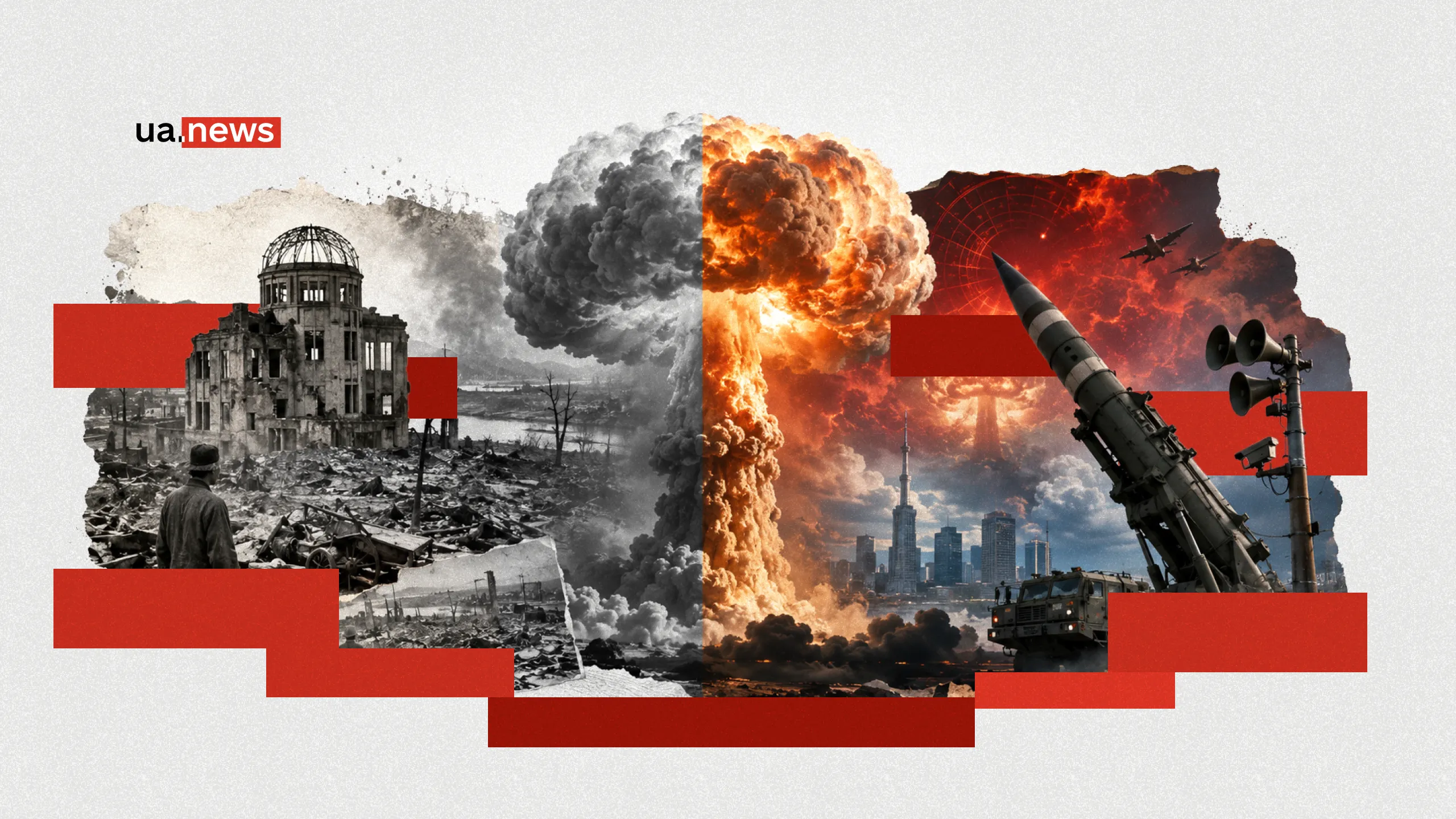
On August 6, 1945, the first nuclear attack in human history took place. An American bomber dropped an atomic bomb cynically named “Little Boy” on the Japanese city of Hiroshima, home to about 350,000 people.
Up to 80,000 people were killed instantly. They literally vaporized, turning into ash and shadows burned onto the stone walls of buildings—and that was only the beginning of the horror. By the end of 1945, the death toll had risen to 150,000 due to injuries, burns, acute radiation sickness, and life-threatening injuries. For years afterward, people continued to die from cancers and genetic mutations caused by radiation exposure. The final death toll from this single strike alone exceeded 200,000—all from a single bomb that, by today’s standards, was very weak and primitive. By comparison, modern thermonuclear weapons are hundreds or even thousands (!) of times more powerful than the Hiroshima “Little Boy.”
It would seem that all of this is behind us, left behind somewhere in 1945, in historians’ archives, on the pages of textbooks about the “Cold War,” and so on. It would seem that humanity, having survived the 1962 Cuban Missile Crisis, had learned its lesson and forever branded nuclear weapons as an absolute, unacceptable taboo—but no. Since 2022, nuclear rhetoric and direct threats to use weapons of mass destruction have returned to public discourse. And they returned at the initiative of Russia, which launched a full-scale invasion of Ukraine.
Why is this extremely dangerous again today, and how real is the threat of a nuclear strike against Ukraine and the world at large? UA.News political analyst Mykyta Trachuk, together with experts, examined the issue.
“Brighter Than a Thousand Suns”: The Anatomy of a Single Explosion
To grasp the level of the threat, one must first understand exactly what a nuclear explosion is. The testimonies of Hiroshima survivors and scientific reconstructions of the events of August 6, 1945, paint a picture that goes far beyond any military experience.
At 8:15 a.m., a B-29 bomber dropped “Little Boy” over the center of Hiroshima. The bomb exploded at an altitude of about 600 meters—this was done deliberately to maximize the destructive effect of the shock wave. The first thing those at a relatively safe distance saw was a flash. Eyewitnesses described it as “a light brighter than a thousand suns,” like a fire that filled the entire sky. Within a one-kilometer radius of the epicenter, anyone who was outdoors instantly suffered third-degree burns: their skin was charred, their clothes caught fire, and eyes melted away before the brain had time to “register” the pain. The temperature at the epicenter of the explosion reached several million degrees for a split second—equivalent to the surface of the Sun. A fireball with a diameter of about 280 meters formed, radiating thermal energy that incinerated all living things within a radius of hundreds of meters. People who were closer to the epicenter simply vaporized. Trees, buildings, streets—everything turned into a literal hell.

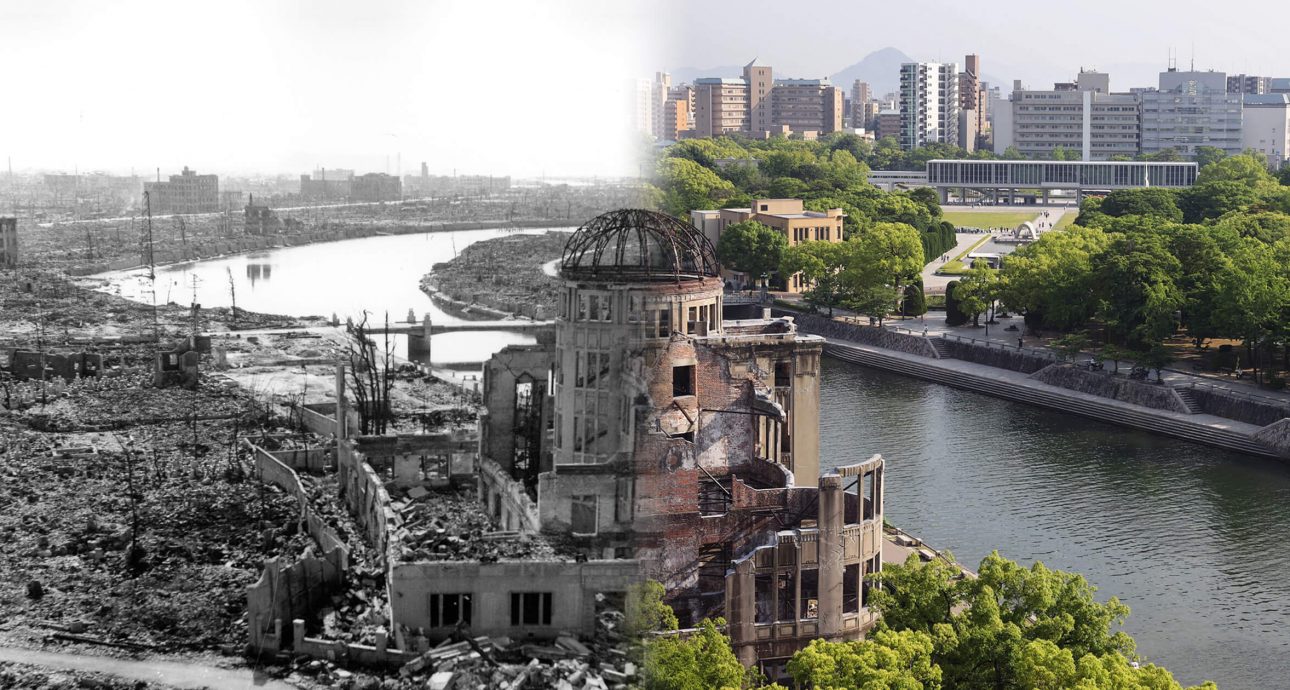
And then came the shock wave. Within a radius of up to 2 km from the epicenter, all buildings were completely destroyed. Those who miraculously survived the flash were killed by the shock wave: they were torn to pieces, buried under debris, thrown out of windows, and so on. Windows, by the way, were blown out as far as 15 km away. The roar of the explosion could be heard hundreds of kilometers away, and the mushroom cloud, which rose to a height of over 12 km, was visible in neighboring Japanese prefectures. Then radioactive fallout began. Those who survived the blast rushed to the rivers, trying to quench their thirst and soothe the pain from their burns—and along with the water, they received another dose of radiation. Radiation sickness began to claim lives over the following days and weeks: nausea, bloody diarrhea, hair loss, organ failure, and ultimately—a slow and painful death.
Hiroshima was wiped off the face of the earth in a matter of seconds. It took 20 years for the city to fully recover. And all this horror was caused by a single bomb—a bomb whose power is but a pale shadow of what the nuclear powers have on standby today.
The
Renaissance of Nuclear Rhetoric: How the World Returned to the Age of Fear
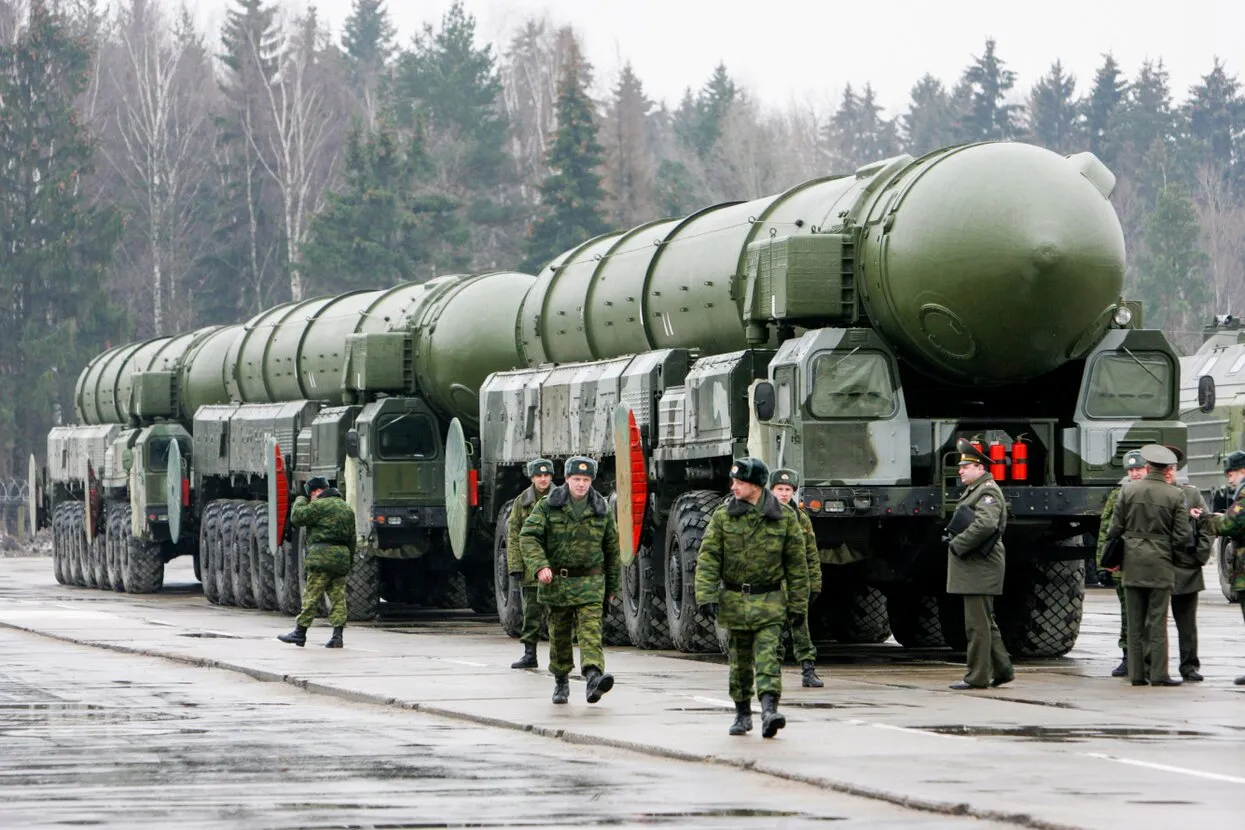
After the end of the Cold War, it seemed that nuclear weapons had become a purely ceremonial attribute of the great powers, something like a museum exhibit in the arsenal of international politics. However, February 2022 shattered that illusion. A few days before the full-scale invasion of Ukraine, Putin held a meeting with Defense Ministry leadership, after which Russian nuclear forces were placed on a special combat alert status. Moscow made it clear that any Western intervention in the “Ukrainian conflict” could provoke a nuclear strike.
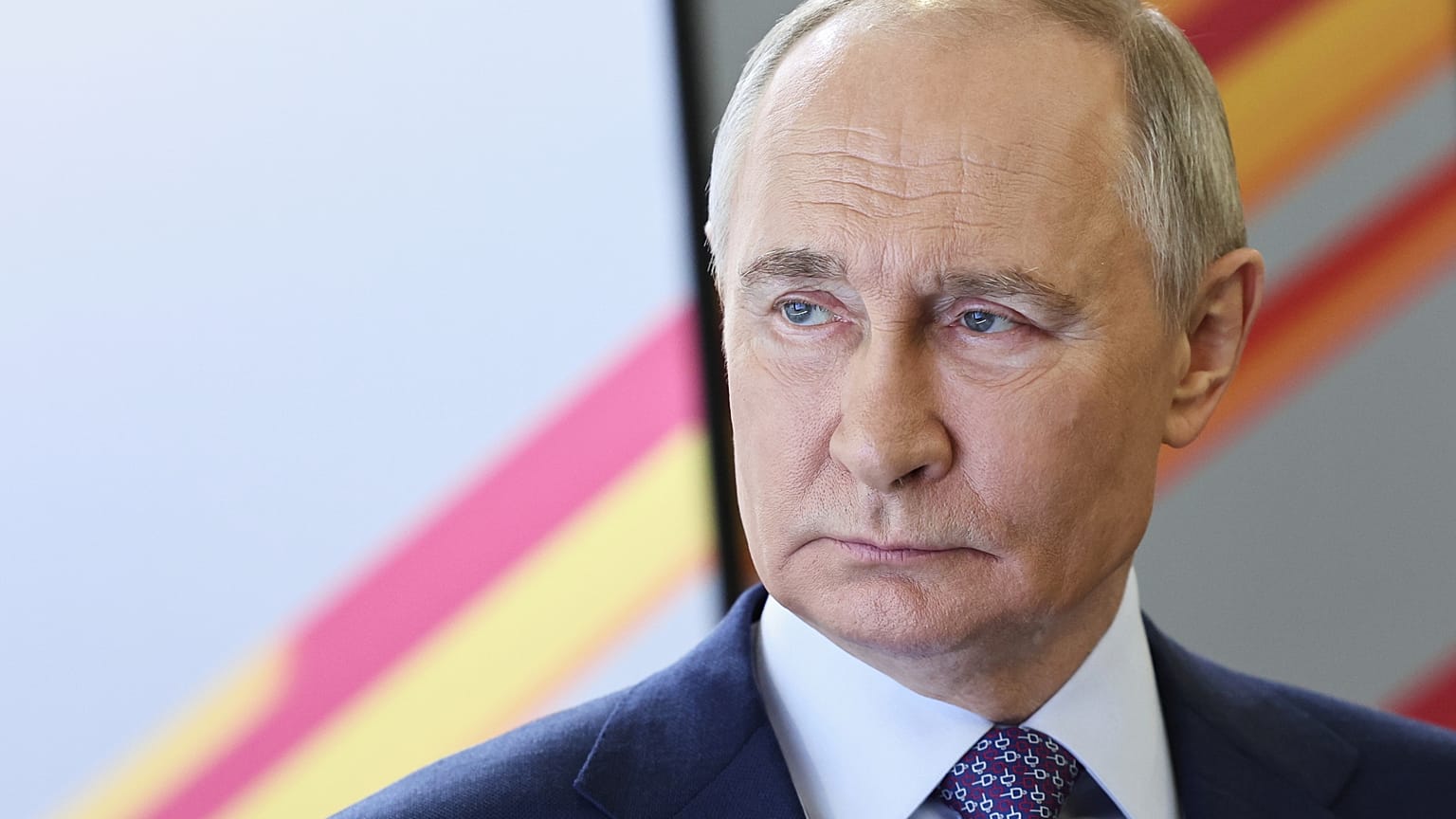
Since then, this rhetoric has only intensified. Direct nuclear threats against a sovereign state and its allies have become a routine feature of the Russian political landscape. Since 2022, Russian state television channels have turned into a nonstop stream of nuclear blackmail. Propagandists ponder which target to choose for a “demonstrative” nuclear strike, discussing it with such a matter-of-fact tone as if they were choosing furniture. Russian military experts discuss the flight times of missiles to London, Berlin, or Warsaw as if they were talking about the weather forecast.
Russian pseudo-intellectuals play a distinct and extremely alarming role in this “renaissance” of nuclear rhetoric — people with advanced academic degrees who legitimize the idea of using nuclear weapons. For example, the well-known scholar and political scientist Sergey Karaganov constantly and directly calls on the Russian leadership to launch a preemptive nuclear strike against Ukraine or European countries in order to “stop the world from sliding toward a global catastrophe” and “break the West’s will.” His writings are not marginal social media posts, but rather publications in leading Russian academic journals that are cited, discussed, and shape the worldview of a segment of the Russian elite. Karaganov is echoed by Alexander Dugin, a well-known philosopher and ideologue who also regularly speaks of nuclear war as a “holy battle” and a “purification” of humanity before its “renewal.” No sane person can take such statements seriously; this is more a matter for specialists in mental health.
The cyclical nature of this rhetoric is also telling. Roughly once every six months to a year, a wave of “stirring up” the nuclear issue is launched in the Russian information space. Propagandists begin to speak in unison about how “red lines” have been crossed, that “Moscow’s patience is not limitless,” that the “nuclear club” is not a metaphor but a very real argument, and so on. Then the wave subsides, as if it had never happened. This rhythm is no accident: it conditions both domestic and international audiences to accept the idea that nuclear war is not an absolute taboo, but rather a “subject for discussion” or “a price that will have to be paid.”
How plausible is the scenario of nuclear escalation?
The most honest answer to this question is: no one knows. No analyst or expert, no intelligence agency in the world, can say with certainty whether Putin or anyone else will dare to cross the line between threat and action. But there are a number of indicators that compel us to view the situation with the utmost concern.
The most famous symbol of this concern is the “Doomsday Clock”—a project launched in 1947 by the scientists who developed the first atomic bomb. The clock does not show the actual time, but rather how close humanity is to a global catastrophe. Midnight symbolizes a nuclear apocalypse. In 2026, the clock’s hands were set to “85 seconds to midnight”—the closest to the fatal threshold in the history of observations. This means that the expert community assesses the situation as critical.
Numerous analytical reports, comments from military experts, and articles in leading global publications directly indicate that the probability of a nuclear strike has shifted from a purely hypothetical scenario to one that is somewhat—or even moderately—likely. This is an absolutely unprecedented shift, the likes of which have not been seen since the 1960s. And it is a very bad trend. After all, the longer nuclear blackmail continues, the more normalized it becomes in the public consciousness. This is where the “Overton window” mechanism comes into play: ideas that were once considered completely unacceptable gradually become part of public discourse, then—acceptable, and eventually—entirely acceptable.
The Russian Federation’s constant statements are doing exactly that: they are expanding the boundaries of what is permissible. What would have drawn unanimous condemnation from the entire world just 10–15 years ago is now being seriously discussed as one of several possible scenarios. This is the most dangerous process of all those currently unfolding.
Expert
Opinions
Political scientist and director of the Institute of World Policy, Yevhen Magda, points out that for Ukraine, the issue of a nuclear threat is far from trivial. Ukraine has already endured the Chernobyl disaster and is now facing nuclear blackmail from Russia.
“For us, this is a real threat, and when Russia speaks publicly about it, it means that this issue is being seriously considered by the Russian political establishment. At the same time, Ukraine proved back in 2022 that even the use of nuclear weapons against it would not mean the end of the fight. But Russia understands very well that the world fears a nuclear catastrophe—as was the case after Chernobyl and after Fukushima—so the Kremlin skillfully exploits this fear. The nuclear threat, unfortunately, is not some trivial matter. It has existed for decades, and Russia skillfully manipulates it.
We, for our part, must find ways to respond to this asymmetrically. That is why we must talk about Chernobyl, about the fact that Ukraine was the first country in the world to voluntarily renounce its nuclear arsenal—at that time, the third most powerful in the world. And that we will defend our independence in the face of any threats, regardless of what weapons are used against us. We must also emphasize that any country that uses nuclear weapons will simply find itself outside the law in the eyes of the entire international community. We must understand that today, nuclear weapons remain largely a means of exerting pressure. But we must not remove this factor from the agenda, and we must do everything to protect the country even from the possible use of weapons of mass destruction by the Russian Federation,” Yevhen Magda asserts.
Political analyst Maksym Honcharenko notes that the risk of nuclear weapons being used is currently at its highest level since the Cuban Missile Crisis in 1962—but this does not mean that the world is on the brink of nuclear war. Since the start of the full-scale invasion, Russia has repeatedly resorted to nuclear rhetoric. However, the expert sees several reasons to rule out such a scenario.
“The use of nuclear weapons would not give Russia a significant strategic advantage. There will be no devastating blow to production: the heavy equipment most dangerous to the enemy comes from the West and is repaired by manufacturers, and local drone production can be ramped up again in a short time. The losses for Russia would be greater and more prolonged. First and foremost, this would be detrimental not only to the West but also to the countries of the Global South, on which Russia’s diplomacy and trade currently depend. In this way, Russia is alienating its last remaining loyal countries, becoming a major uncontrollable crisis for China, and making any response from the West legitimate. Even if that response is non-nuclear, Russia becomes a problem state for everyone. In the absence of a well-established self-sufficient economy, a stable reliance on “resource-based growth,” and the prospect of a trade collapse, the consequences will be worse than those of dozens of nuclear bombs.
Even the use of tactical nuclear weapons will not achieve the desired result. Tasks traditionally handled by artillery or drones will not be entrusted to weapons from the last century, which cause more harm than good. Modern warfare is a “scalpel” war, not a “sledgehammer” one. In 1945, humanity fully realized the consequences of a nuclear strike; all nations know this cost. It is precisely this knowledge that serves as the most important deterrent today. Even when we discuss the world’s greatest crises, we must remember that nuclear weapons are a threat that must never be carried out,” Maxim Goncharenko asserts.

In summary, no one knows when a nuclear strike will occur—or if it will happen at all. We very much hope that it will never happen. May the lessons of Hiroshima and Nagasaki, combined with the experience of the Cold War, prove to be a sufficiently strong deterrent. But it is impossible to deny the risks. They exist—both for Ukraine, which is on the front lines of this global confrontation, and for the entire world.
Because if a nuclear catastrophe were to begin in Ukraine, it would have two horrific consequences for the entire international community. First: it would remove the barrier for all other nuclear powers. If such a strike can be carried out without irreversible consequences, why shouldn’t North Korea, Israel, Pakistan, or anyone else take advantage of the opportunity in their own conflicts? The second consequence: non-nuclear states, realizing that only possession of nuclear weapons guarantees any semblance of security, will rush headlong to build their own arsenals. The nonproliferation regime will cease to exist, and the world will very quickly face a real apocalypse.
The difference between this—entirely plausible, unfortunately—Apocalypse and the one described in the famous Book of Revelation by John the Theologian will lie in one fundamental point. In the biblical text, the catastrophe (the breaking of the seals, the trumpets of the angels, the bowls of wrath, the star Wormwood, etc.) is followed by the Second Coming. After the end of all things, renewal takes place, and the world becomes better than it was before. In the case of a real nuclear war, however, there will be no renewal. Most likely, after that, there will simply be nothing left, except perhaps a radioactive wasteland.
That is precisely why nuclear powers—and especially the Russian Federation—must be very strict and careful with their own rhetoric. The fact that someone has “nuclear clubs” in their arsenal does not give them the right or excuse to constantly wave them in the face of the entire world. These are weapons best left unmentioned, weapons that must never be used. These are weapons whose very existence is a tragic testament to the imperfection of our species. And if humanity hopes for any kind of future, then sooner or later nuclear weapons must be completely eliminated or at least reduced to such a minimal level that they cease to pose an existential threat to the entire planet.


