
Trump administration asks US Supreme Court to allow scholar’s detention — Dawn
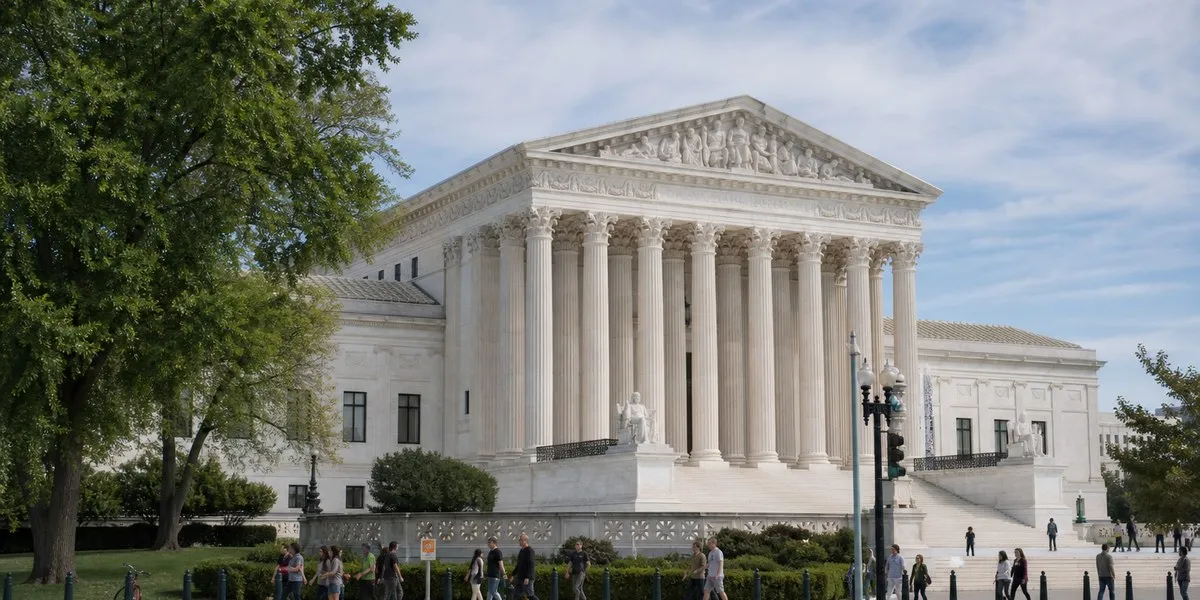
The administration of President Donald Trump has asked the US Supreme Court to overturn a ruling that led to the release from custody of Georgetown University scholar Badar Khan Suri. The Indian citizen was detained by US immigration authorities in March 2025 amid the administration’s campaign to detain and deport foreigners involved in pro-Palestinian activism at universities.
Justice Department’s position
As Dawn reports, the US Department of Justice is asking the justices to determine whether federal immigration law prohibits a lower-court judge from ordering Suri’s release. The scholar argued that his detention violated his constitutional rights to due process and freedom of speech.
After his detention, Suri was transferred to Texas. In May 2025, a district judge ordered his release because the scholar would likely be able to prove that his arrest was a response to speech protected by the US Constitution. The Trump administration insists that the judge had no authority to intervene in the case.
More current news is available on the UA.News Telegram channel Telegram.
Appeals court ruling
In July, a three-judge panel of the US Court of Appeals for the Fourth Circuit, based in Richmond, ruled 2-1 in Suri’s favor. The court said that nothing prevents a judge from considering a complaint about allegedly unconstitutional detention, even if it is connected to deportation proceedings being heard by an immigration court.
US Solicitor General D. John Sauer said in the petition that the ruling was erroneous and could hinder the enforcement of immigration law nationwide, as it would allow detainees to challenge deportation outside immigration courts. Earlier, another appeals court reached the opposite conclusion in the case of pro-Palestinian activist Mahmoud Khalil, who studied at Columbia University. Khalil’s lawyers said they intended to challenge that ruling before the US Supreme Court.
Suri is a postdoctoral fellow at the Alwaleed bin Talal Center for Muslim-Christian Understanding at Georgetown University’s School of Foreign Service.




