
The Trump administration is seeking direct channels of communication with Iran's actual leadership
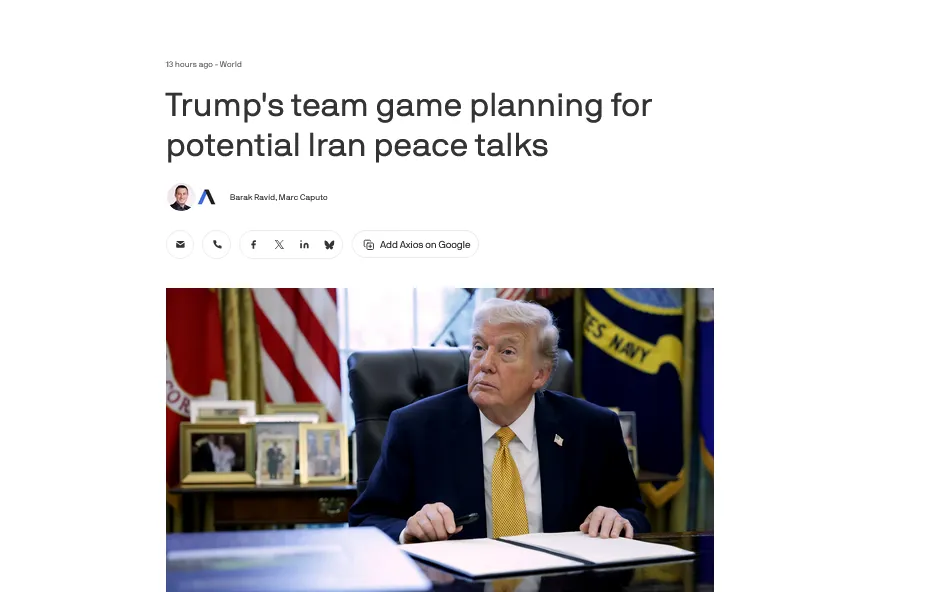
U.S. President Donald Trump’s team is trying to identify key figures within the Iranian government who have the actual authority to conclude agreements, rather than merely acting as intermediaries.
According to Axios on March 22, 2026, Iran’s current Foreign Minister Abbas Araghchi is viewed with skepticism in Washington, being called a “fax machine” who does not make strategic decisions. At the same time, the U.S. is seeking a new venue for negotiations, viewing Qatar as a more effective alternative to Oman.
Key challenges of the negotiation process:
Search for real leaders: The White House seeks to engage directly with those who control Tehran’s policy to avoid delays caused by formal diplomats.
Changing the mediator: The U.S. has lost confidence in Oman, which has traditionally facilitated contacts, and is leaning toward involving Qatar, given its successful mediation experience in the Gaza Strip.
Qatar’s position: Despite Washington’s trust, Doha is currently willing to assist only “behind the scenes” and does not wish to assume the role of official chief mediator.
The situation is complicated by Trump’s recent ultimatums regarding the unblocking of the Strait of Hormuz and the active phase of military operations in the region. The question of exactly whom to engage in dialogue with is becoming critical for the U.S. administration, as it directly affects the possibility of reaching a comprehensive peace agreement and stabilizing global oil markets. While the search for channels of communication continues, the U.S. is maintaining pressure on Tehran, combining threats of military strikes with proposals for economic agreements.
U.S. President Donald Trump issued an ultimatum to Tehran, demanding that the Strait of Hormuz be fully opened within 48 hours.
As a reminder, Tehran began allowing commercial vessels to pass through the Strait of Hormuz only for a fee.
In addition, French President Emmanuel Macron announced the start of consultations with key partners on establishing a UN mechanism to ensure the security of the Strait of Hormuz.
Recall that war in the Middle East threatens global food security, according to Al Jazeera.
Donald Trump stated that after the “demise” of the Iranian regime, control of the Strait of Hormuz should be assumed by American allies. He criticizes Europe for its unwillingness to send ships to escort tankers. The U.S. is prepared to leave patrolling to its allies if Iran falls.
