
The cooling anomaly in the Atlantic has been attributed to a weakening of ocean currents
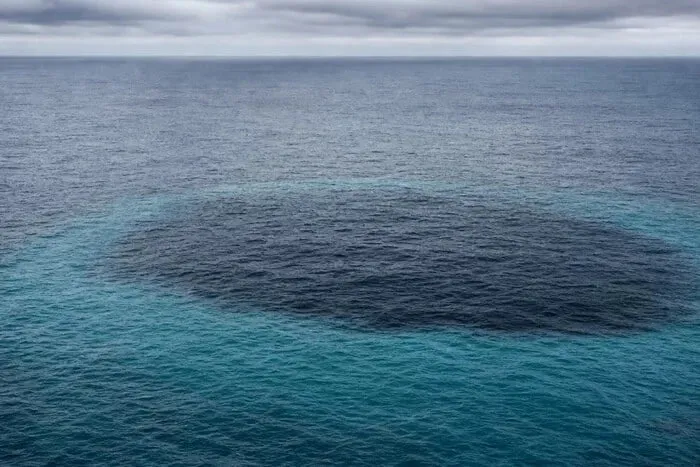
An international team of scientists has identified the causes of the so-called “cold spot” in the North Atlantic, which has long been the subject of research.
According to a new analysis, this part of the ocean continues to cool despite global warming, and this phenomenon may be linked to changes in water circulation and the weakening of one of the planet’s key ocean currents.
Scientists estimate that such processes could affect climate systems and the overall state of the environment.
Causes of the cold spot
This refers to a region south of Greenland where water and air temperatures remain below normal, despite the overall rise in global temperatures.
To determine the causes of this phenomenon, scientists analyzed satellite observations, atmospheric reanalysis data, and information on ocean heat content dating back to 1955.
Prior to the study, there were two main theories regarding the origin of the cold spot. According to the first, the cause could be a reduction in the inflow of warm water masses into the region. The other hypothesis suggested that the ocean in this area simply loses more heat through the surface.
Scientists concluded that the main cause of the cooling is a reduction in heat input due to the weakening of the Atlantic Meridional Overturning Circulation — a large-scale system of ocean currents that transports warm water from the tropics to the northern part of the Atlantic Ocean.
According to the researchers, it is this system that plays a key role in regulating the climate across much of the planet.
Signs of changes in the global climate system
“Given the well-established existence of a circulation tipping point, as well as recent studies that have identified a range of different 'early warning signals' of ocean circulation approaching such a tipping point, compelling evidence of circulation weakening is causing serious concern in society and politics," the study’s authors stated.
The scientists emphasize that the appearance of a cold spot does not signify a local cooling event in and of itself. On the contrary, it may be one of the signals of large-scale changes in the functioning of the global climate system.
What the study’s results showed
The study also found that heat loss from the ocean surface in this region has not increased. This means that the problem lies not in the water cooling faster, but specifically in a reduction in heat input.
The researchers note that the cold zone is located directly in the path of the oceanic “conveyor belt” of water masses that drives circulation. Therefore, a decrease in the volume of warm water flowing in from the tropics naturally leads to a drop in temperature in this sector of the Atlantic.
Scientists also note that previous studies have already documented signs of a slowdown in the Atlantic Meridional Overturning Circulation. The new study has become one of the most compelling pieces of evidence of a direct link between the weakening of this current and the formation of the cold spot.
The Atlantic Meridional Overturning Circulation is considered one of the main mechanisms regulating Earth’s climate. Its significant weakening or cessation could affect weather conditions in Europe and North America, alter precipitation patterns, and cause large-scale climatic consequences in various regions of the world.
This is reported with reference to Science Alert.
Earlier, the U.S. sent a destroyer to the Black Sea and explained the reason for its ships’ presence there.
The U.S. will reinstate the Second Fleet in the Atlantic due to Russia’s aggression.


