
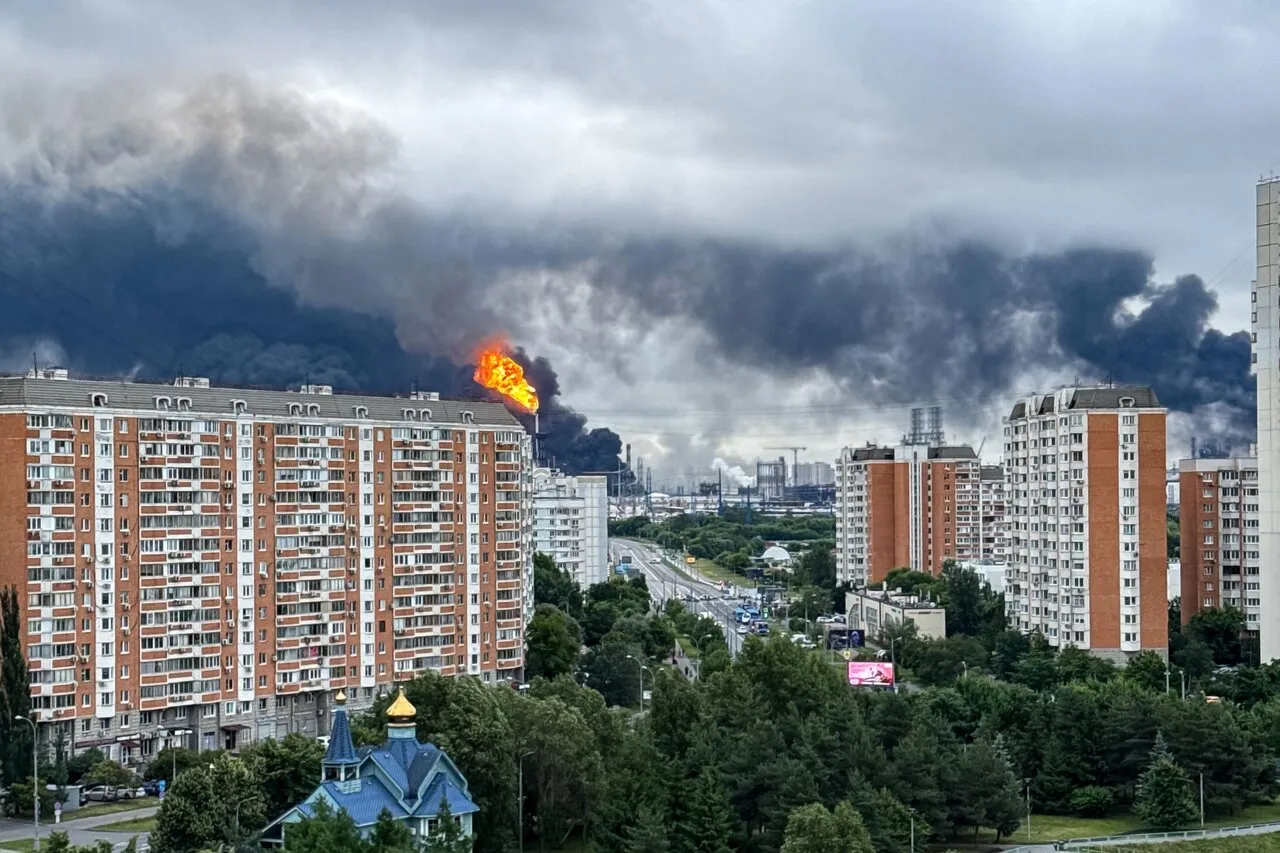
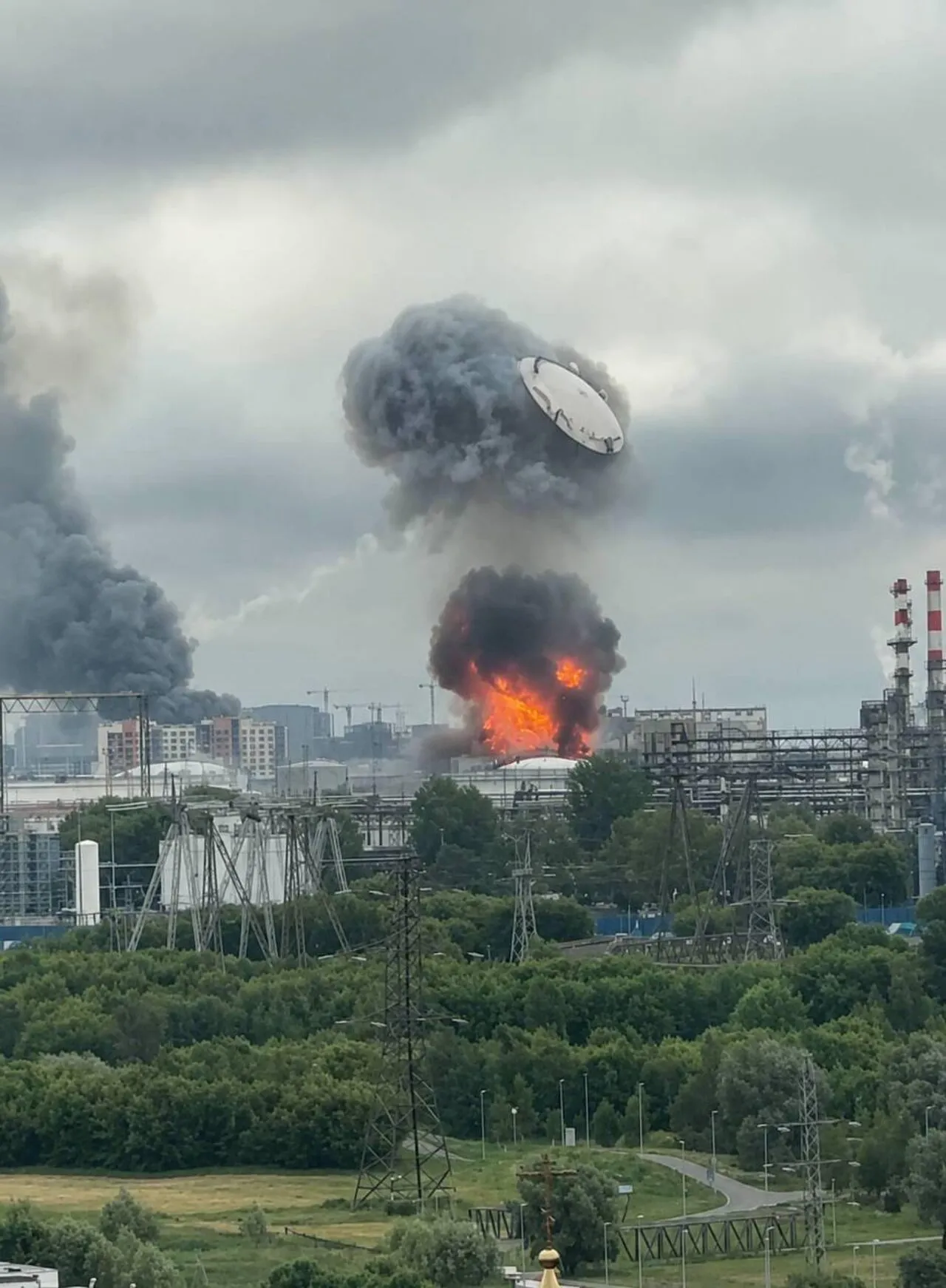
The morning of June 18 for Moscow residents (and especially those in the Kapotnya district) began not with the usual noise of the metropolis, but with the sounds of explosions and black smoke that blanketed the sky above the Moscow Oil Refinery. This was already the second attack in recent days—the previous one took place on June 16—and the third since May 2026.
In effect, Russia’s capital experienced firsthand what Kyiv and countless other Ukrainian cities have been enduring systematically for years now. Ukraine is consistently and methodically implementing a strategy that could be loosely termed the “dismantling of the energy infrastructure.” In this war of attrition, Kyiv has staked its strategy on striking at the “lifeblood” of the Russian economy—the oil sector. Strikes on oil refineries—and specifically on the Moscow Refinery—are not isolated actions but rather components of a single chain of operations designed to inflict pain on the Russian budget, which funds the war.
How is Ukraine destroying the Russian oil industry, and how are Moscow residents themselves reacting to the strikes? UA.News investigated the issue.
A Strategy to Strike at the Heart of the Russian Federation’s Budget
To understand the strategy, one must realize that modern Russia is, after all, not just a small “gas station country” or “Upper Volta with missiles.” It is a state where the entire oil and gas rent accounts for the lion’s share of revenue, which is used to fund the military. Ukraine is well aware of this, which is why it long ago abandoned the concept of striking exclusively at military targets on the front lines. The logic is simple and ruthless: if it is physically impossible to destroy the entire enemy army, one must deprive it of fuel and, consequently, the budget funds needed to pay military salaries and purchase new weapons.
The campaign to destroy the oil industry has long taken on a systematic character. Throughout 2026, dozens (!) of successful strikes were carried out against oil refineries, oil depots, terminals, transshipment ports, and other facilities. Ukrainian drones have become a real nightmare for Russian air defense, as the latter is physically incapable of covering thousands of kilometers of critically important pipelines, tank farms, and distillation columns. A distinctive feature of these attacks is that they target not only fuel storage facilities but also technologically complex components, the destruction of which paralyzes production for weeks and months.
The Moscow refinery in Kapotnya is a prime example of this strategy. It is not just a large plant, but a key supplier of fuel for the entire Russian capital. It provides over 50% of the diesel fuel for Moscow and its airports, and also supplies a significant share of gasoline to the regional market. Shutting down this facility due to a series of strikes and serious fires would almost instantly cause a logistical collapse in central Russia, forcing the government to divert resources from other, often remote, refineries. But Moscow’s problem is that these “other” refineries are also in the crosshairs of the Ukrainian Armed Forces’ drones.
A Chain Reaction: From Tuapse to Moscow and a Drop in Production
To assess the long-term consequences, it is worth looking back to the recent past: to April 2026 and the strikes on the Tuapse refinery. This facility, with an annual capacity of 12 million (!) metric tons, was one of the most important centers not only for refining but also for maritime exports. What happened there went far beyond a local emergency.
The fire, which raged for nearly a week, effectively reduced the infrastructure to a complete wasteland. It was not just individual storage tanks that were damaged, but likely the entire internal system of pipelines, pumping stations, and berthing facilities. This is not the kind of disaster that can be “buried under sand and money” and brought back online in two or three weeks.
Restoring such a facility is a matter of months—and when it comes to replacing imported equipment, even years. This is precisely where the Russian state has fallen into a trap of its own making. Most of Russia’s modern oil refining facilities were built or modernized using Western technology. Now, however, under sanctions, attempts to procure replacements have turned into a spy thriller involving shady schemes, double customs duties, and poor compatibility. It is nearly impossible to quickly repair a complex column or pump while circumventing sanctions.
Ports are unable to handle the volume. Following a series of attacks on oil transshipment terminals, various estimates suggest that approximately 40% of Russia’s maritime export capacity has been put out of commission. This resulted in an unprecedented decline in maritime oil exports in the spring of 2026. Volumes fell to their lowest levels since 2024.
For the enemy’s economy, this means a direct reduction in foreign exchange earnings at precisely the time when the war demands a massive increase in spending. Funds that could have been spent on missiles or ammunition are burning up along with the oil in Kapotna and Tuapse. This creates a cascade effect: unable to export, storage facilities become overfilled; production companies are forced to shut down wells; output drops; and the budget loses out on mineral extraction taxes. As the saying goes, little by little, the stone is worn away.
The situation on Russia’s domestic fuel market deserves special attention. While projecting cheerfulness and optimism on television screens, the Kremlin faces a harsh reality on the ground: gasoline shortages have become commonplace in dozens of regions. This is particularly noticeable in the occupied territories and in Crimea, where logistics chains are even longer and supply priorities are lower. When the refinery in Kapotna catches fire, it creates not only a smoke screen but also a massive gap in the capital’s fuel supply. The authorities are forced to resort to manual intervention, diverting tankers from, say, Siberia, which drives up prices and drains fuel from other regions. This leads to social tension, rising consumer prices, and higher logistics costs.
But it’s worth reiterating: this is not a collapse that will bring down the Russian state tomorrow—unfortunately. It’s more like a slow bleed from a wound.
What Moscow residents think about the strikes
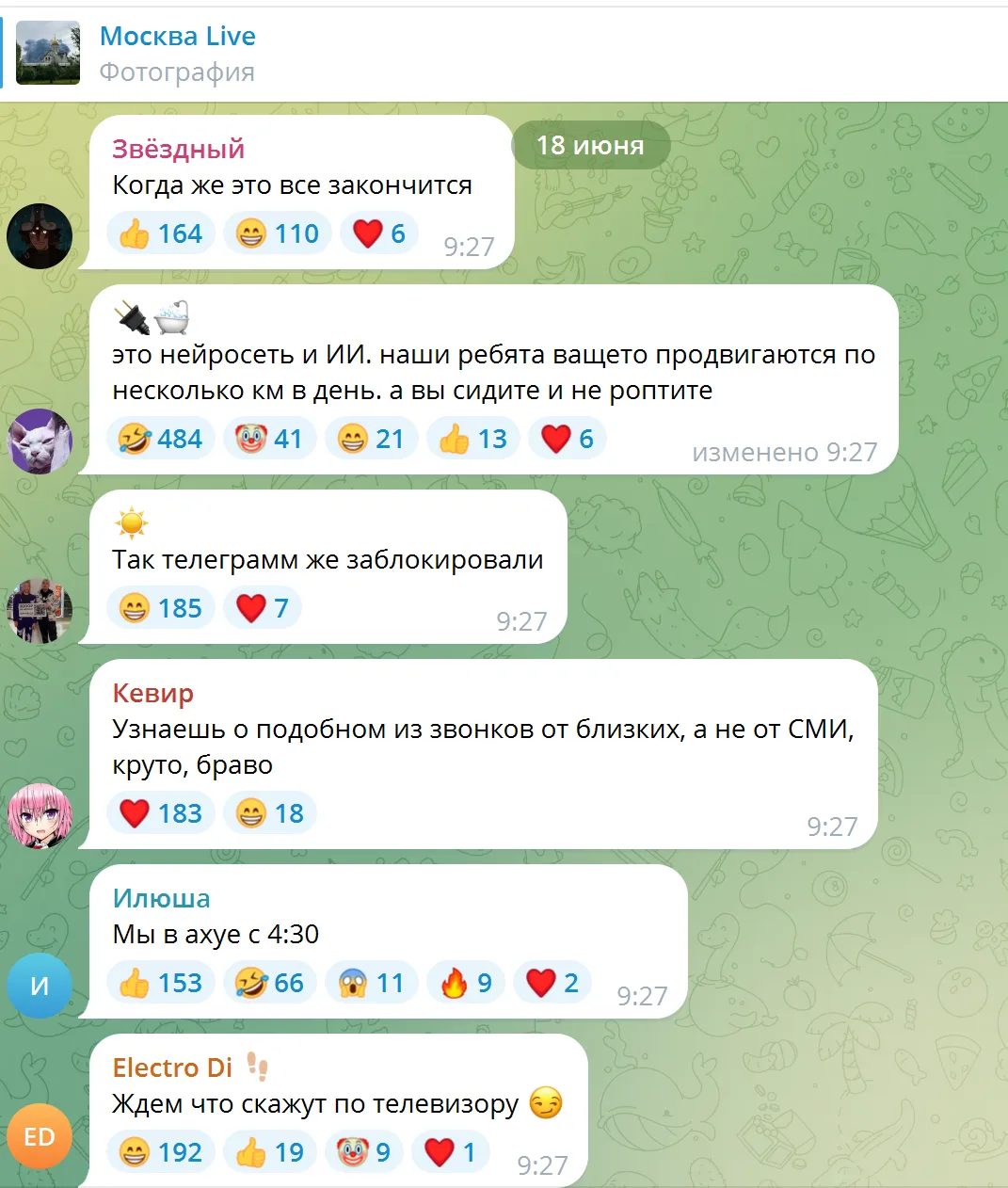
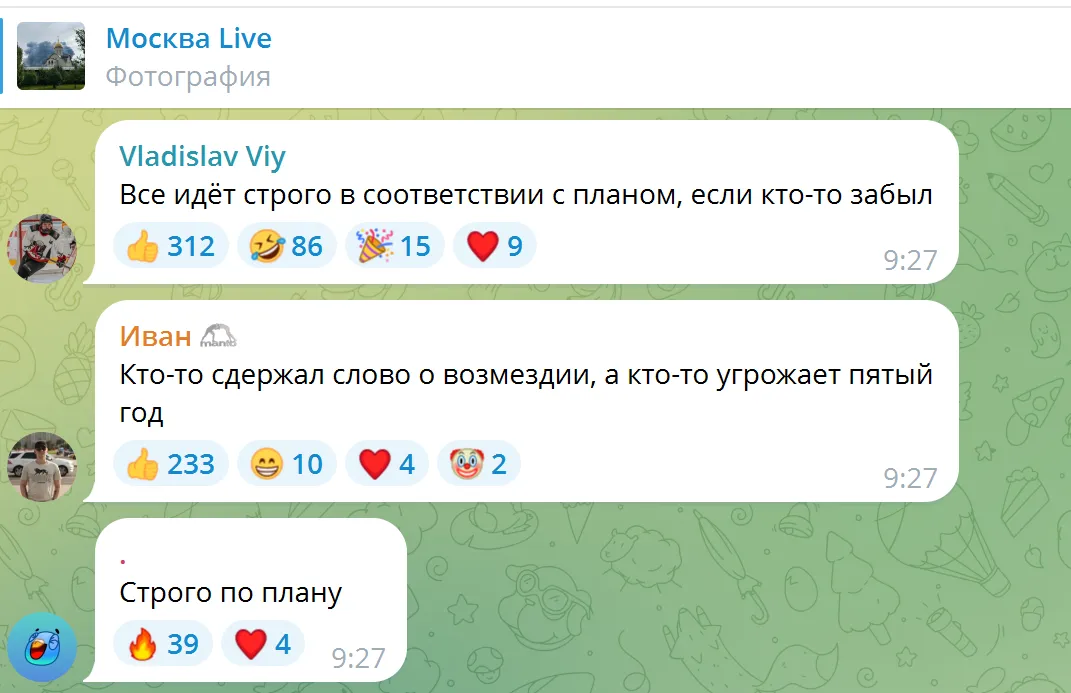
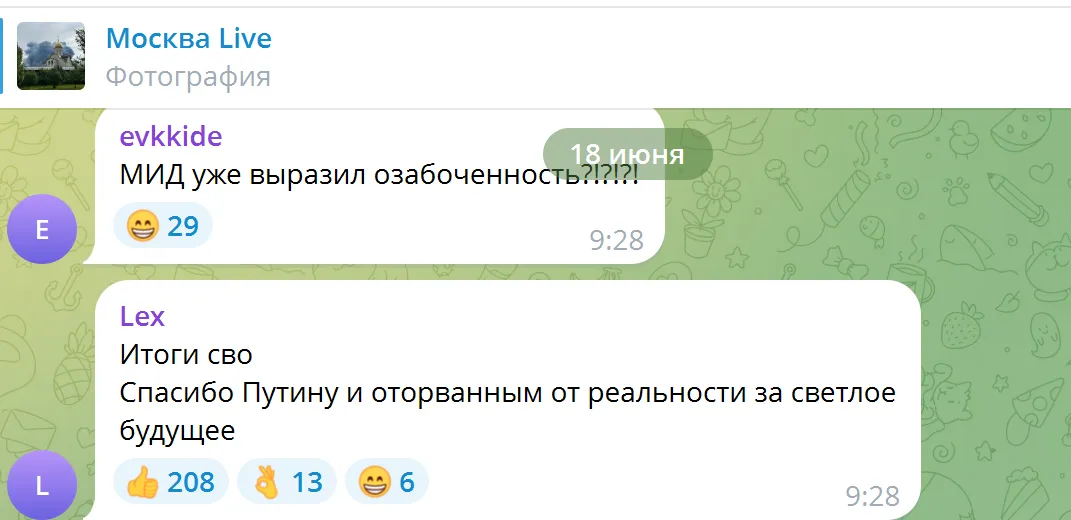
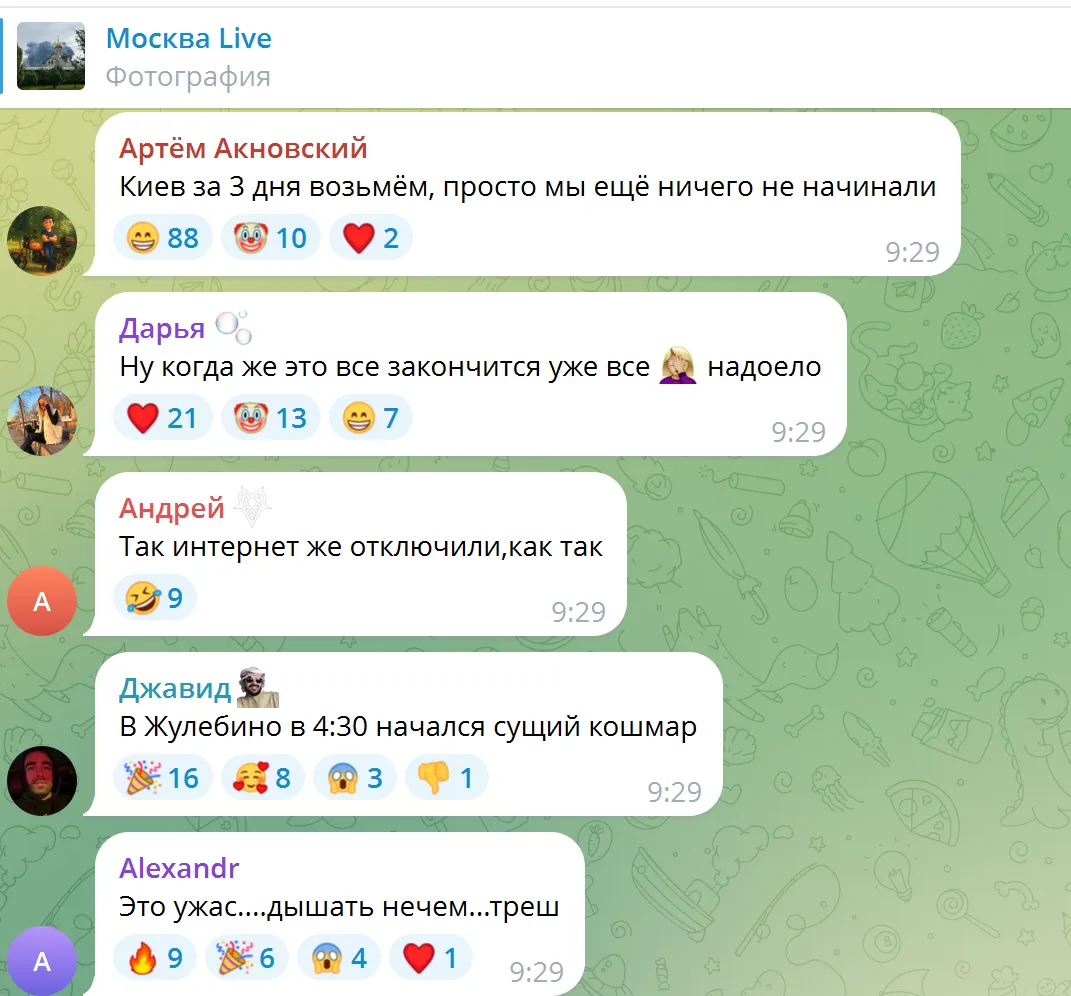
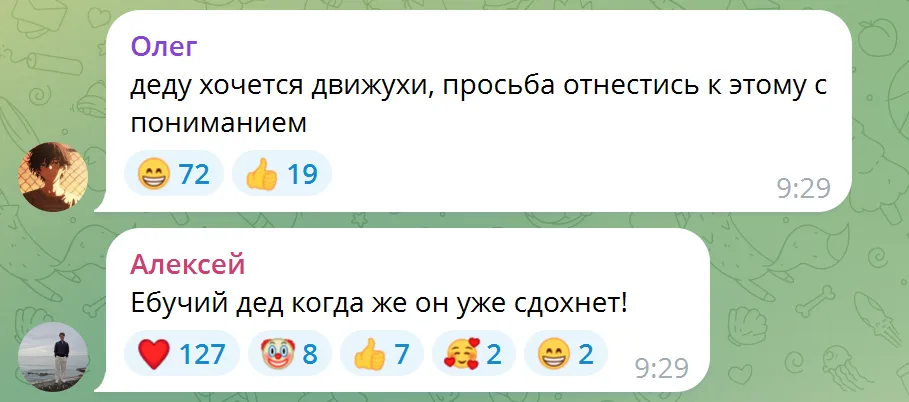
We are all living in an era of information warfare, which is in some ways even more powerful and all-encompassing than the war on the front lines. It is extremely difficult to find out the real opinions of residents of the enemy’s capital—which is home to about 15 million people—since there is no reliable sociological research in Russia during the war. Nevertheless, UA.News conducted its own small investigation, carefully reading literally thousands of comments in Moscow Telegram public channels. As an example, we looked at the “Moscow Live” channel—one of the Russian capital’s largest media outlets, with 1.8 million subscribers.
It’s worth noting once again: the representativeness of such a “sample” in the age of bot farms and AI is highly questionable and certainly does not claim to be reliable. Most people aren’t posting comments at all during this time. A significant portion of the accounts that do comment appear to be fake or bots. Comments from users in Ukraine are also immediately noticeable. Nevertheless, UA.News reviewed dozens of pages—profiles with numerous photos, stories, links to social media, and so on—which, with a high degree of probability, may indicate real people.
According to our assessment, about 80–90% of the comments regarding the situation are strongly negative toward the Russian authorities. People are asking questions like “when will all this end,” mocking the claim that “the special military operation is going according to plan,” saying that “it’s all IPSO and AI—there are no actual strikes,” and cursing “Grandpa” (Putin—ed.) for the “mess” (a well-known quote by Putin about the war—ed.) and wish him to “die soon,” joke about the need to capture Malaya Tokmachka, and say that “drones are being shot down by oil refineries,” etc. There are literally hundreds of such comments.
Also, about 10–20% of the comments are pro-war and anti-Ukrainian. Users are calling on the Kremlin to “fight for real,” to seize Ukraine, to “destroy Kyiv,” to “bomb all the Ukrainians,” to strike European capitals, and so on. However, it’s worth noting that such posts garner literally hundreds of negative reactions in the form of dislikes, clown emojis, or laughing emojis.
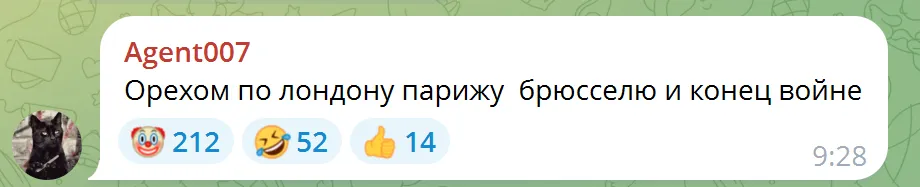
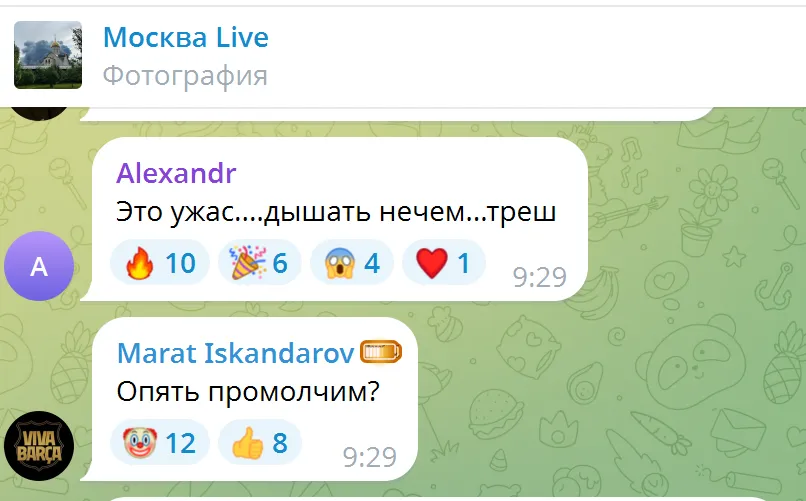
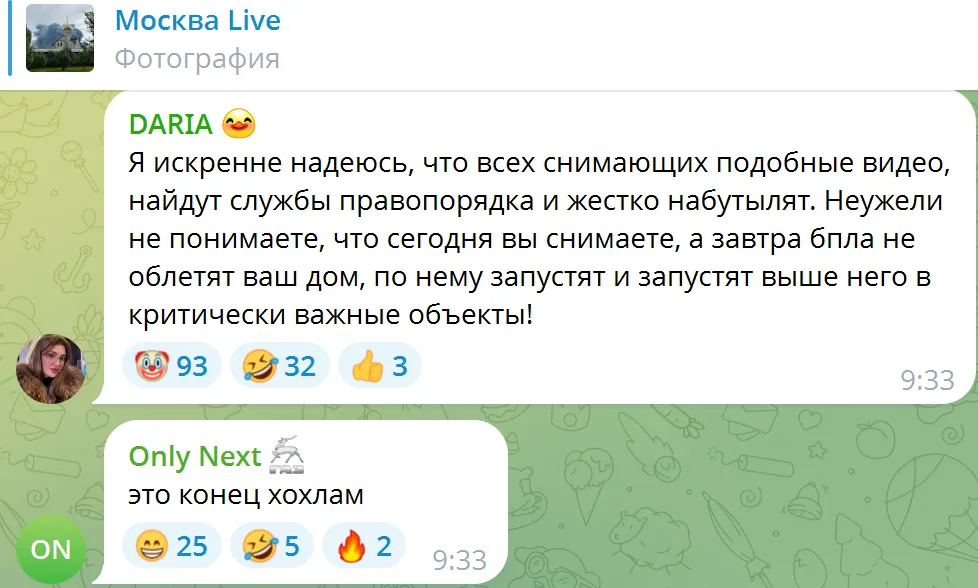
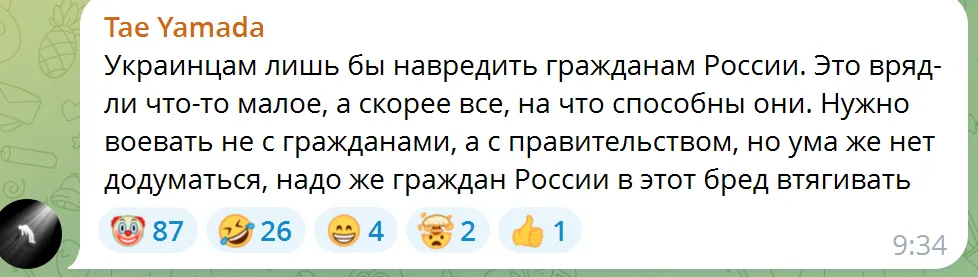
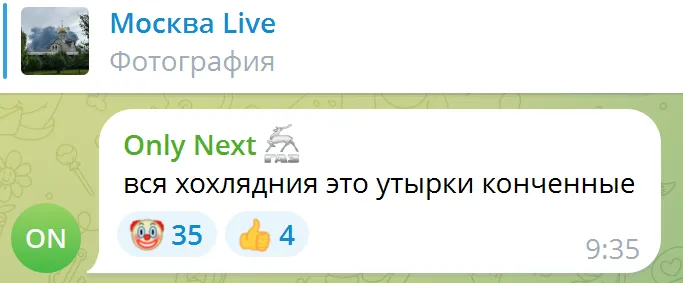
A similar situation exists in several other Moscow-based news pages with a combined audience of over 4 million users. The vast majority of comments are critical of the government and mock Putin and the war. Some of these comments are undoubtedly written by Ukrainians, but Muscovites also leave posts; their accounts contain content from several years ago—for example, Stories from the Moscow City area dating back to 2021 or 2022. In other words, these are most likely real accounts belonging to real people.
In theory, all of this could indicate that residents of the Russian capital fully understand the reasons behind what is happening and who is responsible for it. And in general, this is not surprising: Moscow is a fairly liberal (by Russian standards) metropolis, and it has always been that way. Putin’s and “United Russia’s” approval ratings in Moscow have always been significantly lower than in the regions. It was the residents of Moscow who were the first to take to the streets for the largest protest rallies back in 2011. At one point, Muscovites nearly elected the late Navalny as mayor. And in general, the residents of such a metropolis are predominantly middle- and upper-class people who want to watch videos on YouTube, drink lavender raff in coffee shops, and fly to Europe for the weekend. For the most part, they have absolutely no interest in—and no need for—Putin’s war, the ruins of Donbas, internet restrictions, or other attempts to “get back on our feet.”
However, even if everything written above is true, it still fundamentally changes nothing. Neither Muscovites nor, even less so, other Russians have any legal means to influence the government, change it, or end the war. And large-scale protests on the scale of Ukraine’s 2014 Maidan are not to be expected in Moscow—at least as of now, there is no indication that they are likely to happen. So even if all the outrage expressed in the comments is sincere, all this negativity will still remain just in the comments, with no impact on the actual situation.

In summary, Ukraine’s strategy to destroy Russia’s oil sector is arguably one of the most effective asymmetric moves in this war. Realizing that a quick military victory over a massive nuclear power is impossible, Kyiv is methodically stripping it of its economic foundation. Attacks on oil refineries in Moscow are part of a unified campaign that has already led to a drop in exports to 2024 levels, the disabling of 40% of port capacity, and acute fuel shortages across entire regions. The plant in Kapotna, which just yesterday was supplying fuel to the capital’s airports, is now turning into a pile of scorched metal—and this is happening all across the Russian Federation.
Russia has every chance and every opportunity to put an end to this: all it needs to do is simply halt hostilities and begin genuine peace negotiations. Then, literally hundreds of millions of people will finally be able to breathe a sigh of relief and live relatively peaceful lives, free from daily airstrikes, destruction, death, and the madness of war. However, for now, the Kremlin’s official rhetoric once again calls for “fighting for real” until the “complete destruction of the terrorist regime in Kyiv.” And so, as the great Russian poet Alexander Blok wrote—unfortunately, “peace is but a dream.”


