
Silent drones are changing the rules of war in the Middle East
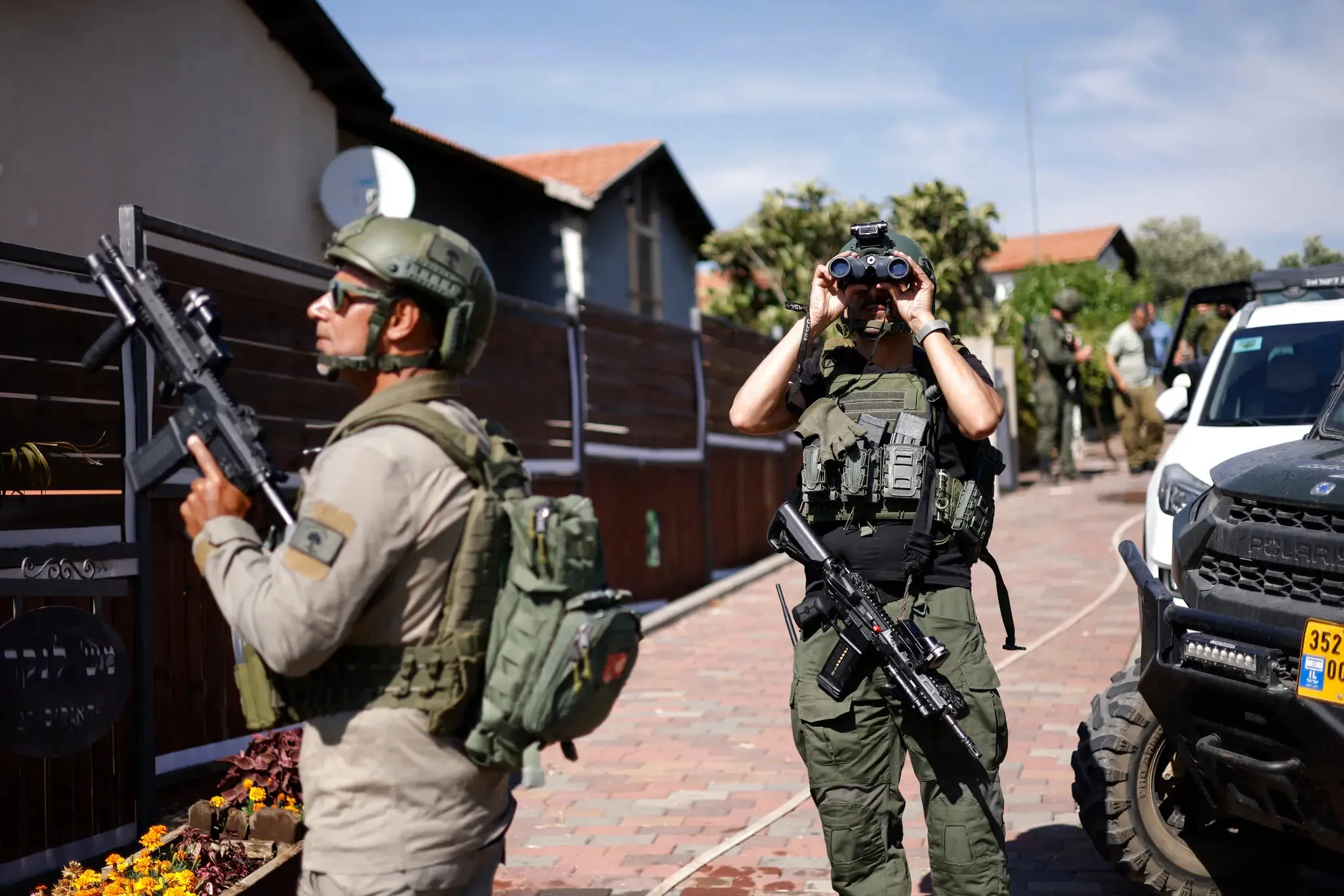
The fiber-optic-controlled drones used by Hezbollah have unexpectedly begun successfully striking Israeli military targets, undermining standard defense measures and forcing the army leadership to urgently seek new solutions. These attacks have already resulted in casualties, and Israeli forces acknowledge that they have encountered a technological challenge for which they were not fully prepared.
The new wave of drone attacks launched by the Iranian-backed group Hezbollah came as an unpleasant surprise to the Israeli army, because these drones operate differently from conventional systems and are nearly immune to electronic jamming. They move via a fiber-optic cable trailing behind the drone, which effectively allows them to be controlled without a radio signal that can be jammed. That is precisely why standard electronic warfare systems, which previously worked well against other drones, are significantly less effective in this case.

According to the Israeli military, such drones have repeatedly struck military equipment and positions, including armored personnel carriers, tanks, and even components of air defense systems. The attacks resulted in military casualties, with some soldiers wounded, forcing army leadership to acknowledge that the threat has become systemic and requires a rapid response. In Israel itself, the situation is described as a “complex technological challenge” that must be addressed in real time.

According to Western media, including The New York Times, warnings about such drones had emerged earlier, but despite this, the army had not yet fully adapted to the new tactics. Former military experts acknowledge that the problem was underestimated, even though it was already known from the experience of the war in Ukraine, where similar technologies are also actively used. One of the Israeli Army’s reserve generals put it bluntly: “The system needed a strong wake-up call.”

It is also emphasized that these drones have become not only a military tool but also a means of psychological pressure. Videos of the attacks, distributed by Hezbollah itself, are appearing online, creating an additional effect of fear among the military and the population. According to representatives of the group, these strikes are intended to demonstrate that even a technologically advanced army can be vulnerable.

Israeli authorities have already announced the creation of special expert groups tasked with finding solutions to counter this new threat. Various options are being discussed—from shooting down drones in mid-air to physically cutting the control cables. At the same time, the military acknowledges that there is little time to adapt, as the attacks occur regularly and are growing in intensity.
Experts also note that this technology could quickly spread to other conflicts, as it is relatively cheap and effective. That is why events on the Israeli-Lebanese front are already being viewed as part of a broader transformation of modern warfare, where drones are becoming one of the main strike tools even against well-defended targets.
As a reminder, amid the escalating situation in the Middle East, the discount on Russian Urals crude oil began to rise for the first time in recent months. However, experts say that high oil prices will not save the Russian economy from a slowdown.
The price of Russian Urals crude at Indian ports jumped to a record $121.65 per barrel.


