
A rocky Scottish island turned out to be a structure built on a wooden platform — BBC
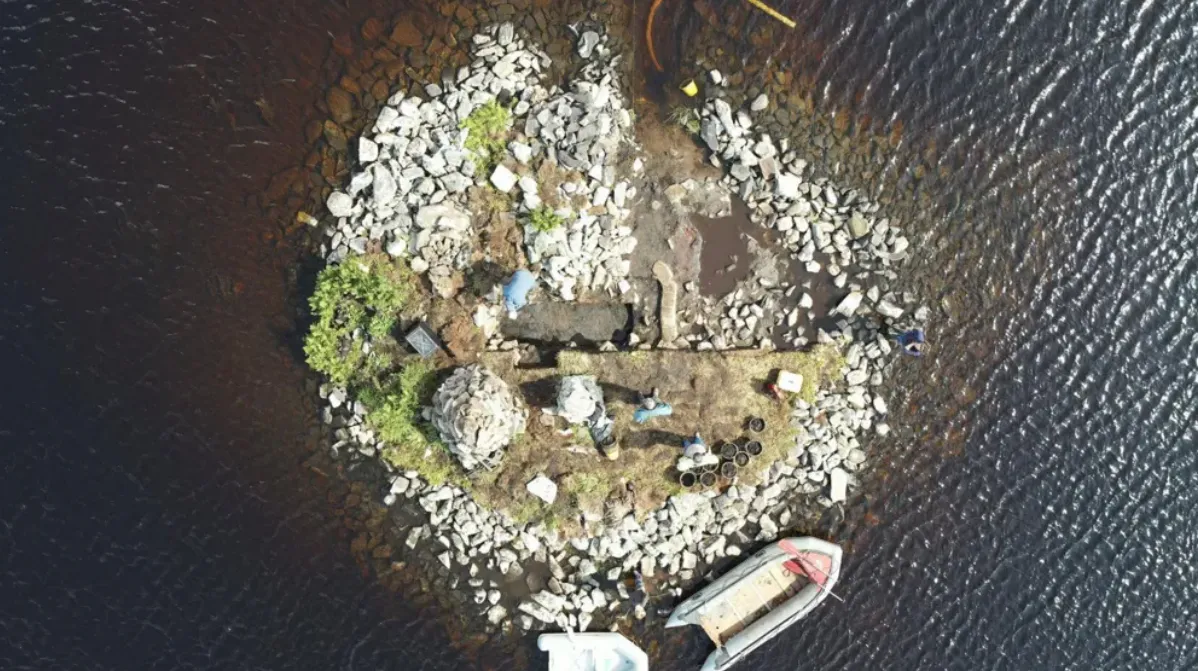
Archaeologists from the University of Southampton have discovered that the ancient artificial island in Loch Borgastyle, Scotland, has an unexpected foundation. Although it looks like a stone structure today, a large wooden structure is hidden beneath its surface.
Research has shown that the island is a Neolithic crannagon—an artificial island created by humans thousands of years ago. During excavations, scientists found a well-preserved wooden platform that effectively supports the entire structure.
According to experts, the island was built between approximately 3500 and 3300 BCE. Initially, it was a circular wooden platform with a diameter of about 23 meters, reinforced with brushwood. Later, during the Bronze Age, new layers of brushwood and stones were added to it, and several centuries later, the structure was rebuilt again.
During their research, archaeologists also discovered hundreds of fragments of Neolithic pottery in the water surrounding the island, which may indicate the special significance of this place for the region’s ancient inhabitants.
In addition, a stone path leads from the shore to the island, which is now submerged.
Scientists note that the exact purpose of such islands remains a mystery. However, the scale of the construction indicates a high level of development and organization among the Neolithic communities that lived in what is now Scotland.
Source: BBC.
Archaeologists in Jerusalem have discovered a giant tunnel of unknown purpose – video
In Italy, during the construction of a highway, workers stumbled upon the remains of an ancient sanctuary dating back to the 5th century BCE. The unique discovery was made near the town of Pons, located about 72 kilometers from Venice. After the artifacts were discovered, large-scale archaeological research began immediately at the site.


