
The U.S. embargo has sent Cuba's economy into a free fall – Bloomberg
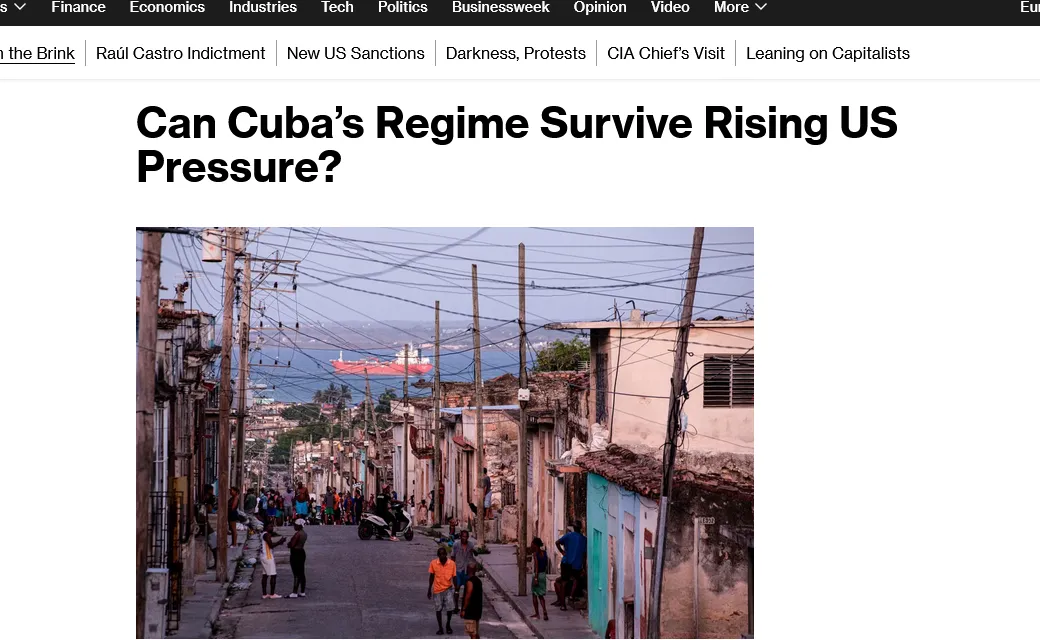
Extreme economic pressure and a strict fuel embargo imposed by the United States have triggered a massive collapse in Cuba, pushing the country’s communist regime to the brink of survival. Despite Havana’s attempts to appease Washington with partial domestic reforms, the White House is increasingly hinting at the possibility of military intervention if there is no complete change of power on the island.
This is reported by the Bloomberg news agency.
The situation escalated critically in early 2026 amid broader geopolitical tensions, particularly following the capture of Venezuelan President Nicolás Maduro by U.S. special forces and the onset of hostilities against Iran. Due to the closure of the Venezuelan supply route and U.S. threats to impose tariffs on any third countries that dare to assist Havana, fuel imports to the island have virtually ceased. Cuba’s Minister of Energy, Vicente de la O Levy, officially acknowledged that the country’s state reserves of fuel oil and diesel have been completely depleted. As a result, the island’s 10 million residents are facing power outages lasting 20–22 hours a day, gasoline is distributed exclusively by ration cards, airlines have been warned that they cannot refuel at airports, and the country’s vital tourism sector has effectively collapsed.
U.S. President Donald Trump and Secretary of State Marco Rubio make no secret of the fact that the goal of “tightening the screws” is to dismantle the 67-year-old communist regime, which Washington views as a dangerous foothold for China, Russia, and Iran in close proximity to Florida. According to journalists, U.S. officials are already conducting behind-the-scenes negotiations with certain representatives of the Cuban elite, notably Raúl Guillermo Rodríguez Castro (the grandson of Raúl Castro, who wields influence over the military-business conglomerate GAESA). In addition, CIA Director John Ratcliffe visited the island for high-level talks due to Washington’s frustration over the lack of concessions from Cuban leaders, who instead publicly declare their readiness to mount armed resistance in the event of external aggression.
In an effort to loosen the noose of sanctions, the Cuban government took steps unprecedented for it: it released some political prisoners, allowed the overseas diaspora to invest in local businesses, and permitted private companies to import fuel independently. However, the White House called these concessions insufficient. Meanwhile, sporadic protests are breaking out on the island (in particular, in the city of Morón, protesters set fire to the Communist Party office), and humanitarian aid from China, Mexico, or Brazil is unable to cover the energy shortage. Bloomberg experts warn that the ultimate collapse of the Cuban government threatens to trigger an uncontrolled surge in migration—since 2020, more than 2.75 million people have already left Cuba, and a new crisis could provoke large-scale destabilization across the entire Caribbean region.
As a reminder, Cuba has restored its power grid following a massive blackout.
Trump also confirmed the U.S. intention to intervene in Cuba.


