
Can Trump’s Diplomacy Turn a Ceasefire into Peace? — An Analysis by Politico
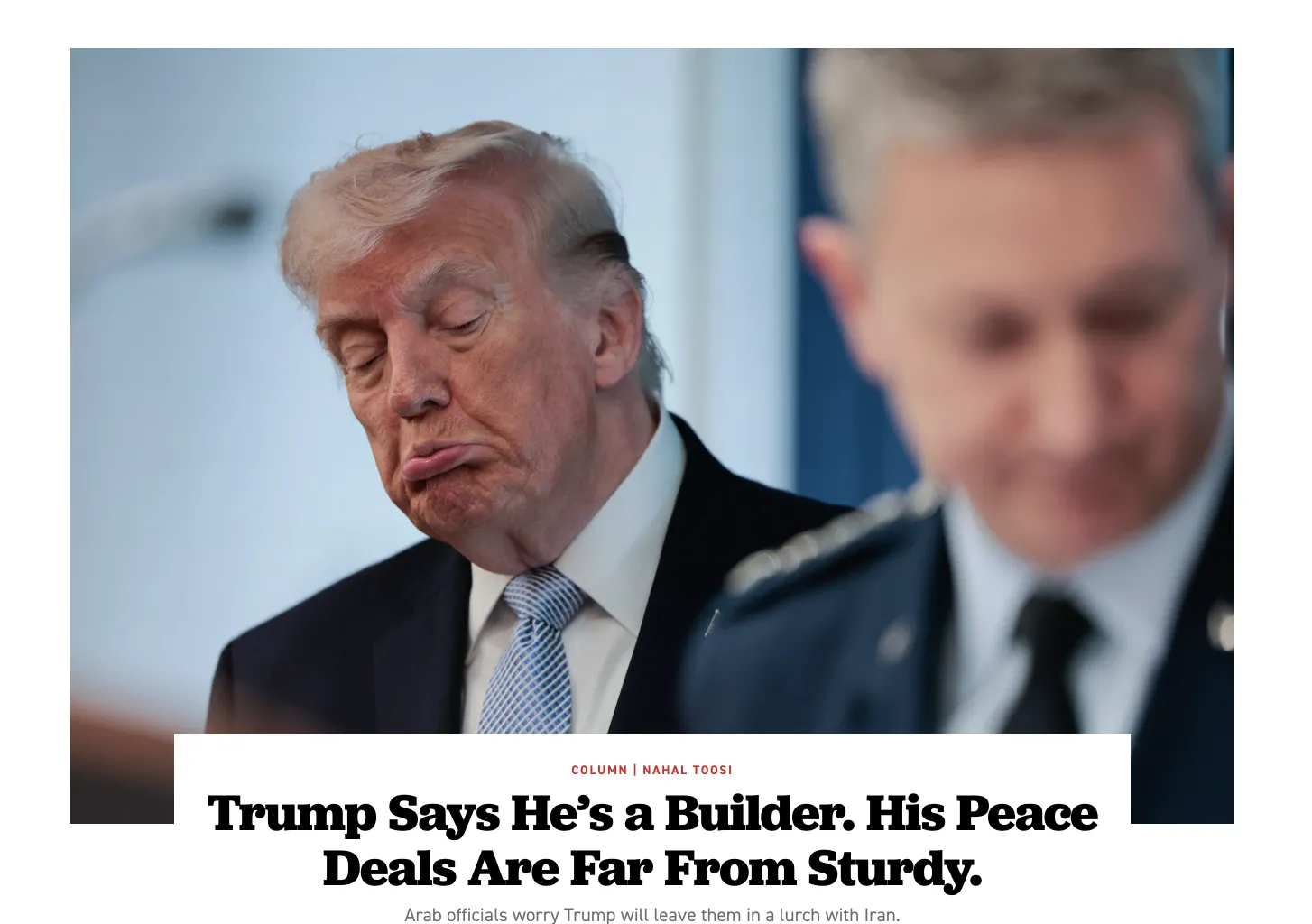
According to analysts, the Donald Trump administration is increasingly adopting an approach of strategic ambiguity on complex international issues. A recent Politico article notes that when assessing the global policy legacy Trump may leave behind at the end of his political cycle, experts point to his penchant for symbolic and unconventional decisions that influence perceptions of diplomatic processes.
The article describes criticism of Trump’s approach to foreign policy, which is compared to a real estate developer’s mindset: a focus on quick “deals” and declaring victories without deeply resolving conflicts. In practice, this looks like temporary truces and half-solutions, while the structural causes of wars remain.
Diplomats and experts are concerned that such a strategy could lead to “frozen” conflicts, particularly regarding Iran, Gaza, and other regions. In their view, the U.S. is losing its expert and bureaucratic capacity due to institutional cuts, staffing shortages at embassies, and a narrow decision-making circle.
Critics also believe that the administration is banking on quick ceasefires rather than long-term agreements that take into account the interests of all parties. This could leave regions in a “gray zone” between war and peace, where new crises periodically flare up.
Examples from past and current conflicts—from the Middle East to other regions—are cited as evidence that so-called “endings of wars” are often merely pauses. According to some diplomats, stable peace requires systematic diplomacy, the involvement of experts, and a long-term negotiating framework—none of which the current approach provides.
Earlier, Trump sought nearly complete control over Greenland during closed-door talks.
Trumppointed to the catastrophic consequences of a mistake in choosing a successor – Fortune.
On May 18, U.S. President Donald Trump published an AI-generated image in which he is allegedly depicted alongside an “alien” and accompanied by “space forces.”


