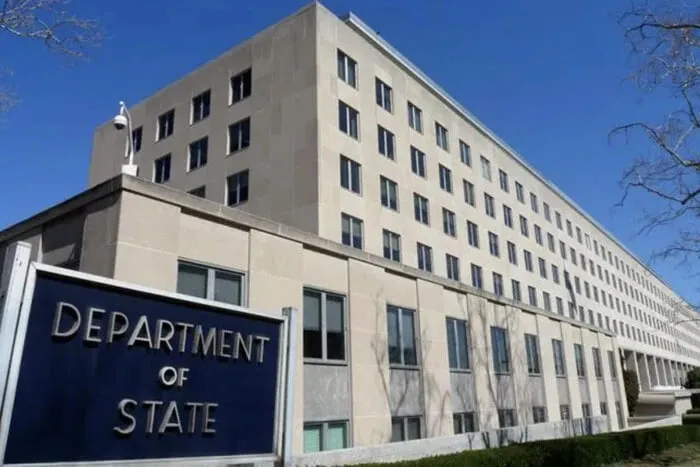
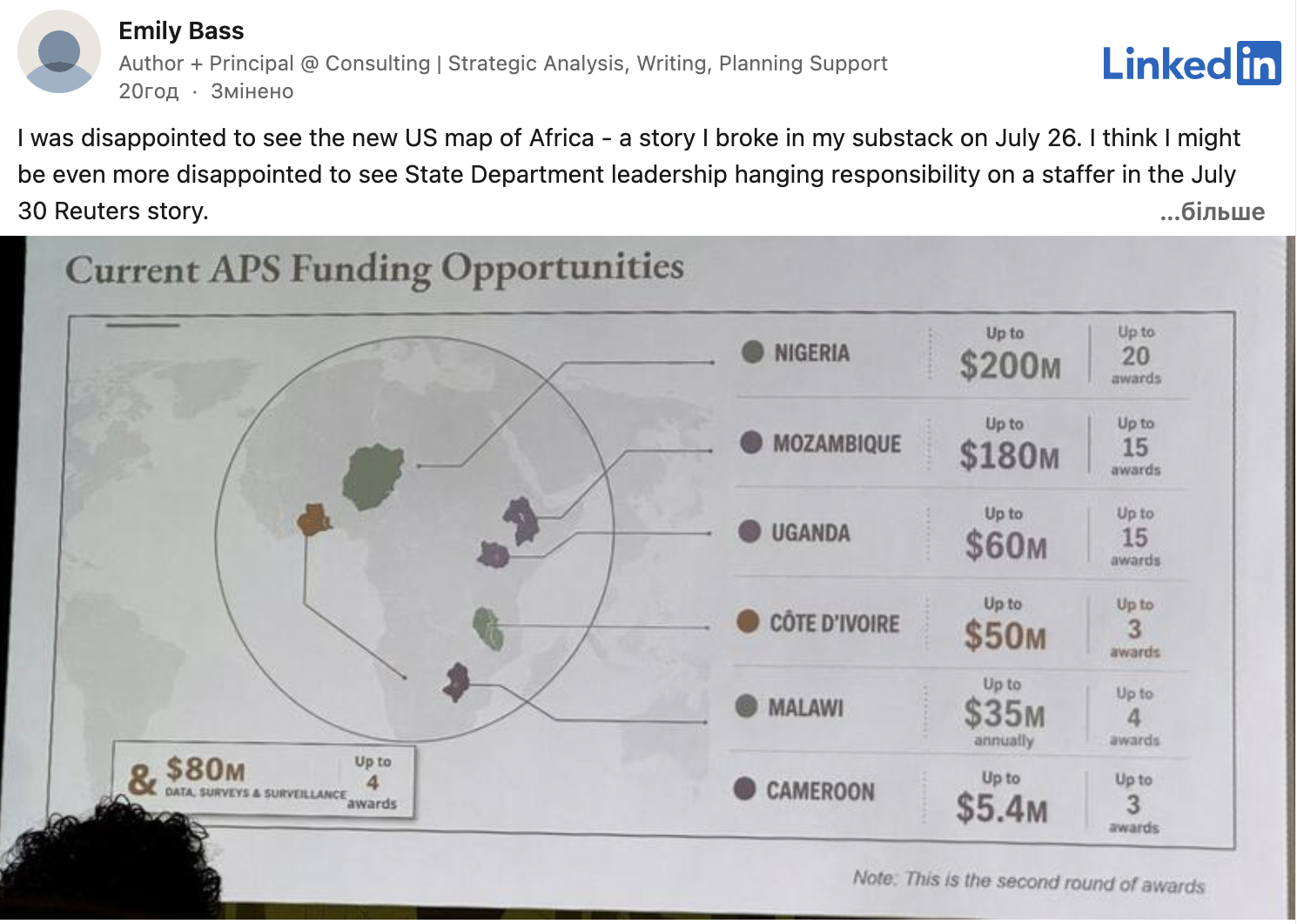
The U.S. State Department found itself in an awkward situation due to an error on a map of Africa that was displayed during the AIDS 2026 international conference in Rio de Janeiro. On the slide, several African countries were shown in the wrong locations.
The error was first noticed by conference attendees, who took screenshots of the presentation and shared them on social media. Specifically, Nigeria was placed in the Sahara region, Mozambique was “moved” to the Horn of Africa, and Côte d’Ivoire ended up on the opposite side of the continent.
The U.S. State Department displayed a slide featuring a map of Africa on which all the countries were labeled incorrectly. Additionally, an OpenAI watermark was spotted on the image, indicating that artificial intelligence tools were used to create it. In particular, the map depicted Nigeria as a landlocked country in the middle of the Sahara, even though it has a coastline on the Gulf of Guinea. Mozambique was moved to the Horn of Africa, and Côte d’Ivoire was placed on the opposite side of the continent.
Screenshots of the presentation were first published on Substack by HIV/AIDS expert Emily Bass. They subsequently went viral, particularly on LinkedIn, where one of the posts garnered nearly 40,000 views.
Matt Petty, an expert on artificial intelligence and geopolitics at the Atlantic Council, also commented on the incident. “Whoever created and approved this slide didn’t know where the countries of Africa are located and didn’t bother to check their work,” he wrote.
The U.S. State Department took responsibility for the error. Officials explained that the map was created by a team member who was rushing to make changes to the presentation just before the event began. Meanwhile, OpenAI told Reuters that it is investigating the circumstances surrounding the appearance of the image bearing the company’s watermark.
Iranian Foreign Minister Abbas Arakchi held telephone conversations with the foreign ministers of Bulgaria and Cyprus, warning them against making their infrastructure available to support U.S. military operations.