
Smoke from fires in Indonesia has blanketed Malaysia and Singapore for over a month — Dawn
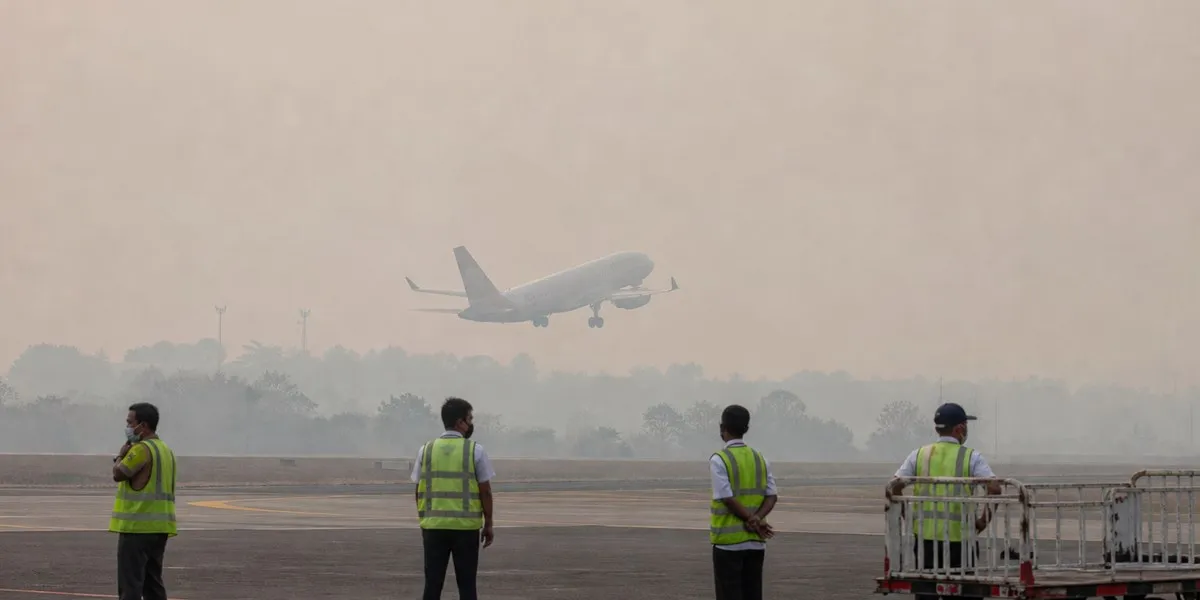
Smoke from forest and land fires in Indonesia has blanketed neighboring Malaysia and Singapore for more than a month. Schools were closed due to pollution, while the number of complaints about respiratory problems rose sharply, Dawn reports.
Obstacles to filing a case with the International Court of Justice
Mohd Hazmi Mohd Rusli, a professor at the Islamic Science University of Malaysia, believes that the main obstacle to a potential appeal by Malaysia or Singapore to the International Court of Justice is the court’s jurisdiction. It can consider a dispute only if both states have agreed to this, including through a special agreement, matching declarations recognizing compulsory jurisdiction, or provisions of an international treaty.
Indonesia, Malaysia and Singapore are not parties to the 1979 Convention on Long-Range Transboundary Air Pollution. Experts also consider it unlikely that Indonesia would voluntarily agree to the jurisdiction of the International Court of Justice in this matter.
ASEAN mechanisms and lawsuits against companies
All three countries are parties to the 2002 ASEAN Agreement on Transboundary Haze Pollution. This legally binding regional treaty is aimed at preventing and monitoring transboundary haze from forest and land fires, as well as mitigating its effects. At the same time, it contains no provision for legal proceedings before the International Court of Justice.
More current news is available on the UA.News Telegram channel Telegram.
According to Rusli, the agreement does not provide a simple mechanism under which one member state could sue another, instead emphasizing national action and regional cooperation. Analysts note that ASEAN’s principles of consensus, sovereignty and non-interference limit diplomatic pressure concerning land management and firefighting within member states.
Azam Hawari, a lawyer at the environmental organization ClientEarth, suggested that citizens of Malaysia or Singapore could try to bring a case in an Indonesian court against companies linked to the fires. To do so, they would need to prove a connection between a company’s activities, the haze that reached their countries, and the damage caused. Hawari is not aware of successful cases of this type.
Singapore’s experience
Singapore adopted the Transboundary Haze Pollution Act in 2014. It was aimed at punishing companies whose activities outside the country caused or contributed to unhealthy haze levels in Singapore. The application of the law depended on cooperation from foreign authorities, including regarding maps of fire hotspots, while conflicting or overlapping land rights complicated the establishment of liability.
Singapore’s investigations into four Indonesian companies over their alleged role in the 2015 transboundary haze, according to the source, remain open.




