
Doctoral student from Tartu studied how audiences perceive theater — ERR News
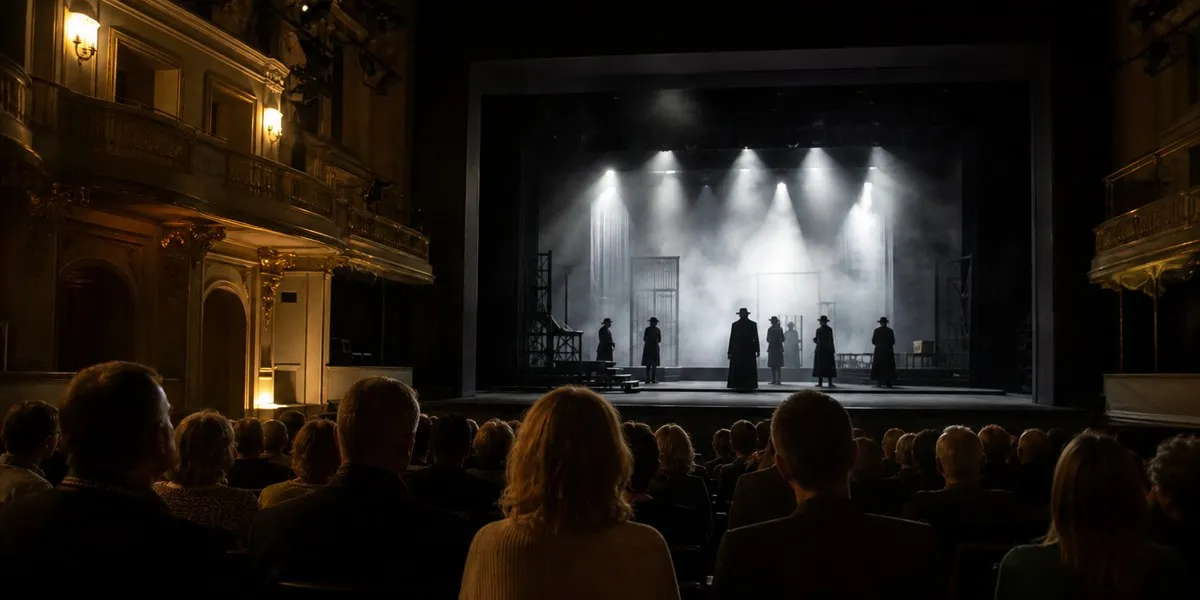
In Estonia, University of Tartu doctoral student Merilin Jürjo studied the psychological processes that take place in audiences during a theater performance. In her dissertation, she examined why some productions resonate with the public while others do not, ERR News reports.
The viewer's personal experience
Jürjo noted that previous theater studies often viewed the audience as a single group, without focusing on the individual person. Her model describes the process of perceiving a performance, from the formation of expectations to the cognitive and emotional interpretation of what is seen and the creation of meaning.
According to the researcher, a person comes to the theater with their own experiences, views, and beliefs, which influence their perception of the stage action. This forms the so-called horizon of expectations — an idea of what should happen on stage. If what is seen does not meet these expectations, the viewer may experience cognitive dissonance. Jürjo considers such psychological discomfort an opportunity to rethink one's own beliefs or defend them.
Theater does not replace therapy
The researcher emphasized that theater differs from other art forms through the shared time and space between actors and viewers. As an example, she cited the Vanemuine theater production “The Beauty Queen of Leenane,” in which hot oil is poured onto an actor's hand on stage. According to her, even if a viewer realizes that this is a theatrical device, mechanisms associated with mirror neurons can trigger emotional empathy and a bodily reaction, as if the person were experiencing the pain themselves.
More current news is available on the UA.News Telegram channel Telegram.
At the same time, Jürjo stressed that going to the theater is not therapy and does not solve mental health problems. However, a performance can be a safe space for reflecting on difficult topics. Using the Estonian Drama Theatre production “Prima Facie,” which is devoted to a rape case and the subsequent trial, as an example, she noted that the development of the stage story can show that a person's life does not end with a traumatic event.
Viewing characters from a certain distance can also help a person treat themselves with greater empathy. In Jürjo's view, the model of performance reception may be useful to directors and playwrights when working with sensitive topics, particularly for assessing how a production may be perceived by the most vulnerable viewers.
The supervisors of Jürjo's dissertation, “A Psychological Model of Theater Performance Reception,” were University of Tartu professor of theater studies Anneli Saro and school psychology lecturer Astra Schultz. The official opponent was Stockholm University professor emeritus Willmar Sauter.




