
The Danube has reached a record low water level and turned into a network of sandbars
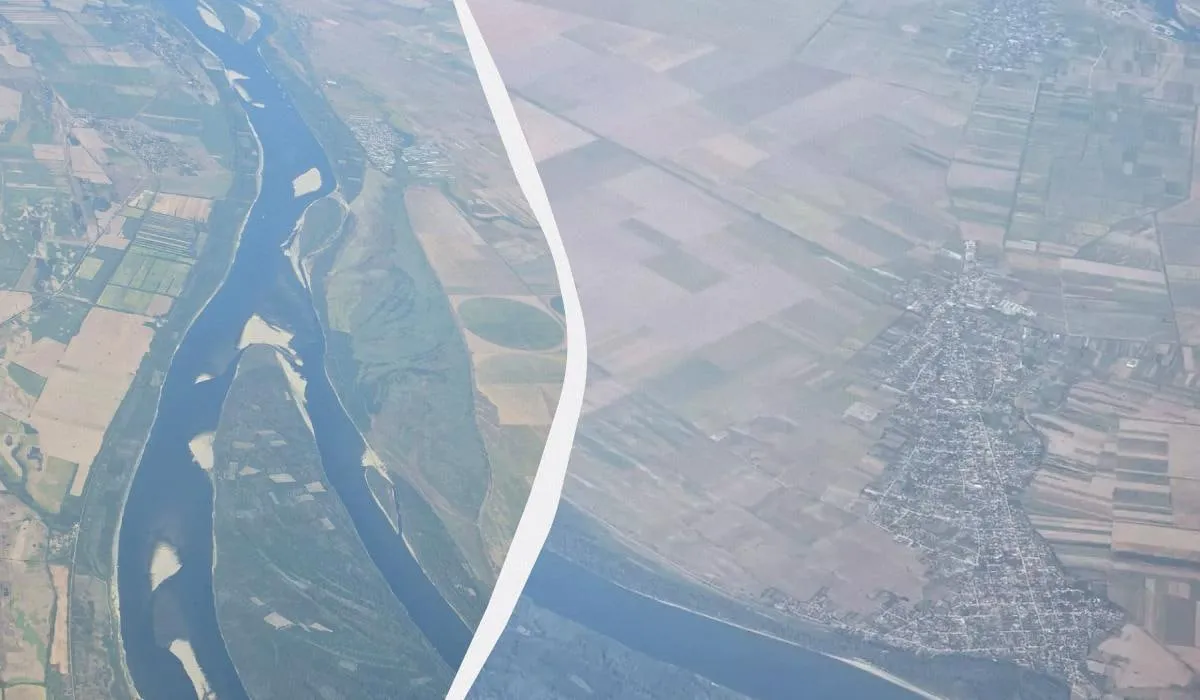
This year, the Danube is experiencing one of the most severe periods of low water levels in recent decades. Due to a prolonged drought, the river’s water level has dropped significantly, exposing large sandy areas.
New aerial images show numerous sandbars and narrow channels of water that now separate the Romanian and Bulgarian shores.
The photographs were taken on Monday, August 17, from a passenger plane at an altitude of 8,000 to 10,000 meters in the Teleorman County area. Due to low water levels, large sandy areas have been exposed—a characteristic sign of low-water periods on the Danube.
According to the latest data, on August 16–17, the Danube’s flow rate at its entry into Romania dropped even further, reaching 1,350 cubic meters per second. This is significantly lower than the long-term August average of 3,900 cubic meters per second.
According to forecasts, the flow rate may drop even further in the coming days—to 1,300 cubic meters per second.
This year, the Danube has experienced one of the most severe periods of low water levels in recent decades. A prolonged heat wave and drought in Central Europe have led to a sharp drop in the river’s water level. An additional factor has been the reduction in water inflow from the Alps: due to global warming, snow and ice reserves—which previously partially compensated for the lack of precipitation—are shrinking.
In some areas, ships that had sunk decades ago—including vessels from World War II—have resurfaced. The low flow has also created problems for the energy sector.
Libertatea reports on this.
The Danube has become so shallow that shipwreck debris has emerged from the water.
As a reminder, the Cabinet of Ministers allocated nearly 50 million hryvnias to protect Izmail from flooding.
Drones attacked the port of Izmail; air defense systems shot down most of the targets.
Ukraine is strengthening its defense system against Russian attacks amid massive strikes on various regions.


