
Israel Democracy Institute experts call for stronger political education for schoolchildren
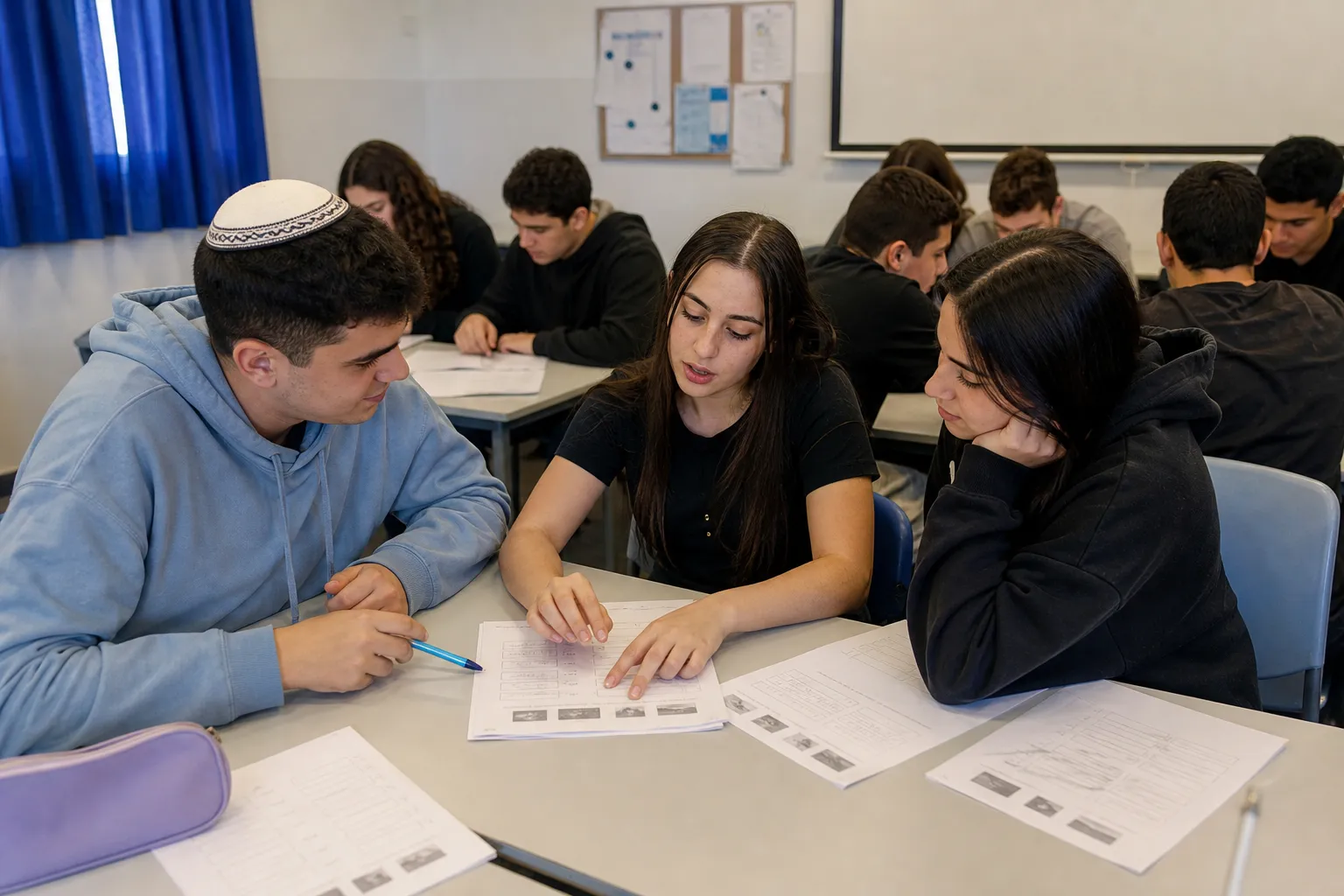
Meital Baron and Dafna Kahana-Dolev, experts at the Israel Democracy Institute, called for electoral education in Israeli schools to be supplemented with practices that would help students independently and reasonably assess political proposals. They write about this in an op-ed for the Jerusalem Post.
The authors noted that students are offered the Ministry of Education questionnaire “Who Should I Vote For?”, available via a QR code. It makes it possible to identify the qualities that schoolchildren expect from a party and a member of the Knesset. At the same time, according to the experts, the material offers almost no explanation of how to compare one’s own priorities with party platforms, verify campaign promises, or assess the reliability of information.
Survey on discussions in schools
According to a July 2026 survey by the Israel Democracy Institute, 27% of adult Israelis believed that schools should avoid topics related to elections. Another 34% supported teaching only the formal voting procedure, while 33% supported open discussions of party positions on key issues.
Israel’s Ministry of Education encourages mock elections, discussions of civic participation, and the significance of voting. However, Baron and Kahana-Dolev believe that these activities focus mainly on the electoral procedure rather than on developing political judgment skills.
More current news is available on the UA.News Telegram channel Telegram.
Meetings with party representatives
Party campaigning is prohibited in schools; however, students may be introduced to different positions, including during panels involving representatives of political parties. In the July survey, 55% of secular Israelis supported such panels. Representatives of other religious groups — traditional, national-religious, and Haredi — mostly opposed them; among Haredim, this figure reached 82%.
The authors stress that the educational value of such discussions depends on the breadth of views represented and students’ ability to compare what they hear. They also point out that the topics recommended by the ministry — the economy, security, law, welfare, and Israel as a “Jewish and democratic state” — are formulated too broadly and do not cover some specific controversial issues.
In the experts’ view, schoolchildren need regular work with real sources, party proposals, and evidence. Students should learn to verify claims, analyze the performance of politicians while in office, fairly present the opposing position, and revise their own conclusions in accordance with the facts. Baron and Kahana-Dolev also note that many teachers lack the training and institutional support needed to conduct controversial but impartial political discussions in classrooms.


