
Taiwan’s opposition parties clash over Zhubei mayoral election
In Taiwan, the opposition Kuomintang and Taiwan People’s Party have failed to agree on a joint candidate in the election for mayor of Zhubei, the largest city in Hsinchu County. Both political forces have registered their own contenders, and the dispute could complicate their cooperation in the local elections in November and in the 2028 elections.
The Kuomintang nominated Hsinchu County council member Wu Hsu-chih. The Taiwan People’s Party candidate is former Hsinchu City deputy mayor Chiu Chen-yuan, who registered to run and said he would not withdraw his candidacy. This was reported by the South China Morning Post.
Dispute over the agreement
Taiwan People’s Party chairman Huang Kuo-chang claims that the parties had a long-standing verbal understanding: his political force would not participate in the Hsinchu County magistrate election and would support Kuomintang candidate Hsu Hsin-ying, while nominating a candidate for mayor of Zhubei. He acknowledged that there was no written agreement, but stressed that the arrangement had been repeatedly confirmed.
Huang accused the Kuomintang of failing to fulfill its commitments after party leader Cheng Li-wun said she could not resolve the dispute. “Burning down an entire forest for the sake of one tree — honestly, I still cannot understand why this happened,” he said.
More current news is available on the UA.News Telegram channel Telegram.
The Kuomintang insists on a different approach: cooperation should involve selecting the strongest candidate, including based on polling results, rather than automatically withdrawing from an election. In June, the party held primaries, won by Wu Hsu-chih. Hsu Hsin-ying’s office denied breaking any promises, saying it remained committed to jointly nominating a candidate, but did not confirm an agreement to hand Zhubei to the Taiwan People’s Party.
An important city for both parties
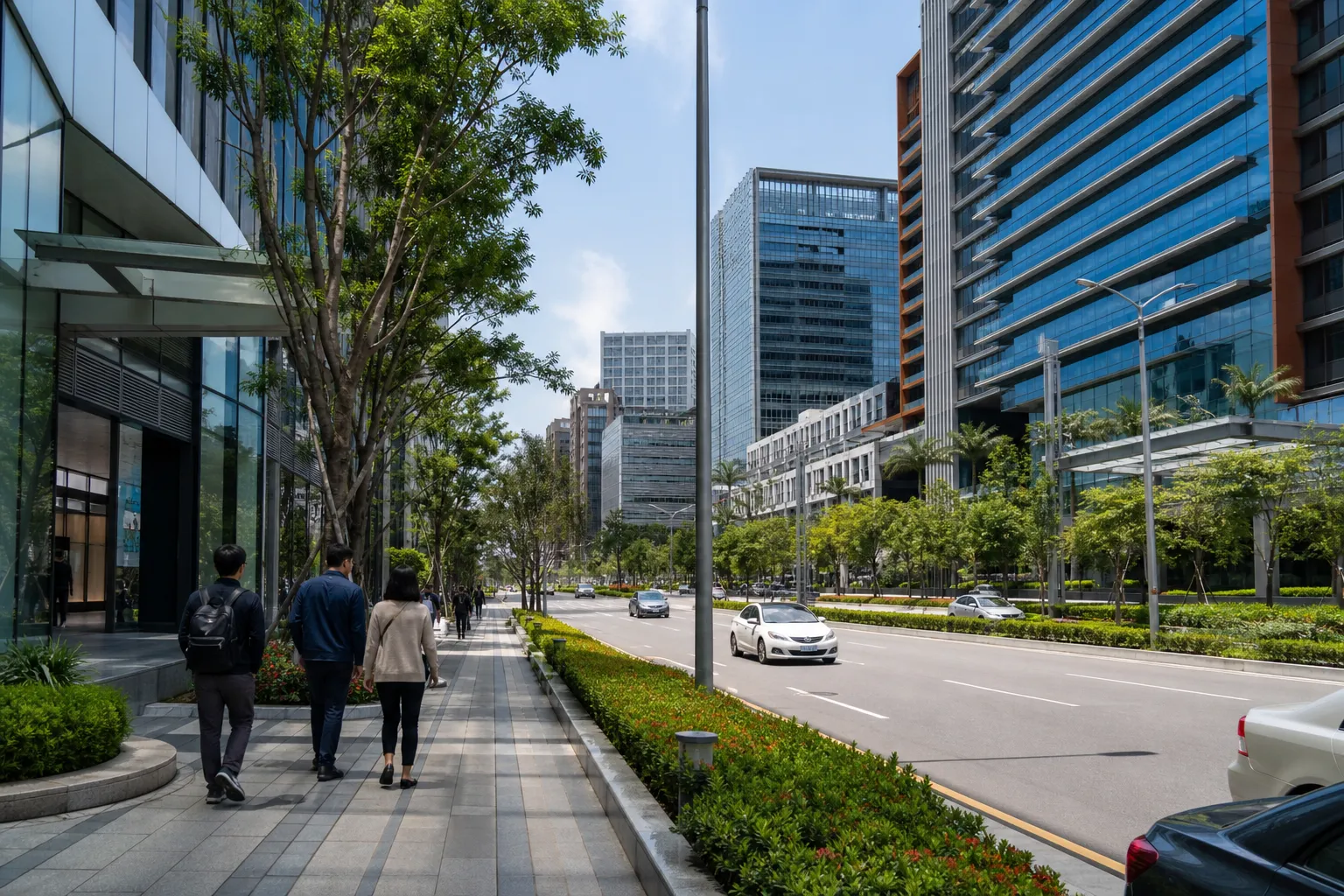
Zhubei has more than 220,000 residents, accounting for nearly 40% of Hsinchu County’s population. The city is developing thanks to Hsinchu Science Park, which is home to semiconductor, technology, biomedical and artificial intelligence enterprises. The city’s younger population and large number of technology-sector workers make it important for political forces outside the traditional rivalry between the Kuomintang and the ruling Democratic Progressive Party.
In Taiwan’s 2024 top-leader election, Taiwan People’s Party founder Ko Wen-je received more than 38% of the vote in Zhubei. In the parliamentary party-list vote, his party received 32.6% there — slightly more than the Kuomintang’s 31.9%.
Soochow University political scientist Chang Yuan-hsiang warned that even a minor split could trigger a “butterfly effect” and undermine the trust the opposition needs to jointly challenge the ruling Democratic Progressive Party in the 2028 election. According to him, Ko will be unable to run because of the corruption case against him, while Huang currently has no competitive standing in the polls.


