
German Ambassador to Russia Speaks Out on Putin's Manipulation – Bild
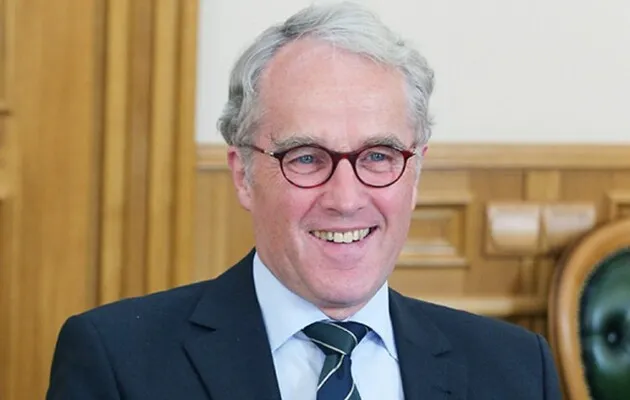
Rüdiger von Fritsch, the former German ambassador to Moscow, shared his observations on Russian President Vladimir Putin’s negotiating style. According to him, during negotiations, Putin employs a range of psychological tactics, including ostentatious politeness and attempts to shift blame onto the other side. The diplomat emphasizes that it is important not to succumb to “flattery” tactics and to avoid accepting imposed guilt.
This was discussed in a Bild podcast.
Von Fritsch served as ambassador in Moscow for five years during the most intense period—from the start of the annexation of Crimea until 2019. During this time, he repeatedly accompanied Chancellor Angela Merkel and other German politicians in negotiations with Putin and gained a deep understanding of his tactics.
The first tactic is a classic scheme from American detective stories. The role of the “bad cop” was usually played by Russian Foreign Minister Sergey Lavrov: he skillfully employed what von Fritsch calls “inversion of guilt.” The mechanism is simple: Russia does something unacceptable—and immediately points the finger at the West.
“When I’ve done something wrong, I convince you that you’re to blame. The CIA organized the coup on Maidan. NATO expanded—so now we’re forced to defend ourselves,” the diplomat explains the logic behind this tactic. If the negotiator isn’t prepared for such a twist, they quickly start to feel guilty—and stop pressing the issue.
After Lavrov, Putin would enter the room—and the atmosphere would change dramatically. The president would appear affable, relaxed, almost friendly. But that was precisely the trap.
“He appears extremely reserved and controlled—and that’s exactly how he is. But beneath this façade lies hidden aggression that breaks through at a certain moment. He suddenly draws a dagger and strikes,” von Fritsch recounts.
He describes one such moment in detail. In 2015, during a meeting with a leading German politician, the conversation turned to barrel bombs—a primitive but extremely brutal weapon that the Assad regime was using against the civilian population of Syria. The guest criticized Russia’s involvement in the war. Putin listened—and laughed. “Poor Assad—he doesn’t even have proper bombs,” he said. Von Fritsch comments briefly: “That’s the full extent of this man’s cynicism.”
Another trick is his phenomenal knowledge of details. Putin regularly surprised his interlocutors with specific figures from their domestic lives.
At a meeting with a German politician, he suddenly shifted to the topic of payments to Syrian refugees in Germany: how much an adult receives, how much for a family with two children and a spouse. The figures were accurate. According to von Fritsch, this tactic is designed to surprise and throw people off balance: “He knows more about you than you think.”
At a meeting with Donald Trump in Helsinki in 2018, Putin, according to eyewitnesses, suddenly asked how many American cars are sold in Russia and how many European ones. The figures were at the ready. “Mr. President, this needs to change,” Trump replied. “There’s your opening,” the diplomat comments.
Von Fritsch’s advice is succinct: prepare no less thoroughly than Putin does. Lavrov, he notes, knows the material down to the finest detail—it’s futile to enter negotiations with moral arguments instead of facts.
Merkel, in the ambassador’s view, acted correctly: she never blurred her position or tried to “soften” relations at the expense of principles. But attempts to “understand Russia”—without a clear line between understanding and justification—regularly became a trap for less experienced negotiators.
“I must try to understand you—but that does not mean justifying criminal policies,” is how von Fritsch formulates the only viable position.
Earlier, the Kremlinhad announced strikes on decision-making centers and urged foreigners to leave Kyiv.
On the night of May 24, Russian troops launched a massive combined attack on Kyiv, using ballistic missiles and strike drones. All districts of the capital came under fire.
On the night of May 24, Russian troops carried out a massive attack on the Kyiv region, using strike drones, cruise missiles, and ballistic missiles. The shelling resulted in casualties and damage across all districts of the region.


