
The world is not ready for modern warfare – former CIA director
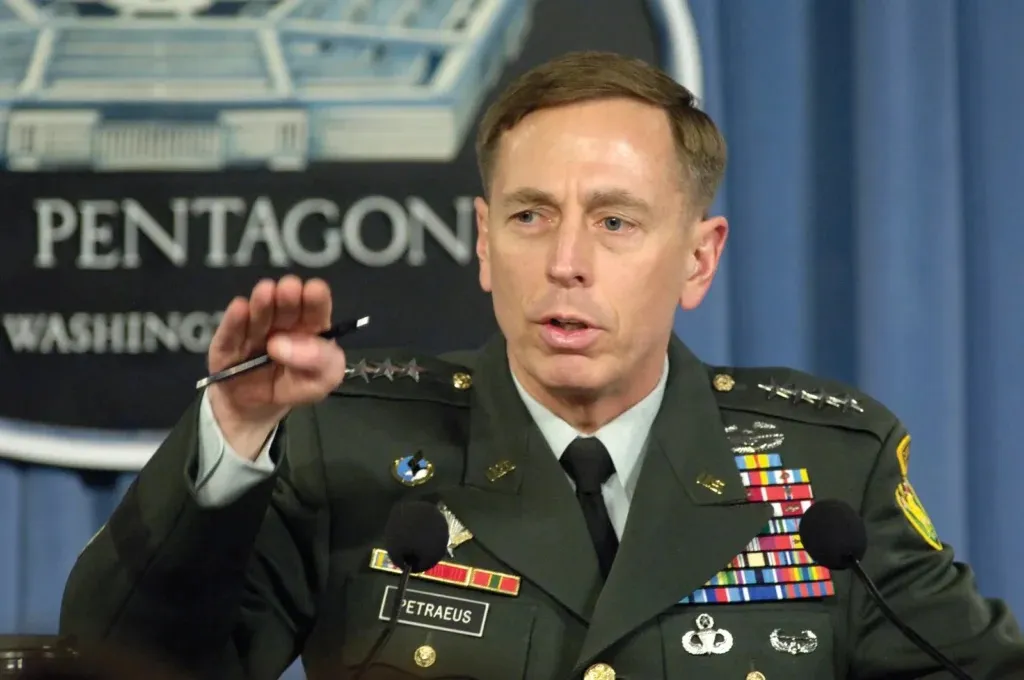
Former CIA Director David Petraeus stated that the military systems of leading nations are not yet adapted to the new threats revealed by the war in Ukraine. According to him, drones have already changed the nature of modern warfare, and the next stage will be massive attacks by swarms of drones, against which the world’s armies currently have no effective countermeasures. Petraeus emphasized that the U.S. and its allies must quickly learn from the lessons of the Ukrainian experience.
This was reported by CBS News.
Petraeus, who has visited Ukraine for the tenth time since the start of the full-scale invasion and personally observed the actions of Ukrainian Armed Forces units near the front lines, stressed that the United States must adopt a “fundamentally new concept of warfare” shaped by the Ukrainian experience.
According to him, Ukraine’s advantage lies not only in the drones themselves, but in a comprehensive system that integrates reconnaissance, target acquisition, and precision strikes. It is precisely this that gives Ukrainian forces nearly absolute control over the battlefield at distances of up to 35 kilometers from the line of contact.
Ukraine deploys up to 10,000 drones per day, and 90% of Russian losses are caused by them. The scale of this deployment has made it impossible for armored vehicles to maneuver normally near the front lines.
“Tanks can no longer maneuver. They cannot survive. Armored vehicles cannot survive,” Petreus stated.
The general warned that the current drone reality is only the beginning of the changes. Today, drones are vulnerable to electronic warfare systems that jam the connection between the drone and the operator. However, the situation will change soon.
“What’s coming are algorithmic drones that cannot be jammed,” he said.
Such drones will require neither GPS nor constant radio communication with an operator, and a single pilot will be able to control several drones simultaneously. The next step is fully autonomous systems, where humans define the tasks and the technology executes them. According to Petraeus, this will become a reality in just a few years, and Ukraine has every chance of being the first to acquire them.
Separately, the general emphasized the threat of drone swarms—coordinated attacks by a large number of unmanned aerial vehicles simultaneously.
“Then you’ll face drone swarms. And that’s something we really don’t have a solution for,” Petreus concluded.
The comparison speaks for itself: one of the Ukrainian manufacturers that Petreus visited during his April trip will produce three million drones this year. By comparison, the entire U.S. defense industry produced about 300,000 last year. In total, Ukraine plans to manufacture seven million drones by 2026.
Russia, according to the general, “no longer has the advantage” in this war. Over the past two months, Ukrainian forces have achieved greater tactical successes than Russian ones. Petraeus is convinced that the lessons of this conflict should shape a new doctrine—one that combines high technology, artificial intelligence, and next-generation weapons.
Read also:
Putin touted the Russian economy’s successes amid the first GDP decline in three years.
Russia changed its polling methodology, and Putin’s approval rating immediately rose
Putin spoke of “ending the war” due to serious problems on the home front and at the front




