
Estonia has put a new radar system into operation near the Russian border

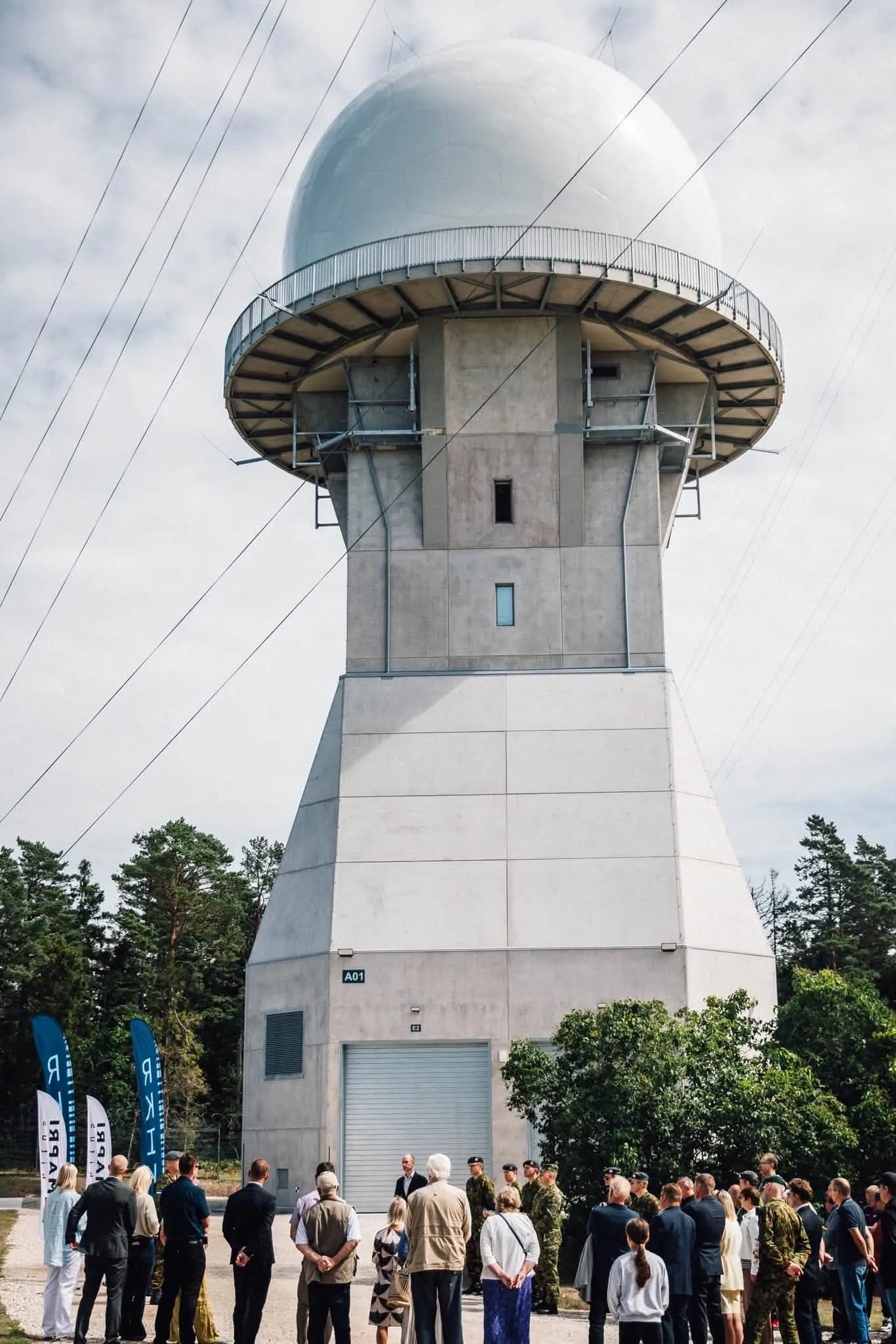
Estonia has completed construction of the new “Kipu” radar station on the island of Hiiumaa, which is equipped with a state-of-the-art French Ground Master 400 Alpha radar system. The new complex is capable of detecting air targets at distances of up to 515 km and altitudes of up to 30 km, significantly strengthening the country’s air surveillance system.
The construction of the “Kipu” radar station cost approximately 4.9 million euros.
The project was one of the key stages in the modernization of Estonia’s military infrastructure.
The country ordered two modern Ground Master 400 Alpha three-coordinate radar stations from the French company Thales back in 2023 as part of the upgrade of its national air surveillance system.
One of the stations was installed on the Kipu Peninsula on the island of Hiiumaa, near the lighthouse of the same name. The radar complex’s tower is approximately 35 meters tall, and thanks to the natural elevation, the antenna is located more than 100 meters above sea level, which significantly expands its surveillance capabilities.
According to experts, the Ground Master 400 Alpha is theoretically capable of detecting high-altitude air targets even over St. Petersburg. At the same time, the system’s primary mission is to monitor the airspace over the Baltic Sea in the western and northwestern directions.
A second similar station has already been deployed at the “Viru” post near the village of Kalina in Ida-Viru County. The system became fully operational in November 2025, although its launch was delayed by nearly a year due to equipment delivery delays and the effects of the pandemic.
The radar is installed atop the spoil heap of the former “Viru” mine, providing a better view of the airspace over Lake Peipus and allowing for surveillance of the northern and northeastern directions.
The Ground Master 400 Alpha is considered one of the most advanced ground-based radar systems in the world.
The system is equipped with an active electronically scanned array (AESA) and operates in the S-band. Thanks to digital multi-beam technology, the system can simultaneously detect drones at low altitudes and aircraft at high altitudes without compromising performance.
According to the manufacturer:
- target detection range—up to 515 km;
- maximum tracking altitude—up to 30 km;
- operational readiness exceeds 98.5%;
- the mean time between critical failures is over 3,000 hours.
The entire system is housed in a single 20-foot ISO-standard container weighing approximately 10 metric tons, which significantly simplifies its transportation and rapid deployment.
The launch of the new radar station will allow Estonia to significantly strengthen its airspace control and enhance security in the Baltic region.
This was reported by the Estonian National Defense and Security Knowledge Center.
The Estonian Ministry of the Interior proposes to extend the reduced operating hours of three road border crossing points on the border with Russia for an indefinite period.
Estonian Foreign Minister Margus Tsahkna stated that the violation of Polish airspace by a Russian missile indicates that Russia’s war is already extending beyond Ukraine’s borders and poses a direct threat to NATO countries and the European Union.




