
European intelligence warns of a Russian attack on NATO in the near future — The Guardian
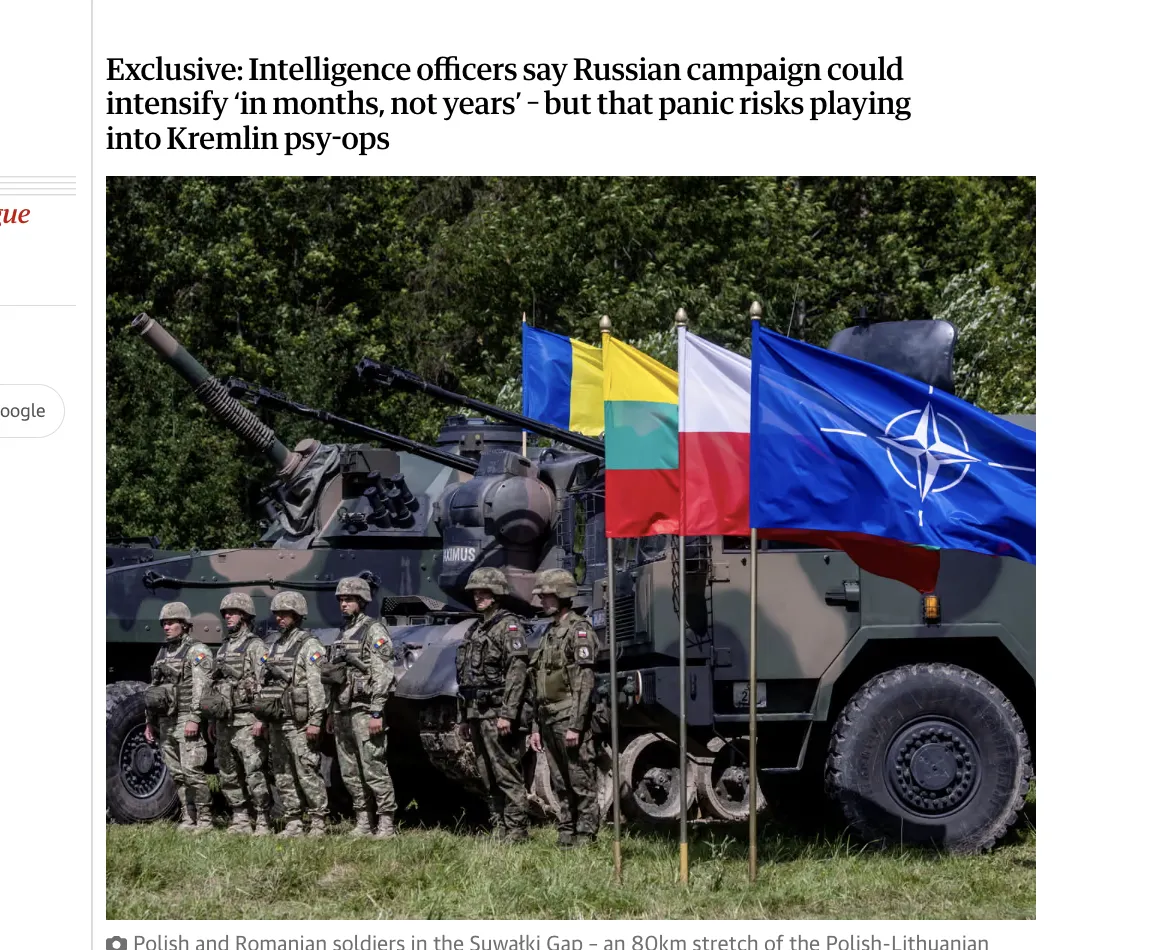
European intelligence agencies assess that there is a high probability that Russia could attack NATO in the coming months. According to their information, Moscow may attempt to test the Alliance’s readiness and resilience.
Michal Kudelka, head of the Czech Security and Information Service, stated that, in addition to increased drone activity, the Kremlin’s plans may also include an incursion into the territory of NATO countries bordering Russia. “The scenario could involve a limited incursion, provocations under a false flag, or a large-scale campaign aimed at exerting influence,” he said. According to him, such a scenario could unfold over “months, not years.”
At the same time, officials from the three Baltic countries bordering Russia are more cautious in their assessments of the likelihood of an invasion or other serious escalation. They point out that Moscow’s resources, tied up in the conflict in Ukraine, are depleted, and warn that stoking fear of a possible attack could play into the Kremlin’s hands.
“We see no signs of an imminent attack. The question remains open: Do they have direct and specific plans, or is this just part of their broader efforts to sow fear and uncertainty in Western society?” said Normunds Mežviets, Director General of the Latvian State Security Service.
According to Kudelka, Russia’s current tactics are based on the principle of “escalation for the sake of de-escalation”: the Kremlin seeks to target the vulnerabilities of Western societies in order to weaken their support for Ukraine’s military efforts. “They believe that if they escalate matters sufficiently, European countries will decide to stop supporting Ukraine,” he noted.
Intelligence chiefs agreed that, regardless of how events unfold, Russia’s campaign of sabotage in Europe is likely to intensify in the coming months. Thomas Nilsson, head of Sweden’s military intelligence and security service, called the recent incident involving an armed drone at Leipzig Airport—which German authorities linked to Russian intelligence activities—a “turning point.”
“Sending an armed UAV to a busy airport in the very heart of Europe... If attacks occur that could result in human casualties or the destruction of critical infrastructure—with enormous consequences for society—I believe that changes the rules of the game,” he said.
According to Nilsson, several objectives lie behind the recent intensification of Russian sabotage activities: to weaken support for Ukraine, sow discord within NATO, and intimidate the populations of European countries. According to Kudelka, another consequence of the sabotage campaign has been an excessive strain on intelligence agencies’ resources. “Now every fire or every malfunction requires an investigation by intelligence agencies as a potential terrorist attack, and for them, that’s a good outcome,” he said.
Source: The Guardian
Earlier, NATO declared its readiness for a possible provocation by Russia.
Later, NATO acknowledged Ukraine’s advantages in certain aspects of the war.
As a reminder, Fico does not want Slovakia to be drawn into the war under NATO Article 5.


