
European diplomats warn Trump against rushing into a deal with Iran — Reuters
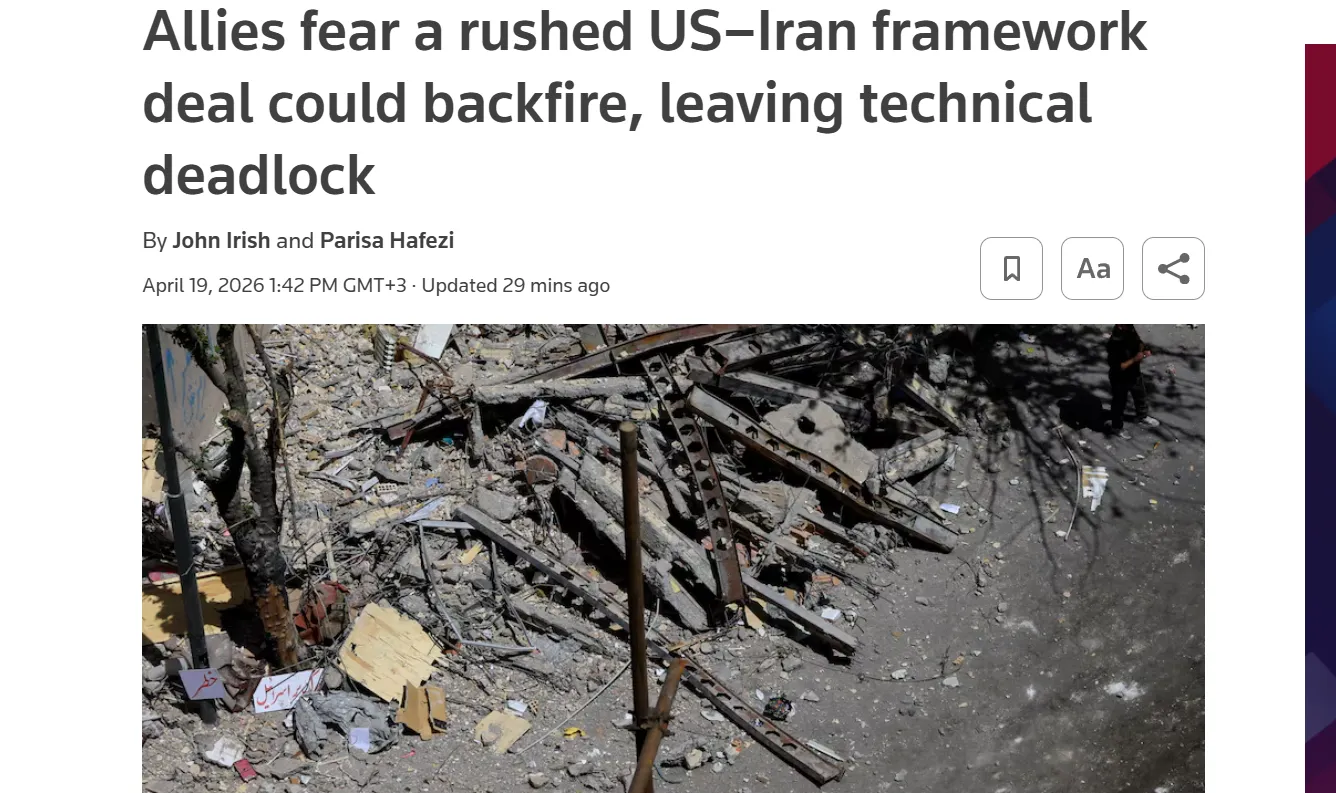
European allies have expressed deep concern over the tactics of the U.S. negotiating team, which is pushing for a quick signing of a framework agreement with Tehran.
This is reported by Reuters.
Experienced diplomats believe that Washington’s attempts to achieve a “high-profile” result in a short time frame may only deepen the crisis rather than resolve fundamental disagreements.
Sources in diplomatic circles point out that the White House’s current strategy ignores the technical complexity of the “nuclear dossier.”
The main risk lies not in the absence of an agreement, but in the adoption of a subpar document that will lay the groundwork for new conflicts.
“The concern is not that there will be no agreement. The issue is that there will be a bad initial agreement that will create endless problems in the future,” one diplomat shared his opinion in a comment to Reuters.
The White House, for its part, firmly rejects criticism regarding its team’s inexperience.
The administration emphasizes the president’s successful track record in complex international negotiations and his ability to secure favorable outcomes for the country.
“President Trump has a proven track record of securing good deals on behalf of the United States and the American people, and he will only agree to one that puts America first,” said White House spokeswoman Anna Kelly.
However, European Union officials, who have spent years working to curb Iran’s nuclear ambitions, are skeptical that the issue can be resolved in just a few sessions.
In particular, Federica Mogherini noted that the previous agreement required more than a decade of meticulous preparation.
“It took us 12 years and a tremendous amount of technical work. Does anyone seriously think this can be done in 21 hours?” emphasized Mogherini, who coordinated negotiations with Iran in 2013–2015.
According to diplomats, the American side is oversimplifying the structure of the future document.
Washington believes that it is sufficient to agree on three or four key points, but Europeans warn that each such point will lead to dozens of new disputes.
The U.S. and Iran are discussing an agreement to end the war
Additionally, Iran announced the opening of the Strait of Hormuz to commercial shipping for the duration of the ceasefire in Lebanon.
Iran estimates the damage from US and Israeli bombings at $270 billion and is demanding compensation from five Arab countries
Iran promises to respond to the blockade of its ports by blocking the Red Sea
