
Ghanaian experts urge government to involve them in solving tomato problems — MyJoyOnline
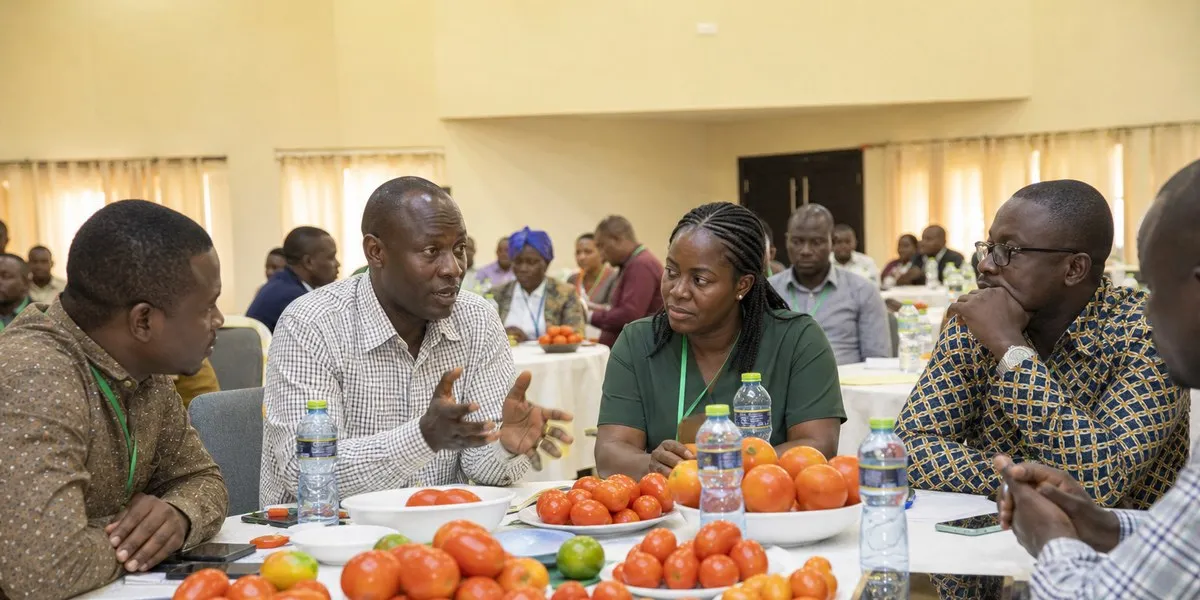
The Ghana Institute of Horticulturists has called on the country’s government to formally involve horticultural specialists in resolving persistent problems in the tomato production and marketing sector. The institute’s president, Mohammed Mujitaba Dawuda, made the statement in the city of Sunyani at the opening of the organization’s 26th annual general meeting and scientific conference, MyJoyOnline reports.
Production and marketing problems
According to Dawuda, horticulture plays an important role in Ghana’s food system, while the institute has for years conducted research, training and meetings with market participants. At the same time, he says, the government has still not given the organization proper attention or established formal engagement with it.
Among the problems in the tomato sector, he named soil fertility, seed and variety selection, root-knot nematodes, pests and diseases, high temperatures, irrigation difficulties and post-harvest crop losses. Periods of tomato oversupply on the market, followed by shortages, remain a separate problem.
Dawuda also noted that attention to the situation was intensified by an incident in Burkina Faso: on February 14, 2026, a truck carrying Ghanaian tomato traders came under a terrorist attack in the city of Titao.
More current news is available on the UA.News Telegram channel Telegram.
Call for cooperation
The conference will run from October 1 to 3, 2026, and is dedicated to creating a resilient tomato production and marketing chain in Ghana. Its participants are expected to include researchers, farmers, government representatives, agricultural service workers, traders, students, non-governmental organizations and business representatives.
The vice-chancellor of the University of Energy and Natural Resources, Elvis Asare-Bediako, called not only for talking about cooperation but also for institutionalizing it. In his view, the sector’s problems are interconnected: disease outbreaks reduce yields, poor-quality planting material harms production, while weak market links and insufficient processing capacity increase pressure on farmers and the fresh produce market.
The organizers plan to prepare a communiqué based on the discussions for submission to the relevant stakeholders.




