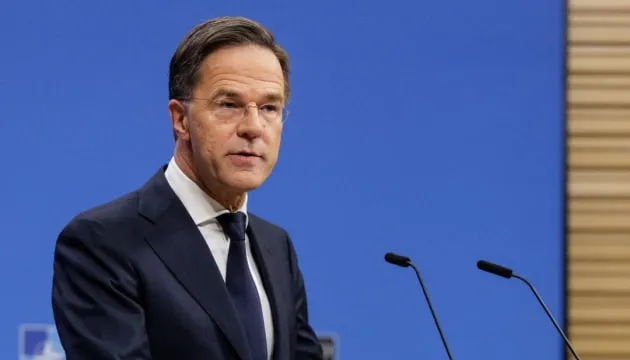
NATO Secretary General Mark Rutte will arrive in Prague today for a visit. During his trip, he plans to meet with Prime Minister Andrej Babiš.
This was reported by the Czech government.
The meeting is scheduled for the end of the workday, followed by a joint press conference. Babiš stated that he will discuss with Rutte issues related to NATO, the military, and the Czech Republic’s obligations to the Alliance.
Czech President Petr Pavel, who is currently on a tour of Latin America, offered his thoughts on the purpose of Rutte’s visit. “I think this is logical, since the Secretary General usually reaches out to countries that may have issues ahead of the summit… Of course, he sees that the Czech Republic is still, on paper, at the threshold of the minimum spending requirement, that is, two percent,” Pavel said, as quoted by Novinky.
As reported, despite its commitments, the Czech government plans to allocate only 1.7 percent of GDP to defense in this year’s state budget. If funding for defense projects by other ministries, particularly the Ministry of Transport, is taken into account, the total expenditure will slightly exceed 2 percent.
A political debate is currently underway in the Czech Republic over which delegation will represent the country at the NATO summit in Ankara this summer: President Pavel, a former army general who held a high-ranking position in NATO, wants to attend the meeting, but the government does not see the need for the head of state to be present.
Rutte will attend the Ramstein meeting in Berlin.
Rutte stated that Ukraine needs $60 billion in defense aid.
During a closed-door meeting at the White House, U.S. President Donald Trump sharply expressed his dissatisfaction with the position of European allies and NATO Secretary General Mark Rutte regarding the situation surrounding the conflict with Iran.
NATO Secretary General Mark Rutte stated that the issue of Ukraine’s membership in the Alliance will not be resolved in the near future. Even despite active negotiations and Ukraine’s aspirations, rapid accession should not be expected. He made this statement during a conversation with journalists at the Ronald Reagan Institute.