
Himalayan glaciers are melting faster, threatening the region’s water security
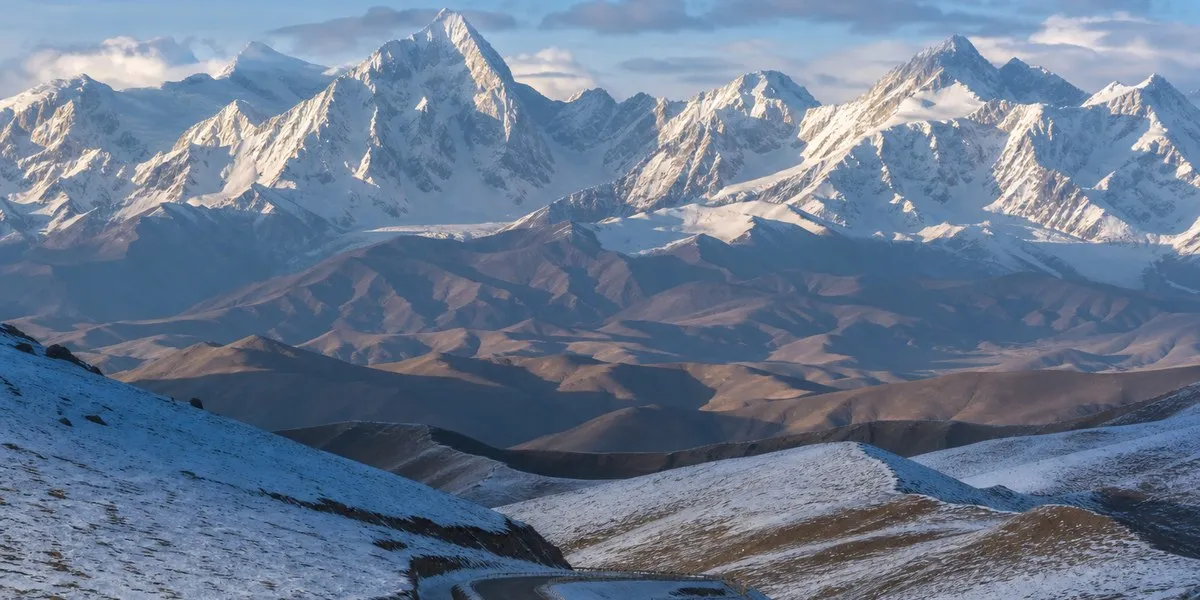
The Hindu Kush-Himalaya region, stretching across eight countries from Afghanistan to Myanmar, is approaching a critical threshold due to accelerated glacier melt. This poses threats to water security, as by the middle of the century the region may reach the so-called peak water — the point at which river runoff stops increasing and begins to decline, according to a study reported by Asharq Al-Awsat.
Unstable glacial lakes
Retreating glaciers leave behind unstable glacial lakes, held back mainly by loose rock and ice. They are located above valleys where millions of people live and pose a danger to populations downstream.
At the end of August, a Himalayan glacier collapse occurred on the border between Nepal and Tibet, triggering a cascade of landslides and flash floods in the valleys below. According to the data cited in the report, the deaths of at least 1,300 people were confirmed in Nepal and China’s Tibet Autonomous Region, while more than 5,300 others were considered missing.
More current news is available on the UA.News Telegram channel Telegram.
Monitoring and economic significance
The study was prepared by the consulting company Systemiq, the Integrated Mountain Initiative, the International Centre for Integrated Mountain Development, and India’s G. B. Pant National Institute of Himalayan Environment. Its authors note that the loss of mass by Himalayan glaciers has accelerated in recent decades.
There are approximately 40,000 glaciers in the Hindu Kush-Himalaya region, but ground-based monitoring is conducted for only 21 of them. In India, nearly 200 glacial lakes have been identified as high-risk, with 56 classified as very high-risk.
The Himalayan region accounts for approximately 18% of India’s territory, but it is responsible for an estimated 35% of the country’s natural disasters. According to the study, the Himalayas provide more than 20% of India’s GDP and are an important part of the country’s economic infrastructure, on which hundreds of millions of people depend.


