
Hong Kong mourned Mao Zedong’s death in 1976
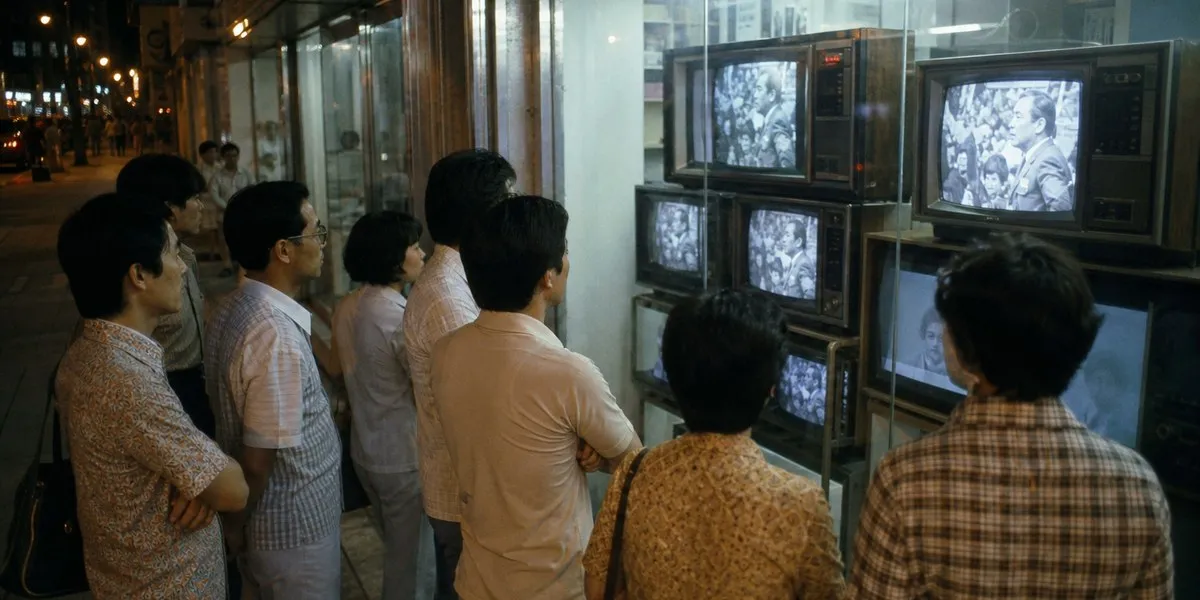
In Hong Kong, China, on September 9, 1976, after reports of Mao Zedong’s death, many people expressed grief, while flags were lowered to half-mast on several major buildings and hotels, including the Bank of China building. This was reported in an archival article by the South China Morning Post, first published on September 10, 1976.
News of the Chinese leader’s death overshadowed Mid-Autumn Festival celebrations. Hong Kong residents heard the news at 5:08 p.m. on both Radio Hongkong channels and the English-language channel of Commercial Radio, several minutes after Radio Peking broadcast the official announcement by the New China News Agency. The first television breaking-news report aired at 5:17 p.m. on the English-language RTV channel. People gathered outside television shops, waiting for further reports.
Reaction in Hong Kong and Macau
The newspaper’s correspondent in Macau reported that local cinemas almost immediately cancelled screenings for the rest of the day as a sign of respect for Mao. P. B. Harris, a professor of political science at the University of Hong Kong, noted that the political significance of Mao’s death would be difficult to assess immediately. In his view, China was entering a new, less defined era, although society had been psychologically preparing for this event for several months.
More current news is available on the UA.News Telegram channel Telegram.
Teacher Tseng Man-kiu, who had taught in China and abroad for 18 years, believed that Hong Kong would not be affected in the near future. At the same time, he stressed that the situation could be assessed after China’s new leadership emerged.
Diplomats’ statements
Representatives of the diplomatic corps in Hong Kong expressed condolences over Mao’s death. Japan’s deputy consul general, Yoshiyasu Sato, said that they respected Mao’s achievements in Chinese history and the revolution. Swedish Consul General Dag Bergman said that what Mao had done for China was very significant and would remain in the world’s memory.
Representatives of the Netherlands and Pakistan described Mao’s death as a great loss for the Chinese people. Canadian Commissioner M. G. Clark said that China had lost not only a leader but also a symbol, and that the world, and Hong Kong in particular, would go through a period of waiting. Russell Spurr, deputy editor of the Far Eastern Economic Review, suggested that Hong Kong’s future could depend on the new political situation in China and the decisions of the new leadership.


