
Chinese scientists report major gold and silver deposit in the Pacific Ocean
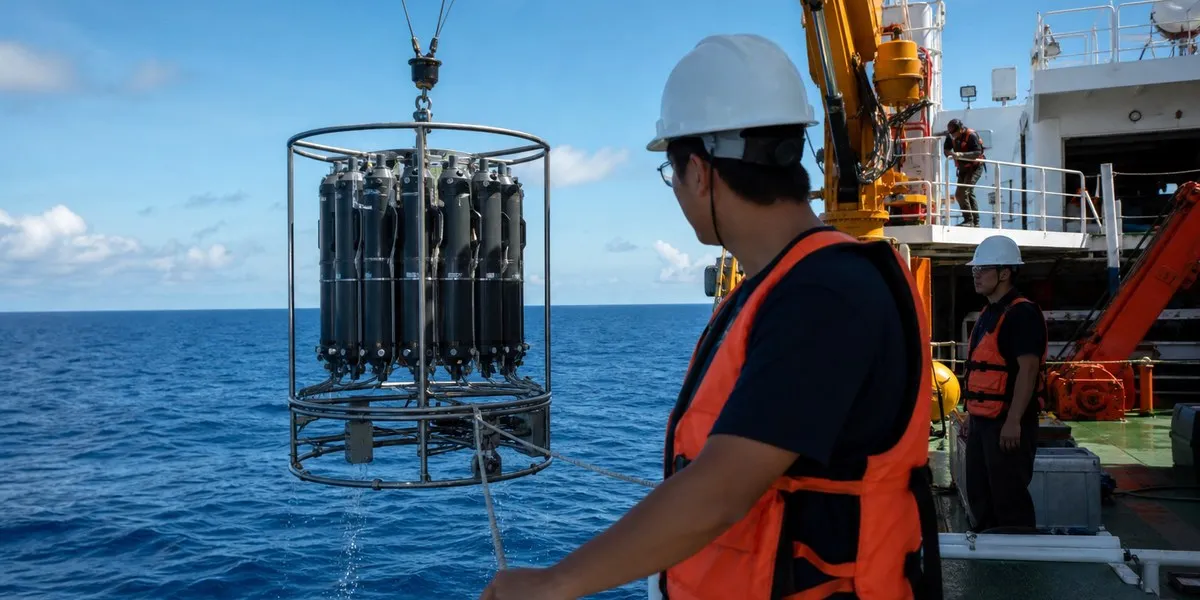
Chinese scientists have reported the discovery of a large underwater deposit with high concentrations of gold and silver in the western Pacific Ocean. According to state broadcaster CCTV, the site is located in a back-arc basin within China’s exclusive economic zone, although its exact coordinates have not been disclosed. The results of a joint expedition by several Chinese research institutions were reported by the South China Morning Post, citing CCTV.
Precious metal content
The deposit is located in a high-temperature hydrothermal field, where hot metal-rich water emerges from openings on the ocean floor. The ore consists of hydrothermal sulfide deposits: when superheated mineralized water comes into contact with cold seawater, metals bind with sulfur and settle as solid sulfide minerals.
According to preliminary laboratory analyses, the gold content in the ore reaches 15.4 grams per tonne, while silver content reaches 1.27 kilograms per tonne. The main minerals identified in the deposits include chalcopyrite, pyrite and sphalerite. CCTV reported that the average concentrations of gold and silver exceed levels typical of terrestrial deposits.
More current news is available on the UA.News Telegram channel Telegram.
Expedition and deposit structure
Specialists from Tsinghua University, the Qingdao Institute of Marine Geology and Shanghai Jiao Tong University took part in the study. The expedition lasted 18 days and included seven deep-sea dives. Scientists worked aboard the oceanographic vessel Xiang Yang Hong 10, which departed from Shenzhen on August 10.
Before the expedition, the team conducted more than a dozen preliminary surveys of the area. During these surveys, they discovered dozens of high-temperature hydrothermal vents at depths between 700 and 1,500 meters, where fluid temperatures exceeded 315 degrees Celsius. The new deposit consists of three massive cone-shaped sulfide mounds.
Sun Shiji, deputy dean of the Institute of Ocean Engineering at Tsinghua University and one of the project’s leaders, said the site has exceptionally high development value. He also noted that the active hydrothermal field provides an environment for unique biological communities adapted to deep-sea conditions.




