
Belgian scientists investigate why cats lick each other
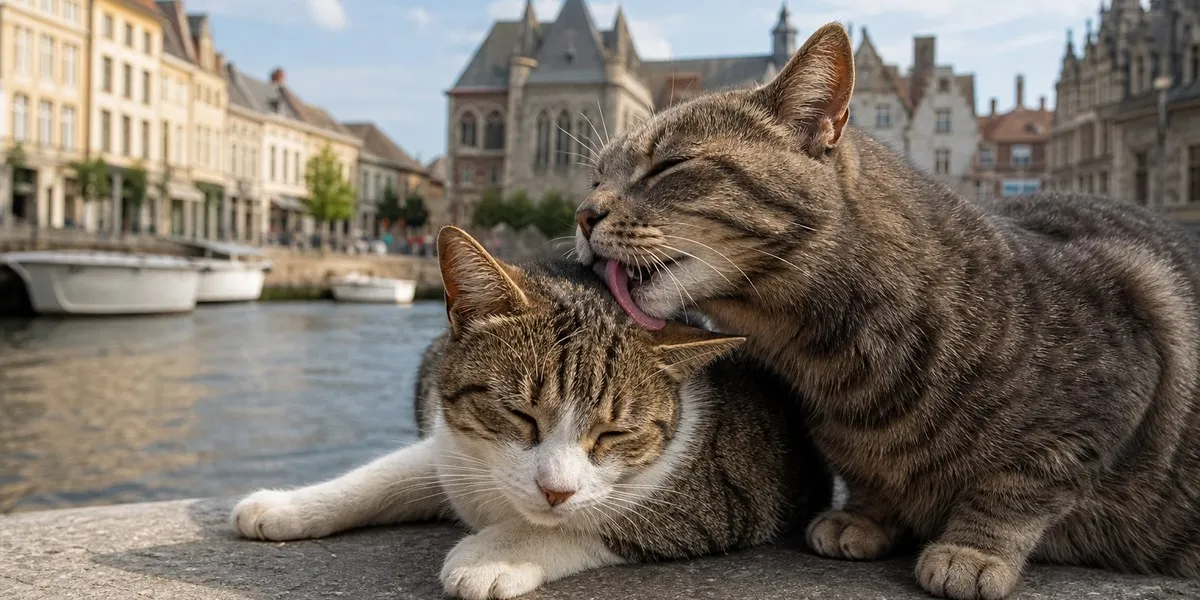
Scientists at Ghent University in Belgium analyzed videos of mutual licking among cats in 53 households where two animals lived. They concluded that this behavior, known as allogrooming, can serve different social functions depending on the situation, Live Science reports.
Social bonding, play, or conflict avoidance
Previously, allogrooming was mainly considered a display of affection and a way to maintain bonds between cats, including by creating a shared group scent. At the same time, a 1998 study involving 25 cats living in an enclosure with access to indoor and outdoor areas showed that aggressive behavior was observed in about 35% of grooming sessions.
In the analyzed videos, cats sometimes licked each other when they were snuggling together and mirroring each other's body positions. The scientists suggested that in such cases, this behavior may strengthen social bonds. Sometimes, after licking, the animals began to wrestle amicably, grabbing each other with their front paws, which may indicate a signal to play.
More current news is available on the UA.News Telegram channel Telegram.
Ears, tension, and hygiene
Mutual licking was often directed at the head and neck, especially the ears. Cat behavior researcher Morgan van Bell noted that the skin of the ears is rich in sensitive nerve endings, so this may help an animal relax. In other species, mutual grooming is also associated with a reduced heart rate in horses and the release of hormones that promote well-being in monkeys.
In tense situations, signs of conflict could appear after licking: ears pulled back, paw movements, or bites. The researchers suggest that it sometimes serves as a calming signal, for example when one cat wants to occupy a sleeping spot where another is already lying. At the same time, because it is directed at the neck — an area cats bite during confrontations — this behavior may also be a subtle expression of an aggressive threat.
Allogrooming may also have a hygienic function, as the head and neck are areas that cats find more difficult to groom on their own. However, the authors of the analysis did not assess the presence of parasites, infections, or skin cleanliness, so there is currently no confirmation that mutual licking reduces the amount of dirt or parasites. Veterinary behaviorist Terry Curtis also considers hygiene a possible explanation, but notes that it is often impossible to determine the motives of a particular cat with certainty.


