
EU develops AI methods to reduce animal testing
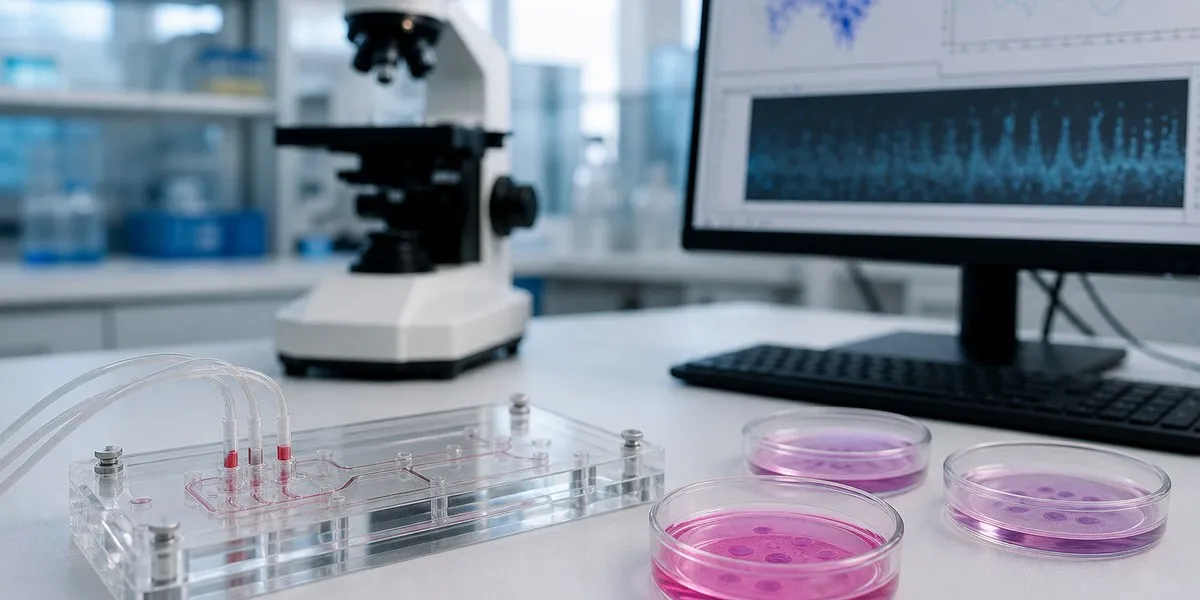
Scientists from various European countries are combining artificial intelligence, human cells and mini-organ models to more accurately assess the harm caused by chemical substances and reduce the need for animal experiments. As Cyprus Mail reports, approximately 150,000 animals, mainly rats and mice, are used in the EU each year to test the safety of everyday chemicals.
The work is being carried out within the ASPIS research cluster, for which the EU allocated €60 million. Since 2021, three related initiatives have been studying non-animal methods for assessing chemical safety, including in vitro experiments and AI-based tools. The European REACH regulation provides for the principle of the three Rs: replacing animal tests where possible, reducing their number and refining procedures to lessen suffering.
Cells and organ models
The ONTOX team, led by Mathieu Vinken, professor of toxicology at the Free University of Brussels, is studying how repeated exposure to chemicals harms the kidneys, liver and brain. The researchers have developed cell-based tests, while AI helps interpret what the results obtained may mean for human organs.
More current news is available on the UA.News Telegram channel Telegram.
One approach uses “organ-on-a-chip” technology — small devices containing human cells that reproduce certain reactions of real organs to chemicals. According to Vinken, traditional experiments can detect an immediate toxic effect, but it is much more difficult to predict the consequences of prolonged exposure. Such tests are also expensive: according to Professor John Colbourne of the University of Birmingham, testing one substance can take from three to seven years and cost up to €15 million.
Risk assessment without animals
The PrecisionTox project compares the responses of human cells and five model organisms to approximately 200 chemicals. Fourteen laboratories are taking part in the work, analyzing how substances disrupt shared biological mechanisms. The model organisms include fruit flies, roundworms, water fleas, as well as zebrafish and frog embryos at developmental stages that are not subject to regulated animal testing.
The third initiative, RISK-HUNT3R, combined the results of non-animal tests with data on the actual level of human exposure to chemicals. The strategy was tested on 60 substances — half of them were toxic and half were not. The researchers’ goal is not to mechanically replace every animal test with a laboratory equivalent, but to create a new risk assessment system that takes into account human biology, exposure data and computational tools. Vinken noted that it is currently impossible to completely abandon animal experiments, but AI can significantly reduce their use.


