
A nuclear waste dump in the Marshall Islands is crumbling due to rising sea levels
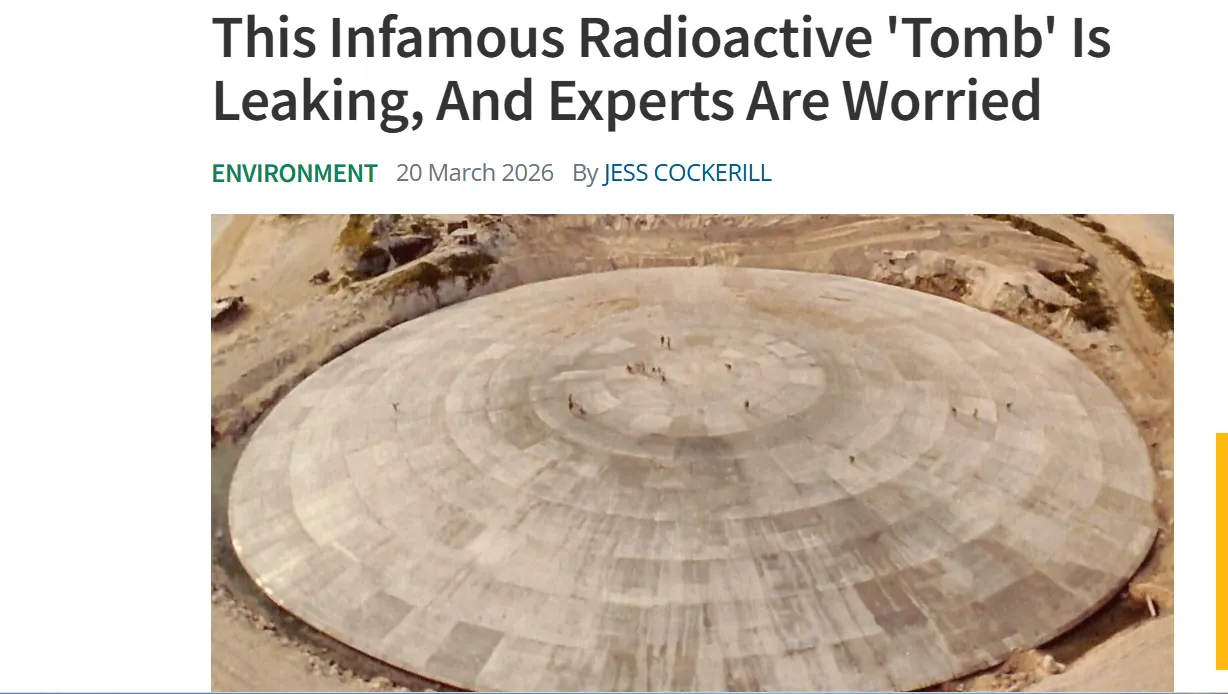
On the Pacific atoll of Eniwetok, a massive concrete structure known as the “Runit Dome” is at risk of widespread destruction.
The structure, which holds over 120,000 tons of radioactive waste, has developed deep cracks through which toxic substances are beginning to seep into the open ocean.
According to the results of recent studies published by ScienceAlert, rising sea levels have led to a critical infiltration of groundwater directly into the crater of the burial site.
This is causing the leaching of dangerous isotopes, posing a threat of a regional-scale environmental disaster.
The massive crater on Runit Island was formed back in 1958 as a result of the testing of an 18-kiloton nuclear bomb codenamed “Cactus.”
It was not until the late 1970s that the U.S. military filled this crater with contaminated soil and radioactive debris, covering it with a concrete dome 115 meters in diameter.
From the very beginning, this “sarcophagus” was viewed only as a temporary solution for storing waste from dozens of tests, the power of which in some cases exceeded the Hiroshima explosions by a thousand times.
Among the structure’s hazardous contents are lethal amounts of plutonium-239—a radionuclide with a half-life of over 24,000 years.
The dome’s main structural flaw is that its floor lacks a protective lining and rests directly on porous coral sediment.
“Given that sea levels are rising and storms are intensifying, we fear that the dome’s integrity may be at risk,” emphasized Columbia University chemist Ivana Nikolic-Hughes.
The scientist personally documented numerous cracks in the concrete and detected a significant concentration of radionuclides outside the sarcophagus while collecting soil samples.
Since Runit Island is located just 20 miles from populated areas, any significant leak would have devastating consequences for local residents.
Experts from the U.S. Department of Energy confirmed as early as 2024 that storm surges are a key factor in the spread of radiation across the atoll.
Most of the island rises only 2 meters above the water, making it extremely vulnerable to climate change, a topic actively discussed by the current U.S. president and environmentalists worldwide.
As a reminder, archaeologists have discovered unique artifacts on the islands near the Dnipro Hydroelectric Power Plant.
Archaeologists also discovered the oldest sunken ship in the Mediterranean Sea.


