
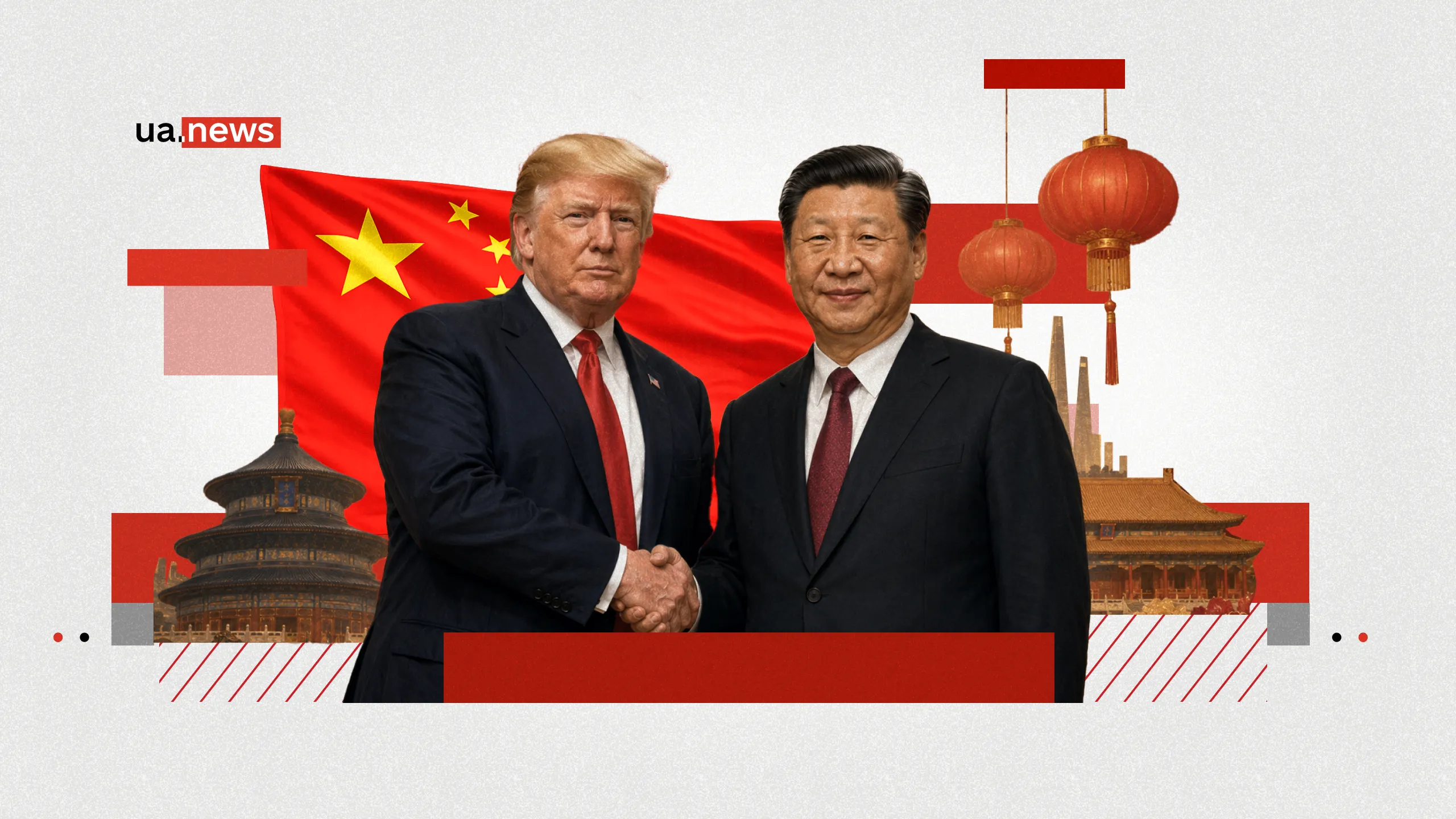
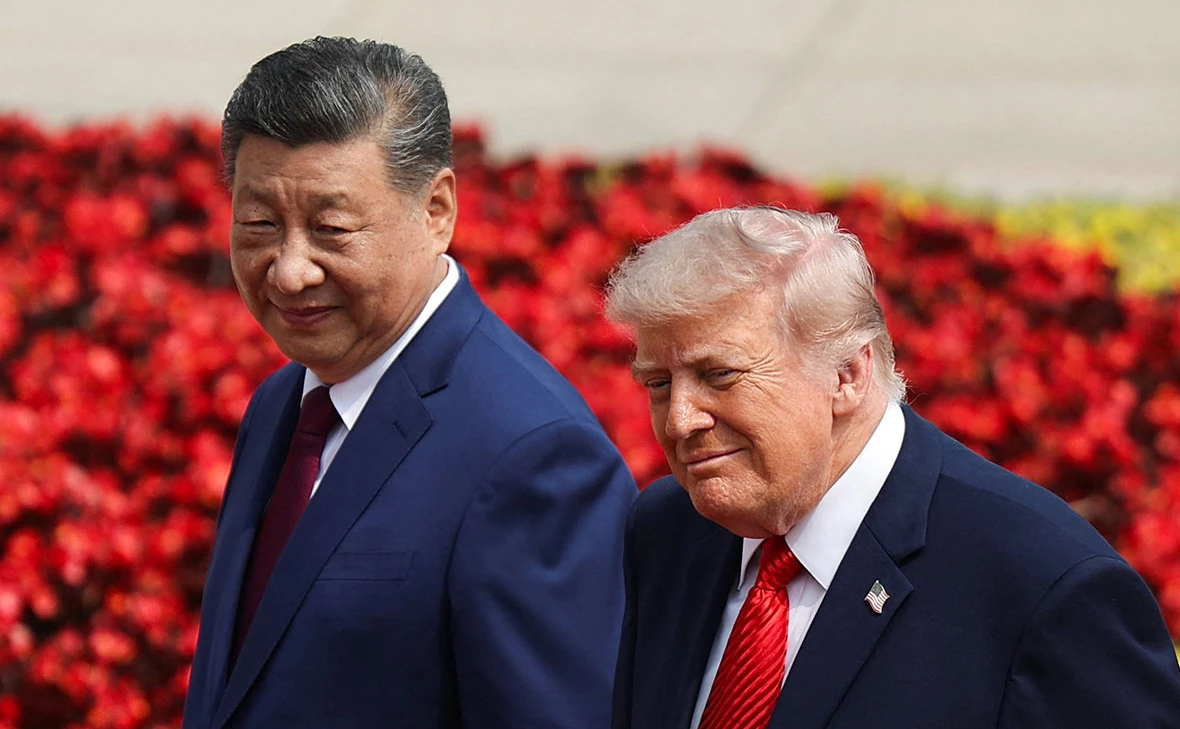
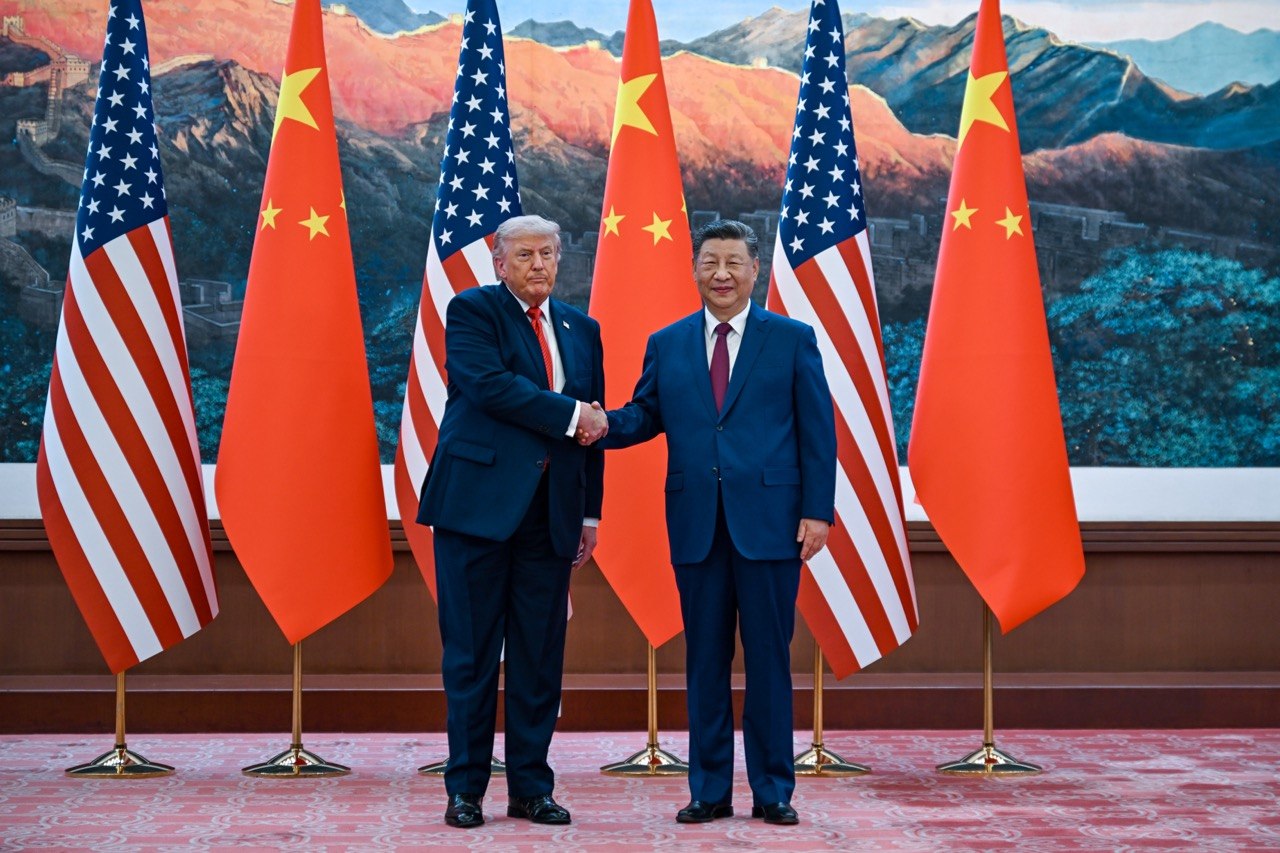
Today, the attention of the world’s media and political experts is focused on the capital of the People’s Republic of China—Beijing—where U.S. President Donald Trump is making his first visit in nearly 10 years to America’s main strategic rival. The visit is taking place amid unprecedented turmoil. The world is reeling from the war in the Middle East, energy prices are hitting record highs due to the blockade of the Strait of Hormuz, and the technological standoff between the two nations has reached a level that many are calling “Cold War 2.0.”
Both leaders need this meeting, but they are driven by different motives. For Trump, it is an attempt to secure a quick tactical victory ahead of the difficult fall congressional elections, while for Xi, it is part of a long-term strategy to manage the rivalry, allowing him to buy time to strengthen China.
So what should we expect from this summit, what is its fundamental significance, and will there be a place for Ukraine and its war in the talks between the two leaders? UA.News political analyst Mykyta Trachuk, together with experts, examined the issue.
Transactional Diplomacy Between the US and China
To understand the true purpose of Trump’s visit, one must consider the context of his second presidential term. In early 2025, the U.S. administration initiated another round of the trade war by imposing tariffs of 140–150% on Chinese goods. However, Beijing withstood this pressure, responding instead with restrictions on exports of critical minerals and other goods vital to the U.S. By early 2026, China had already demonstrated a nearly 22% increase in exports to other countries, successfully diversifying its markets and offsetting the decline in trade with the U.S. Realizing the futility of escalation, Trump eventually, in his typical style, abruptly changed course, shifting to his favorite “transactional diplomacy,” focused on striking “big deals.”
That is precisely why the composition of the American delegation in Beijing is highly revealing and indicates a shift in focus from ideological confrontation to pragmatic business. Accompanying the president to China were the heads of nearly two dozen of the largest American corporations, whose combined market capitalization is measured in trillions of dollars. Among them are Elon Musk, Tim Cook, David Solomon, as well as the heads of Boeing, BlackRock, Citi, Mastercard, and Visa. Of particular note is the presence of Jensen Huang, CEO of Nvidia—the world’s most valuable company in the field of AI microchip manufacturing. Huang, who joined the delegation at the last minute, has long been lobbying for access to the Chinese market. His presence signals Washington’s willingness to seek compromises even in the high-tech sector, where the strictest export restrictions previously applied.
The Chinese side fully understands the vulnerability of American business and is using it to its advantage. Ahead of the visit, Chinese media actively promoted narratives that American tech giants are critically dependent on Chinese supply chains, making the isolation of Beijing impossible.
For Trump, the main goals on the economic track of the negotiations are to establish a new bilateral trade council for sensitive sectors, ensure an uninterrupted supply of rare earth metals, and expand overall trade cooperation with Beijing. For his part, Xi Jinping, whose economy is suffering from a series of domestic problems, is seeking an easing of U.S. sanctions and the removal of tariffs. This mutual interest creates room for tactical compromises—but it certainly does not solve the fundamental problem: both countries continue to erect economic barriers, seeking to reduce their dependence on one another to the point where that dependence can be used as a weapon.
Global Turbulence and the Iranian Crisis
The second, and perhaps even more acute, factor that forced Trump to seek dialogue with Beijing is the geopolitical crisis in the Middle East. The war in Iran triggered a chain reaction of events: the closure of the Strait of Hormuz, which is vital for global energy exports, and the spread of the conflict throughout the region.
The economic consequences of the war came as a shock to the global economy. Ordinary Americans also quickly felt the downturn. For Trump, who built his campaign on promises of economic improvement and low gas prices, this war turned into a political nightmare. Amid inflation and voter discontent (over 60% of Americans oppose a war in Iran), the president’s approval rating has plummeted to a critical 33–35%—and this just months before the fateful midterm congressional elections, where Republicans risk losing both chambers!
As strange as it may sound, Washington desperately needs Beijing’s help in resolving this political crisis. It is China, not Russia, that is Iran’s main ally and the largest buyer of its oil. American diplomacy had counted on the threat to global shipping to force China to pressure Tehran. However, Beijing is skillfully playing this card to its advantage. China has no interest in expending its own diplomatic capital to save the Trump administration from the consequences of its own military adventure—especially since the U.S., and particularly its current leader, are, to put it mildly, far from friends to the Chinese.
Yes, publicly, the Chinese leadership calls for de-escalation and the reopening of the strait, but it does so on behalf of the “international community” as such, distancing itself from American ultimatums. Behind the scenes, however, Beijing continues to buy Iranian oil and ignore American sanctions. And in general, this is standard policy for the PRC: “we are always for peace, neutrality, and international law”—yet “Chinese neutrality” is surprisingly friendly toward certain regimes and noticeably cool or even hostile toward others.
For Xi Jinping, a war in Iran is the perfect geopolitical trap for the U.S., just as Ukraine is a trap for Russia. War drains Washington’s resources, deepens rifts between America and its European allies, and distracts the Pentagon from the Indo-Pacific region, where China is increasingly dominant. So it is unlikely that the golden dragon will actually help the American eagle in its confrontation with the Persian lion.
The Ukrainian Case: Will Leaders Discuss War and Peace?
In this global context, the topic of Russia’s war against Ukraine occupies a rather specific place. For both superpowers, the Ukrainian case is, in this particular instance, of entirely secondary importance.
On the eve of his visit to China, Trump managed to secure a three-day ceasefire between Russia and Ukraine, which lasted from May 9 to 11. As always, the U.S. president ambitiously called this “the beginning of the end of the war.” And although, in reality, the end of the war is, unfortunately, still very far off, and the ceasefire applied only to long-range strikes—it nonetheless significantly bolstered Trump on the eve of his visit to Beijing.
During his visit to Romania, which is taking place right now, President Zelenskyy expressed hope that Trump would mention Ukraine in his conversation with Xi. Perhaps that will be the case. Although it is safe to say that the Ukrainian issue is by no means a priority in these talks. At most, it might be mentioned separately toward the end, as part of a “synchronization of views,” with a brief exchange of opinions. What can be said for certain: unfortunately, the war in Ukraine is not on the list of top issues the American delegation intends to discuss. And this proves once again that for global players and their global issues, the “mouse-like squabbling” over forest plantations in Donbas is not as fundamental as it seems in Ukraine.
China, moreover, has absolutely no interest in Russia’s defeat. For Xi, the partnership with Putin remains a critically important asset in the confrontation with the West. There is a common belief that only Beijing can force Moscow to end the war, since it has influence over it. This is indeed true. However, we must not forget that this dependence is mutual. China receives large quantities of vital energy resources from Russia at an equally large discount. So, as strange as it may sound, Putin also has influence over the Chinese economy. And so, unfortunately, it is hard to imagine Xi suddenly calling the Kremlin dictator, telling him, “Come on, end the war quickly!”—and Putin agreeing to it.
So for Ukraine, this visit certainly holds no promises or breakthroughs. No one intended to decide the fate of the war at this summit. The attention of the two superpowers is currently focused on maintaining access to oil, control over microchip production, the war in Iran, the situation surrounding Taiwan, and so on. The Ukrainian issue remains somewhere on the periphery.
Expert Opinion
Political analyst Maksym Honcharenko believes that Donald Trump’s visit to China should be viewed as an attempt to reset bilateral relations between the two countries. This reset is strategically important and has global implications.
“During Trump’s first term, China was a convenient public rival that the American leader mentioned in numerous speeches. He tried to carry this same policy into his second term, but the reality is that he failed to ‘squeeze’ China economically. Now, both the American and Chinese leaderships are trying to figure out how to cooperate in the new geopolitical reality. We are seeing a shift from the “contain at all costs” approach to “reach an agreement,” which appears to be a far more rational and positive strategy in the long term. The course toward a hard confrontation between the two economic and political giants was typical Trump-style “all-or-nothing” logic, which caused concern among other global players. “We are now seeing a de-escalation of tensions. And this is the first step toward normalizing global trade, which is already highly unstable,” the expert notes.
According to the political scientist, this meeting is primarily about the economy and security, which can be understood from the composition of the American delegation. They clearly wanted to discuss global markets, trade, technological development, and global security issues. Geopolitically, the Middle East, Taiwan, Indo-Pakistani relations, and other issues fall within the sphere of interest of both countries.
“Will they raise the issue of Ukraine? It is highly likely that they will! China currently takes a more neutral stance on the war between Russia and Ukraine. Yes, Russia is an economic partner for China, and given Russia’s isolation from the West, China has a virtually decisive say in the fate of the Russian economy. The Eastern economic giant has successfully seized the opportunity, effectively driving Russia into direct dependence on its market. But in diplomacy, China takes a measured stance, calling for peace and mutual understanding without directly supporting any specific side. For Trump, however, the issue of Ukraine is a personal project: he came to power for a second term on promises to end the war, and even now he continues to try at any cost to bring the parties to the negotiating table. “The problem is that as long as Ukraine’s and Russia’s ‘red lines’ are directly mutually exclusive, this strategy cannot succeed,” says Maksym Honcharenko.
The political analyst is convinced that for the U.S., the most realistic scenario is not to persuade China to directly support Ukraine, but to keep it in a neutral and cooperative position. Washington and Beijing view the war in Ukraine as a security threat and a source of global instability. Ukrainians should not expect that ending the war in our region will be the central topic of the meeting between the two leaders. But we can be certain that, in the context of global security, the issue of Ukraine will still be discussed.
“Ukraine should not count on a quick and straightforward resolution to the war or a radical shift in the parties’ positions. But if such meetings manage to quell at least some pockets of global instability—this will, indirectly, help Ukraine by allowing world powers to shift their focus to it… Donald Trump and Xi Jinping are two pragmatists. We shouldn’t expect ideologically charged speeches or direct calls for support from them. We will see restrained statements about cooperation, partnership, and mutual understanding. But, as befits true pragmatists, these statements will be backed by plans and actions that are cautious yet realistic,” Maxim Goncharenko concluded.
In summary, Trump’s visit to China will certainly go down in history, but not as a moment of “great reconciliation,” but as a typical example of an attempt at tactical de-escalation. This is a meeting of two leaders who are well aware of the inevitability of their strategic confrontation but objectively need cooperation here and now, primarily in the economic sphere, due to serious internal and external challenges.
On the geopolitical chessboard, the pieces will remain in their places after this summit. Beijing will not betray its allies in Moscow or Tehran for the sake of American promises, and Washington will not abandon its support for Taiwan or its efforts to curb Chinese dominance in the military and technological spheres. This is a brief respite before further antagonism and only the first of several planned major meetings, which are already expected to be more in-depth and substantive.


