
Iran May Attack Ukraine with Ballistic Missiles: The Most Dangerous One Identified
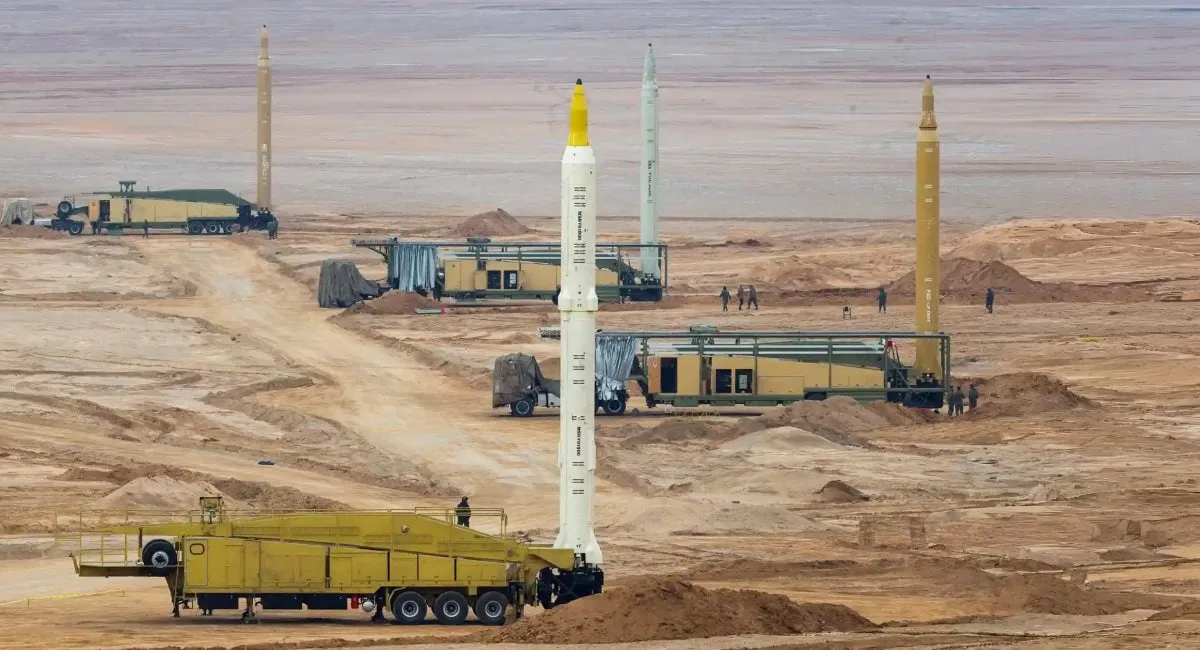
Iran possesses a significant arsenal of medium-range ballistic missiles, some of which are potentially capable of reaching Ukrainian territory if launched from Iranian soil. Analysts have assessed the capabilities of Iran’s missile arsenal and identified the most dangerous models.
According to experts, the Khorramshahr missile may pose the greatest threat. At the same time, the range of missiles such as the Ghadr, Emad, and Sejjil is estimated at approximately 2,000 kilometers. This means that certain Iranian ballistic missile systems could theoretically pose a threat to Ukraine.
As analysts point out, Iran has threatened Ukraine with retaliation for striking one of its vessels, which was likely involved in the transfer of weapons and related components.
“If we set aside the rhetoric of dubious value claiming that this strike, as claimed in Tehran, was ‘carried out on Israel’s orders with the aim of dragging Europe into war’ and ‘cannot go unanswered,’ the only remaining question is what means Iran could use to attack Ukraine,” they noted.
According to the website, Iran’s arsenal includes medium-range ballistic missiles capable of striking Ukrainian cities from northern Iran.
“For missiles such as the Ghadr, Emad, and Sejjil, the range is estimated at around 2,000 km, and the longest-range is the Khorramshahr, which has demonstrated the ability to fly a distance of about 4,000 km,” the report states.
Ghadr and Emad
It is noted that the Ghadr and Emad ballistic missiles are based on the Shahab-3 and appeared in the second half of the 2000s and 2010s, respectively. Both of these Iranian missiles are liquid-fueled, single-stage missiles with a separable warhead weighing approximately 750 kilograms. The launch weight is estimated at 19,000 kg, with a length of 16.6 meters.
At the same time, the newer Emad has a warhead with aerodynamic surfaces and a declared maneuvering capability.
“This feature has slightly reduced the missile’s range. Specifically, in 2021, it was tested at a range of approximately 1,800 km,” analysts note.
Sejjil
In addition, the Sejjil ballistic missile, which first flew in 2008, is already solid-fueled, which significantly reduces the time required to bring it to combat readiness, and is also a two-stage missile.
This missile is larger and has a launch weight of 26,600 kg with a length of 17.6 m. The warhead in the 2,000-km strike version weighs 700 kg, but for a flight range of 1,000 km, it can be equipped with a 1,500-kg warhead.
Khorramshahr
Meanwhile, the Khorramshahr was first unveiled in 2017 and is believed to be based on the North Korean BM-25 Musudan (Hwasong-10), which in turn is based on the Soviet R-27 submarine-launched ballistic missile.
It is a liquid-fueled, single-stage missile that comes in several variants. For example, the 2,000-km version has a warhead weighing up to 1,500 kg. In the 4,000-km version—the existence of which Iran did not disclose for a long time—the warhead’s weight is most likely significantly reduced.
"At the same time, Iran has developed a warhead with submunitions for the Khorramshahr, which has already been used against Israel. It is similar to a cluster warhead and involves the use of up to 20 separate warheads that disperse within a radius of about 8 km from the warhead assembly. This warhead was specifically designed to strike cities and neutralize Israel’s missile defense capabilities,” the article states.
Countering Iranian Missiles
As for countermeasures, analysts note that missiles such as the Ghadr, Emad, and Sejjil require missile defense systems like THAAD, Arrow-2, or higher to be effectively countered.
The Patriot system has limited capabilities against medium-range ballistic missiles. “Actual effectiveness depends on a multitude of parameters, including the speed, trajectory, and maneuvering of the warhead,” the analysts explained.
At the same time, the ability to destroy the Khorramshahr’s warhead before it separates depends on the exact altitude at which the submunitions detach. Due to the sporadic use of this missile, this information is currently unknown. To intercept it, as well as other Iranian ballistic missiles, Israel has used the Arrow-2 and Arrow-3, while the United States has deployed THAAD and SM-3 to defend its ally.
Iran’s stockpile of medium-range missiles has already been reduced
However, as Defense Express notes, Iran’s stockpile of medium-range missiles was significantly reduced during its attacks on Israel last year and this year. This was also due to Israeli and U.S. strikes on the launchers themselves, as well as on warehouses and production facilities for missiles and their components, during Operation Epic Fury.
Defense Express reports this.
As a reminder, a pro-Iranian Telegram channel with nearly 400,000 subscribers is threatening ballistic missile strikes against Ukraine following Ukrainian President Volodymyr Zelenskyy’s latest statement regarding a strike on a vessel involved in transporting military cargo to Russia.
On July 25, Ukrainian President Volodymyr Zelenskyy instructed intelligence agencies to share information with international partners regarding possible new Russian support for the Iranian regime.
U.S. President Donald Trump, after 13 days of new military strikes against Iran, ordered a halt to the attacks.


