
Iran has threatened to continue its blockade of the Strait of Hormuz
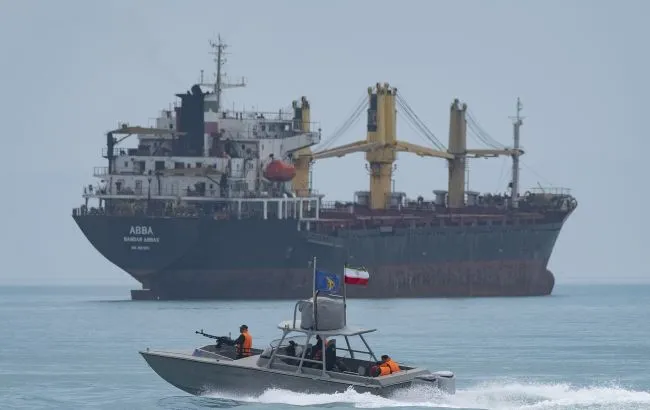
Iran reacted sharply to U.S. President Donald Trump’s statements regarding the Strait of Hormuz. Officials in Tehran stated that Washington would not be able to establish control over the strategic waterway through statements, military force, or aircraft carriers, and threatened to continue the blockade of the strait.
Iranian Deputy Foreign Minister Kazem Garibabadi responded to Trump’s remarks on social media platform X. According to him, the Strait of Hormuz cannot be “seized” with a single social media post, an order, or a show of military force. “The Strait of Hormuz cannot be seized by a tweet, an aircraft carrier, an order, or a campaign speech. Iran is not afraid of threats and will not be intimidated by displays of force,” Garibabadi wrote.
He also stated that Tehran has no intention of relinquishing control over the strait. “The Strait of Hormuz belonged to Iran, belongs to Iran, and will remain Iranian,” said the Iranian Foreign Ministry spokesperson. According to him, the decision to open or close the strait will be made by Tehran itself.
Iran threatens to continue the blockade
Garibabadi called on the U.S. government to abandon what he called “fantastical illusions.” “Once and for all, come to terms with reality: up to this point, you have suffered strategic and severe defeats,” the Iranian diplomat wrote.
He added that if the U.S. does not change its position, Iran will continue to block the Strait of Hormuz. In this way, Tehran has effectively made it clear that it does not plan to make concessions to Washington regarding one of the world’s most important maritime routes.
Why the Strait of Hormuz Is So Important
The Strait of Hormuz is located between Iran and Oman and connects the Persian Gulf with the Gulf of Oman and the Arabian Sea. A significant portion of the world’s oil supplies passes through it. That is why any disruptions to shipping in this area can affect not only countries in the Middle East but also the global energy market.
For Iran, the strait holds particular strategic importance. Tehran has repeatedly used the ability to restrict shipping as a tool to exert pressure on its adversaries. The current dispute has arisen amid sharp statements from Washington and Tehran. The U.S. insists on the need to ensure free navigation, while Iran asserts its right to control the situation in the strait.
So far, neither side has shown any willingness to back down. Iran has explicitly stated that it may continue the blockade, while Washington is standing firm on its demands. Further escalation around the Strait of Hormuz could have consequences far beyond the region, primarily for international shipping and oil prices. Iran’s Deputy Foreign Minister Kazema Garibabadi wrote about this on social media platform X.
Two vessels belonging to the Abu Dhabi National Oil Company (ADNOC) were attacked while passing through the Strait of Hormuz on the evening of August 13. The company itself reported the incident, and the UAE accused Iran of the attack.


