
Israel is waiting for Trump's signal to strike Iran
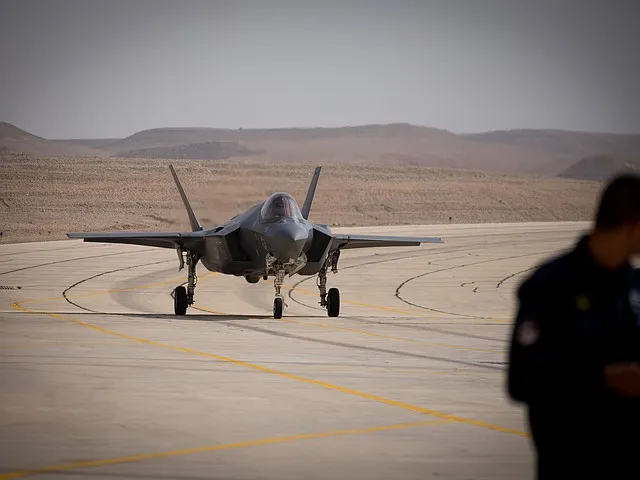
Israel is ready to launch strikes against Iran again, but for now is awaiting a political decision from U.S. President Donald Trump. At the same time, Israeli authorities say the army is already on full combat alert, and the standoff between Washington and Tehran could last several more days or even weeks.
According to journalist Gili Cohen, Israel is not currently directly involved in the new phase of hostilities between the U.S. and Iran. At the same time, officials in Jerusalem would like to obtain U.S. President Donald Trump’s approval to carry out their own military operation against Iran. According to Israeli assessments, the exchange of strikes between the U.S. and Iran will not end anytime soon. They believe the escalation could continue for several more days.
Israeli Prime Minister Benjamin Netanyahu and Defense Minister Israel Katz also spoke about their readiness for a new phase of the military campaign during a ceremony to award officer ranks to graduates of a military pilot training course at the “Hatzerim.”
Netanyahu stated that the conflict is not yet over. “The war is not over yet. Israel faces new challenges,” he said. The prime minister also reiterated that Israel will not allow Iran to acquire nuclear weapons.
Defense Minister Israel Katz emphasized that the Israeli army is ready to act independently if necessary. “The IDF is on standby to resume the campaign and strike Iran on its own—for the third time,” Katz said. The new escalation began after a series of U.S. strikes on Iran. On the night of July 9, the United States announced the completion of a large-scale operation against Iran’s military infrastructure.
According to U.S. officials, the strikes were aimed at weakening Tehran’s ability to attack commercial vessels in the Strait of Hormuz. The U.S. stated that it had struck approximately 90 military targets, including air defense systems, coastal radar complexes, missile and drone depots, naval facilities, and logistical infrastructure. Iran’s Ministry of Health reported 14 deaths as a result of these attacks.
In response, Iran attacked U.S. military bases in the Middle East. Air raid sirens sounded in Kuwait, Bahrain, and Jordan. Jordanian authorities reported that their air defense forces intercepted eight Iranian missiles.
Meanwhile, a U.S. official told Axios that the current escalation could drag on. “This could last several days or even weeks—depending on whether Iran continues to attack merchant ships in the Strait of Hormuz,” the source told the publication.
So far, there has been no official decision regarding Israel’s participation in a new military operation. However, statements by Israeli leaders indicate that the country is prepared to quickly join the fighting if the situation continues to escalate. This was reported by the Israeli television channel Kan-11, citing its own sources.
As of the evening of July 9, hostilities between the U.S. and Iran are ongoing. On the morning of July 9, the U.S. military struck a strategic railway bridge in the north of the country, which is part of an important international transport route.
On July 9, the situation surrounding the conflict between the U.S. and Iran remains extremely tense. According to military analyst Alex Alfirraz Shirs, the parties have reached their most dangerous point in recent times, and any new attack could derail even the slightest chance of de-escalation.
On July 9, a drone attacked a camp of the Iranian Kurdish opposition in northeastern Iraq near the city of Erbil. According to preliminary reports, there were no casualties or injuries.
On July 9, Iran continued to launch strikes against Gulf countries in response to recent U.S. attacks. There are reports of missiles and drones launched toward Jordan, Kuwait, Bahrain, and Qatar, though most of the aerial targets were intercepted.
On July 9, oil tanker traffic through the Strait of Hormuz came to a near standstill. This was caused by new U.S. strikes against Iran, Tehran’s response, and a sharp increase in risks to shipping in the region.
On Thursday, July 9, Iran stated that it had fired ten ballistic missiles at a U.S. military base in Jordan. At the same time, Jordanian authorities reported that all missiles were intercepted and that there were no reports of damage or casualties.
Despite this new round of conflict in the Middle East, Iran maintains that it has not abandoned diplomacy and is attempting to restore relations with the Gulf states. Officials in Tehran claim that the U.S. and the West have mistakenly interpreted their willingness to negotiate as a sign of weakness.




