
Canada Marks Truth and Reconciliation Day Amid Search for Burial Sites — Anadolu Agency
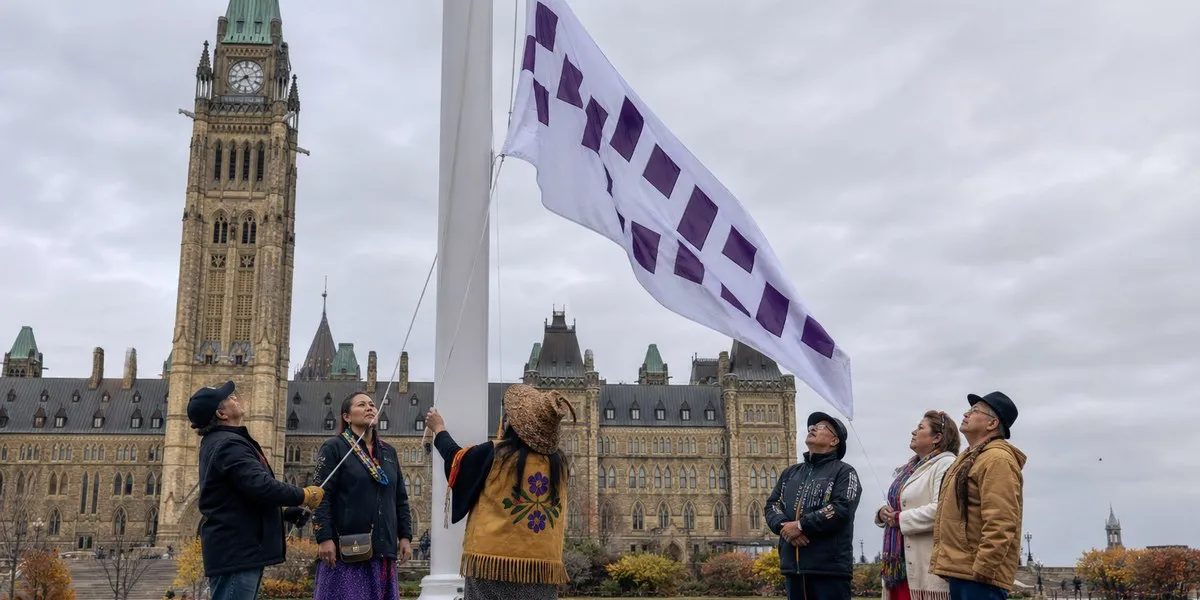
Canada marked the National Day for Truth and Reconciliation, dedicated to Indigenous children who died or disappeared while attending the residential school system, as well as its former students. In Ottawa, First Nations representatives, Inuit and Métis people who survived attendance at such institutions raised the Survivors’ Flag in memory of children who never returned home.
As Anadolu Agency reports, at least 150,000 First Nations, Inuit and Métis children passed through 140 residential schools in Canada over more than a century. The system existed from the 19th century until the 1990s, was funded and regulated by the federal government, and most institutions were run by church organizations.
Thousands of deaths in records
The National Student Memorial Register of the National Centre for Truth and Reconciliation contains information on more than 4,000 children whose deaths were established through documents, as well as testimony from families and survivors. Former Truth and Reconciliation Commission chair Murray Sinclair estimated the number of deaths at 6,000 or more.
The commission noted that the system was aimed at assimilating children by separating them from their families, languages and cultures. Survivors spoke of physical and sexual abuse, punishment for using Indigenous languages, and shortages of food and medical care. Many children who died were not returned to their communities but were buried in cemeteries near schools or in nearby church, reserve or municipal graveyards.
More current news is available on the UA.News Telegram channel Telegram.
The search continues
Indigenous communities are researching archives, collecting testimony from former students, and using ground-penetrating radar, LiDAR scanning and dogs to search for human remains. In 2021, the Tk’emlups te Secwepemc community reported preliminary findings concerning more than 200 potential burial sites on the grounds of the former Kamloops Indian Residential School in British Columbia.
The community stresses that the investigation has not been completed. Ground-penetrating radar can detect soil disturbances or other underground features, but by itself does not confirm the presence of human remains. According to federal materials, more than 370 underground anomalies were recorded and 88 unmarked graves were confirmed in seven communities under funded projects; these figures are not a nationwide total.
As of January 2026, Ottawa had concluded 164 agreements worth about CAD 280 million to search for, document and commemorate burial sites. Communities are also seeking broader access to government, church and hospital archives, which may help establish the fate of children who never returned home.




