
Qatar is exporting gas through the Strait of Hormuz despite tensions and the risk of a blockade
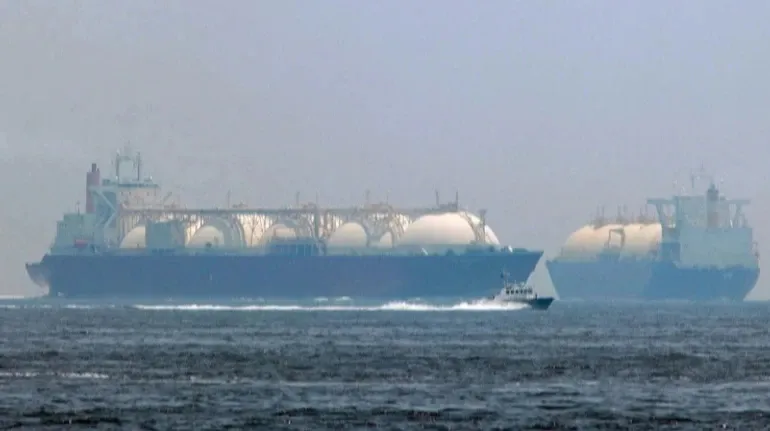
Despite the sharp escalation of tensions in the Strait of Hormuz, tankers carrying Qatari liquefied natural gas continue to navigate the key maritime route to buyers in Asia. Some vessels are sailing with their navigation lights off to avoid being detected amid heightened risks. The LNG market is operating under strain due to the de facto blockade and political tensions in the region, according to Bloomberg.
In the Persian Gulf, gas logistics have begun to resemble a game of hide-and-seek, as tankers carrying liquefied natural gas from Qatar and the UAE continue to set sail and pass through the Strait of Hormuz, despite the fact that this route is effectively under a de facto blockade and operating at the limits of safety.
According to Bloomberg, at least several ships have nevertheless managed to pass through the Strait of Hormuz in recent days and are heading to key buyers, particularly in Asia, although some of them are sailing with their transponders turned off, which allows them to remain undetected by tracking systems and minimize risks amid the tense situation.
One such tanker was the Al Rayyan, which, after passing through the strait, was spotted north of Muscat in Oman and is heading to China, which remains the largest importer of Qatari LNG; the very fact of its route is confirmed only by satellite data and shipping analytics.
Another vessel, loaded at the end of March, also managed to pass through the Strait of Hormuz between Sunday and Monday, after which it disappeared from radar while navigating the most dangerous section, and then reappeared off the coast of Oman, heading for Pakistan.
In effect, this is a situation where the Strait of Hormuz—through which approximately one-fifth of the world’s liquefied natural gas (LNG) supplies pass—remains an unstable zone due to protracted negotiations between the U.S. and Iran, as well as ongoing security risks to commercial shipping.
Companies and market participants are already openly saying that most transits are conducted as discreetly as possible, with systems turned off and visibility minimized, since any signal in this region could pose a risk to the crew and cargo.
Putin traveled to China following Trump, but left without new agreements
China is planning World War III, specifically with the help of the Russians
China has extended the visa-free regime for Russian citizens until the end of 2027
As a reminder, Ukraine and Bosnia and Herzegovina have agreed to launch a “transport visa-free regime” for freight transport starting January 1, 2027. This means that carriers will no longer have to obtain special permits for bilateral and transit flights.


