
China is close to mastering reusable rocket technology
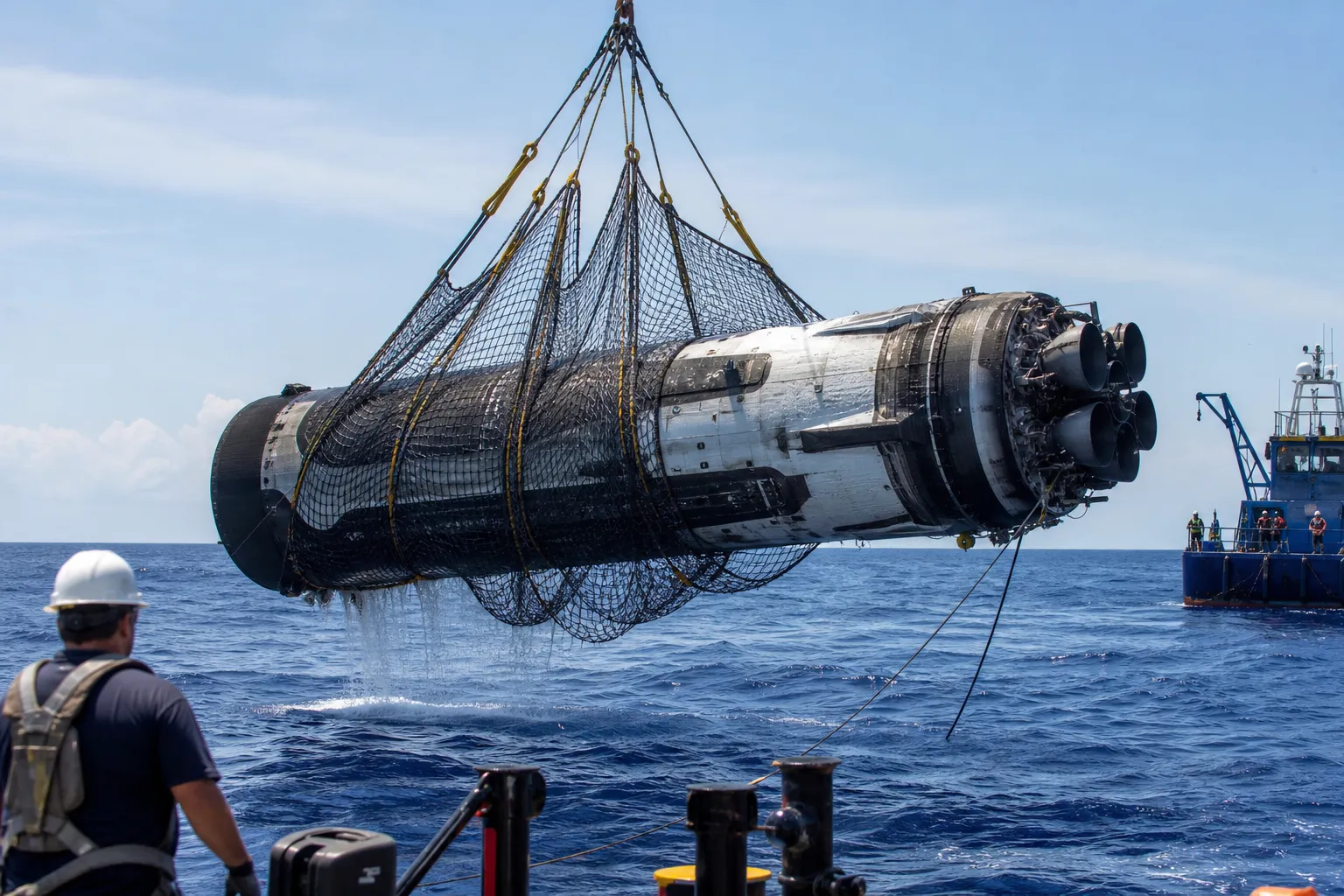
China’s LandSpace and the China Aerospace Science and Technology Corporation (CASC) have conducted separate operations to recover launch vehicle boosters, bringing the country closer to mastering reusable launch technology. According to experts interviewed by the South China Morning Post, this technology could reduce the cost of launching satellites into orbit and increase the frequency of launches, thereby enhancing the space capabilities of the Chinese People’s Liberation Army.
LandSpace became the first company in China to recover a stainless-steel booster after an orbital flight using landing legs. A month earlier, the state-owned CASC successfully recovered an orbital-class booster at sea using a net-capture system. However, neither company has yet demonstrated the reusability of the recovered first stages.
Malcolm Davis, a senior analyst at the Australian Strategic Policy Institute, noted that modern armies rely on space-based systems for communications, positioning, navigation, time synchronization, and situational awareness. According to him, without these capabilities, the military significantly loses its ability to coordinate operations and understand the situation on the battlefield.
For more breaking news, follow the UA.News Telegram channel.
Timothy Git, director of the research firm Perceptum, believes that reusable rockets will enable the PLA to quickly replace lost space platforms or expand its satellite constellation during a conflict. In his assessment, this will help maintain navigation, communications, and situational awareness even in the event of attacks on satellites.
Namrata Goswami, a professor at the Johns Hopkins University School of Advanced International Studies, stated that the combination of reusable rockets, spare satellites, and rapid launches could be particularly important in the event of a conflict over Taiwan. She attributed this to the PLA’s growing reliance on satellites for intelligence, surveillance, communications, BeiDou navigation, and guidance in the Indo-Pacific region.
According to the Beijing-based research firm Hello Space, as of April, China had 55 satellite manufacturing companies, and their combined annual production capacity could reach 7,360 satellites by 2030. By comparison, SpaceX reported in a regulatory filing that between December and April, it produced an average of about 70 Starlink satellites per week—approximately 3,640 per year.


