
Low water levels in Germany’s Rhine restricted shipping — ABC News Australia
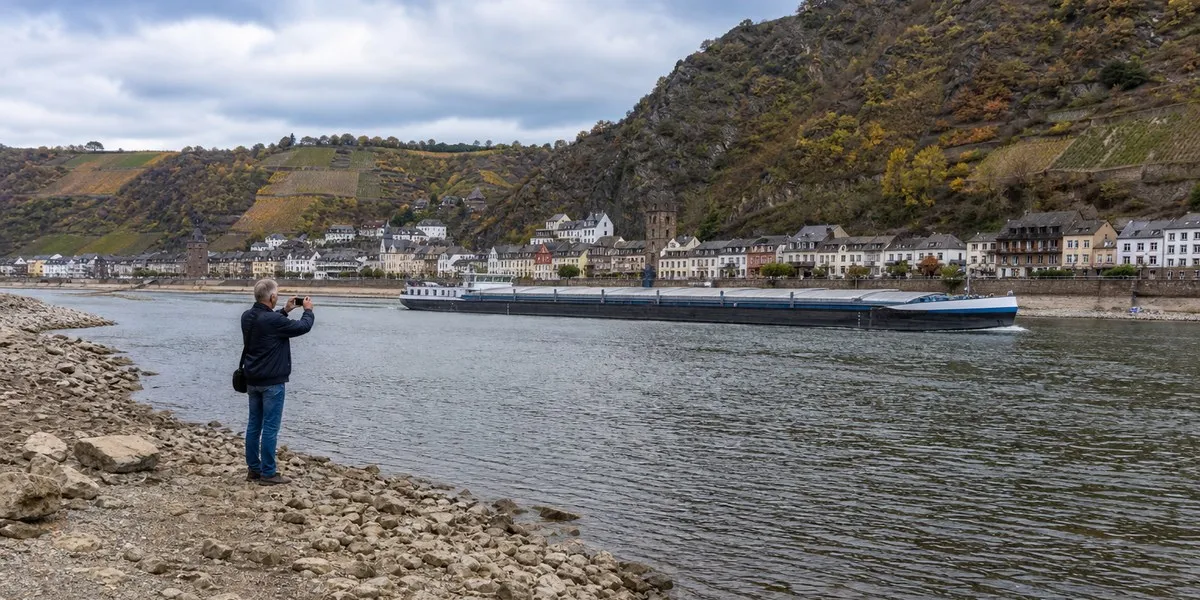
In Germany, the water level in the Rhine dropped sharply due to record heat and drought in August, leading to the temporary closure of the river’s southern section to shipping. Thousands of tonnes of cargo remained in ports, while carriers were forced to reduce transport volumes, ABC News Australia reports.
Less cargo on vessels
After traffic resumed on the southern section of the Rhine, the water level there remained at around 25 centimetres. Thorsten Stuntz, captain of the Stella Maris cargo vessel, who has worked on the Rhine for nearly 40 years, said that due to shallow water he reduced the ship’s load by more than 80%. He usually transports crushed stone used to produce cement in Europe.
According to the outlet, other vessels also significantly limited their operations, while more than three quarters of Europe’s inland waterway cargo was stranded in docks along the Rhine. The German government changed the rules so that cargo could be transported by road. At the same time, a vessel can deliver up to 3,000 tonnes of cargo, while even a large truck can carry about 25 tonnes.
More current news is available on the UA.News Telegram channel Telegram.
Risks to trade and tourism
The Rhine annually handles the transport of about 285 million tonnes of cargo to and from the port of Rotterdam, accounting for approximately 30% of the freight turnover of this trading hub. The German environmental organization Nature and Biodiversity Union previously called the falling water level an environmental catastrophe: it estimates that the river has lost 60 billion cubic metres of water over 20 years. The organization also warned that repeated closures of the Rhine could lead to more than $1 trillion in trade losses by 2050.
The shallowing has also affected tourist communities along the river. In the German town of Kaub, where one of the Rhine’s shallowest sections is located, cruise operators have begun bypassing this part of the waterway. This section is used as a depth reference for the entire waterway: vessels are prohibited from travelling farther south if the water level falls too low. Kaub Mayor Bernd Vogt said there were no tourists in the town during the summer season, which is usually the busiest.
Possible solutions being considered to reduce disruptions include the use of lighter vessels and high-tech dredging systems.




