
Thwaites could raise sea level by 30 mm by 2100 — Al Jazeera
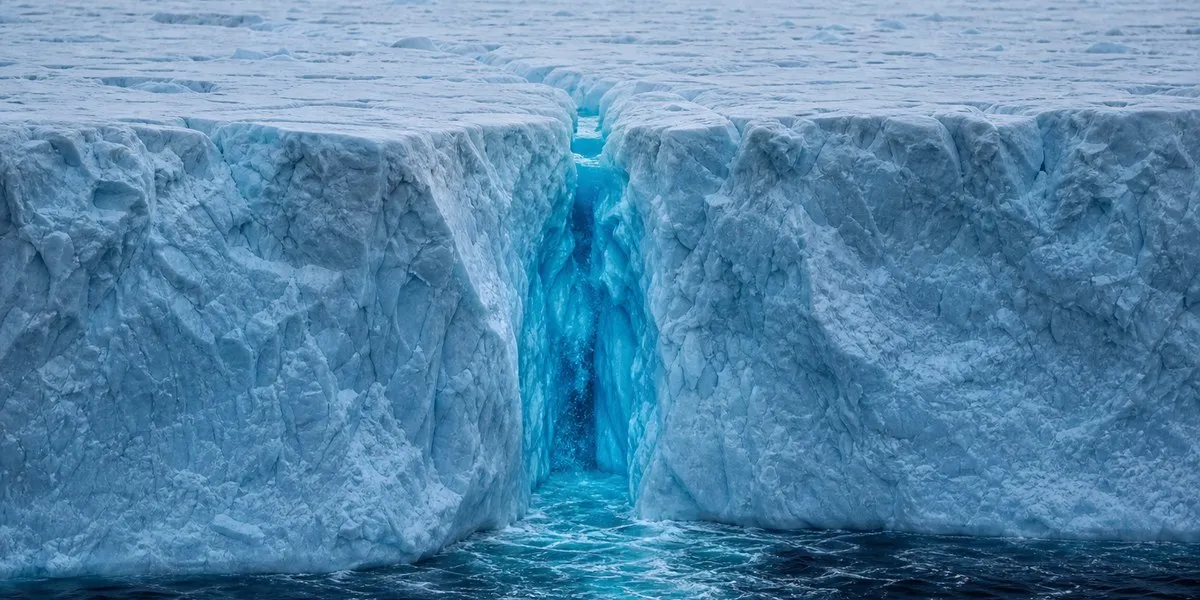
A new study has found that the Thwaites Glacier in West Antarctica could add up to 30 mm to global sea level by 2100 — twice as much as previous estimates projected. This scenario is possible even without an additional acceleration of global warming, Al Jazeera reports.
Warm water beneath the glacier
The study, published in the journal Nature Communications, was conducted by researchers at the University of California in collaboration with NASA's Jet Propulsion Laboratory. They used new computer models to more accurately assess melting in the glacier's grounding zone — the area where ice transitions from resting on bedrock to a floating ice shelf.
Unlike models that treat the grounding line as fixed, the study's authors used the concept of a broader grounding zone. Tides lift and lower the ice, allowing warm seawater to penetrate deep beneath the ice sheet and intensify melting.
Scientists believe this process accelerates Thwaites' detachment from the Muginot Ridge — an underwater bedrock rise that currently helps stabilize the glacier. According to the study, there is a 60% probability that Thwaites will lose its support on this ridge by the end of the century.
More current news is available on the UA.News Telegram channel Telegram.
Why Thwaites matters
Thwaites covers an area of about 192,000 square kilometers and is part of the West Antarctic Ice Sheet. Together with other glaciers, including Pine Island, it holds back ice masses whose loss could significantly raise global sea levels.
According to current estimates, Thwaites' melting accounts for about 4% of total global sea-level rise. Since 2000, the glacier has lost more than 1 trillion tonnes of ice and continues to lose about 50 billion tonnes each year.
A separate study by the British Antarctic Survey, published in July in Geophysical Research Letters, concluded that Thwaites will lose ice for at least the next 150 years even under the most extreme possible conditions of ocean cooling.




