
Holiday on September 23, 2026 — Saudi Arabia celebrates National Day
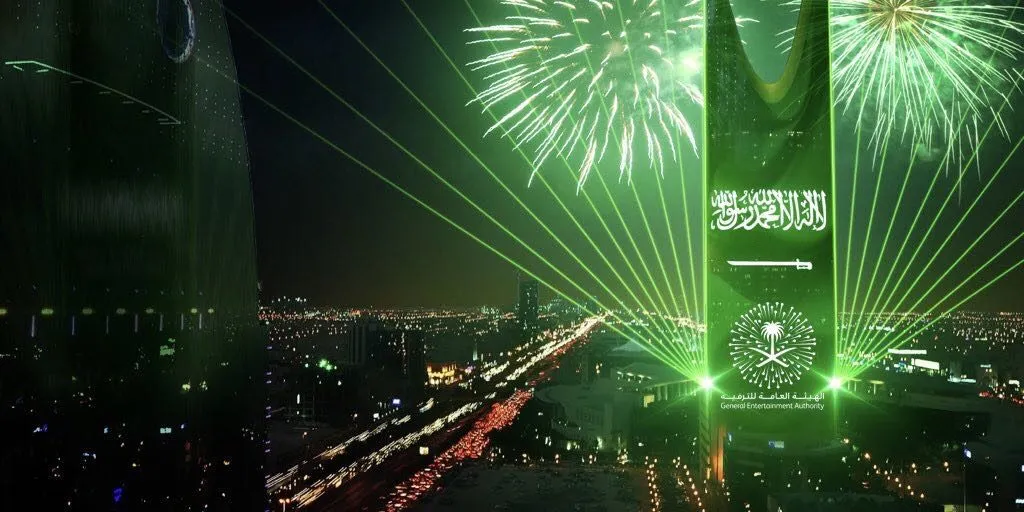
On September 23, 2026, Saudi Arabia celebrates National Day—a holiday commemorating the unification of the country in 1932. It was on this day that King Abdulaziz ibn Saud proclaimed the establishment of the Kingdom of Saudi Arabia, uniting the regions of Najd and Hijaz under a single name. Today, it is one of the country’s most important national holidays, when city streets are decorated with green flags and concerts, cultural events, air shows, and festive programs for families are held.
Saudi Arabia’s National Day is celebrated annually on September 23. In 2026, the holiday falls on a Wednesday. This date does not change, as it is linked to a specific historical event—the proclamation of the kingdom’s unification in 1932. In Saudi Arabia, this day is called Al Yawm Al Watani, meaning National Day. It is dedicated not to a specific religious event, but to the history of the creation of the modern state. For the country’s residents, it is an opportunity to reflect on the path Saudi Arabia has taken and to emphasize the importance of national unity.
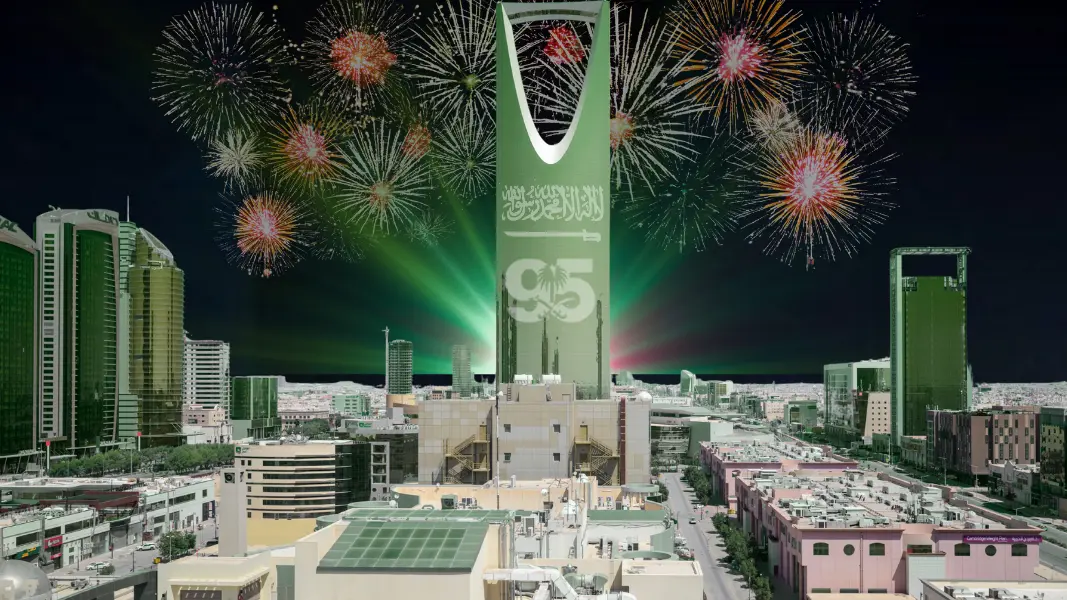
September 23 is an official holiday. Government offices, schools, and many other organizations do not operate on their usual schedule during this period. If the date falls on a weekend, the rules regarding an additional day off are determined separately. In 2026, Saudi Arabia will celebrate its 96th National Day, counting from the proclamation of the kingdom in 1932. The country’s official tourism platform is already preparing a special program for September 23.
How Saudi Arabia Came to Be
The history of modern Saudi Arabia began long before 1932. One of the key figures in this process was Abdulaziz ibn Saud, also known as Ibn Saud. In the early 20th century, he gradually expanded the territories controlled by his dynasty. One of the most significant events was the capture of Riyadh in 1902. After that, Abdulaziz began to restore the authority of the House of Saud in the central part of the Arabian Peninsula. In the following decades, his forces gradually established control over other regions.
The Najd and the Hejaz were of particular importance. The Najd is located in the central part of the Arabian Peninsula, while the Hejaz is in the west, where Mecca and Medina are situated. The unification of these territories marked an important stage in the formation of the modern state. In 1932, the Kingdom of Saudi Arabia was officially proclaimed. It is this event that today forms the basis of the country’s National Day. Official Saudi Arabian sources describe September 23 as the date when King Abdulaziz unified the regions and proclaimed the new name of the state.
What Happened on September 23, 1932
Until 1932, the territories that today make up Saudi Arabia had not been united into a single modern state. Over the course of several decades, King Abdulaziz gradually established control over various regions. In 1932, he issued a decree unifying his domains. The lands of Najd and Hijaz, along with other territories, were given a common name—the Kingdom of Saudi Arabia. It is this name of the state that became the basis for the modern national holiday.
The date of September 23 was not chosen by chance. It was on this very day that the creation of the new kingdom was officially announced. Historical documents, later made public by the National Center for Documents and Archives of Saudi Arabia, confirm that September 23 was linked to the proclamation of unification. Interestingly, in the calendar system of that time, the date corresponded to the first day of the month of Mizan. Later, September 23 was established as the permanent date for National Day in the Gregorian calendar. Therefore, the modern holiday is not simply the country’s birthday. It symbolizes the completion of a long process of uniting various regions under a single government.
When National Day Became an Official Holiday
Although September 23 had been a historic date since 1932, for many decades the holiday did not take the form it has today. In particular, until 2005, National Day was not a general official holiday in the modern sense. In 2005, King Abdullah decided to make September 23 an official holiday for workers, college students, and schoolchildren. At the time, the Saudi media called this a significant change, as the date had not previously been accompanied by a general day off.
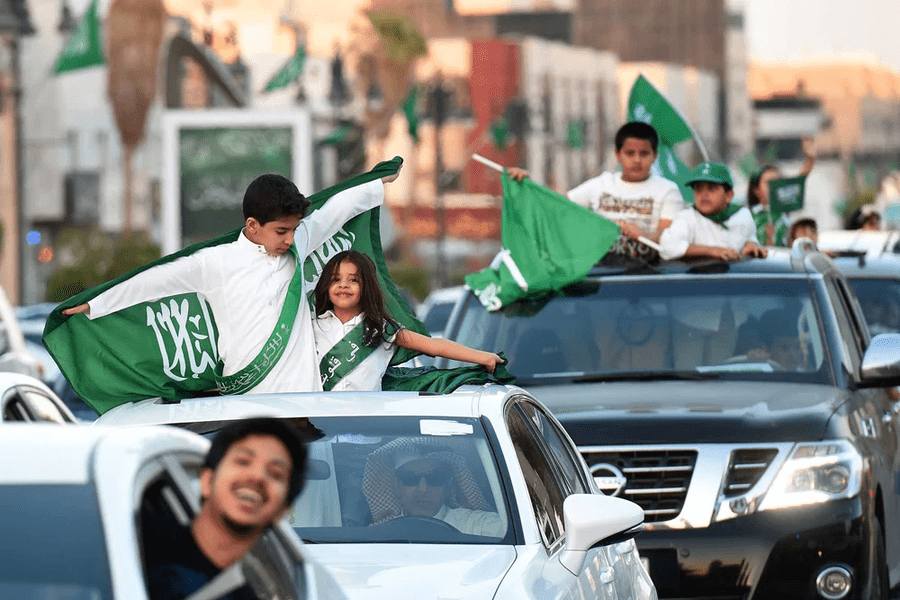
In the years that followed, National Day was regularly observed as an official holiday. In 2006, the Saudi Press Agency explicitly stated that September 23 was an official holiday in accordance with civil service regulations. By 2007, official announcements had already confirmed that the day off also applied to private-sector employees. Thus, the holiday’s current form took shape much later than the historical event itself. Today, National Day has become a major part of the country’s public life.
Why Is Green the Main Color of the Holiday?
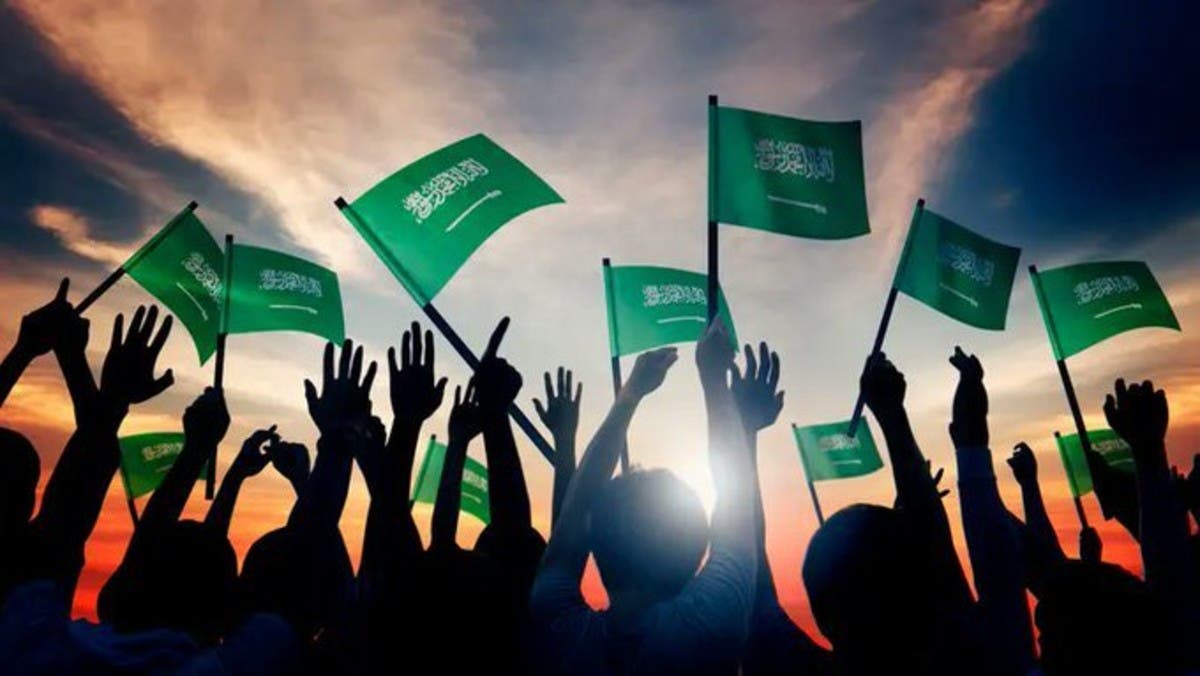
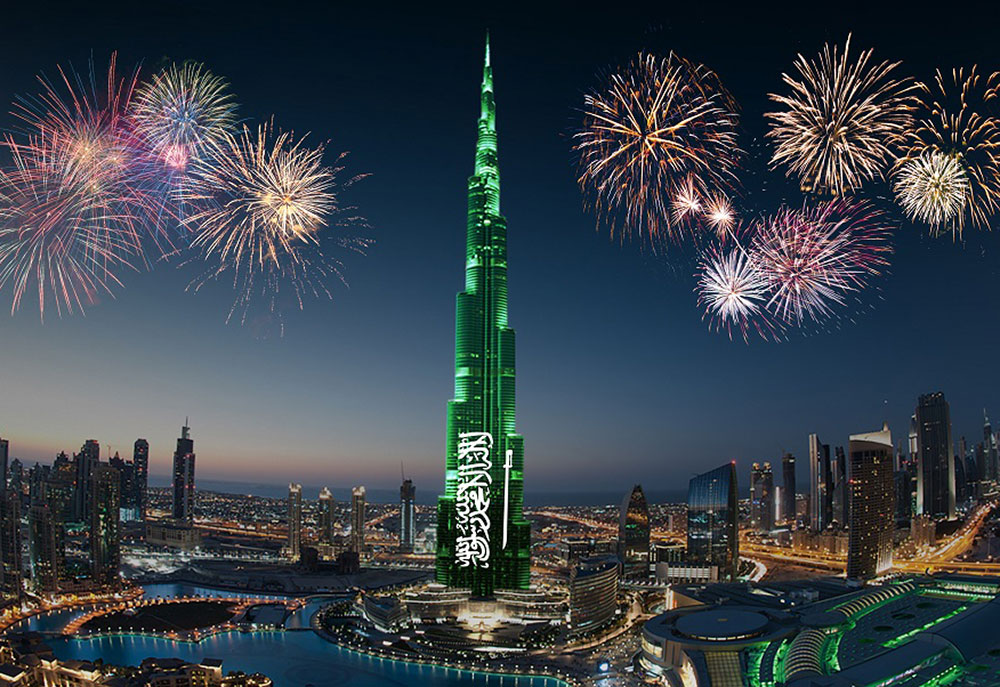
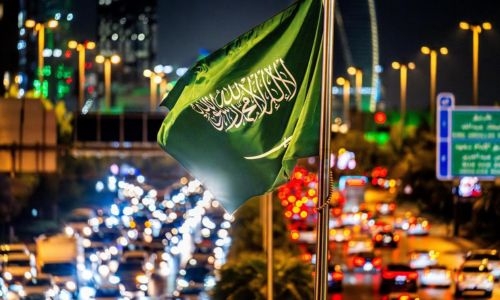
If you look at photos of Saudi Arabia’s National Day, one thing stands out almost immediately—the abundance of green. Streets, buildings, billboards, and various urban landmarks all turn green. The reason is simple—green is the primary color of the Saudi Arabian flag. The flag features a green background with white Arabic lettering and a white sword. That is why, during the national holiday, green becomes the dominant color in the cities’ decorations.

Before the holiday, municipalities decorate the streets with flags and green lighting. For example, in Turaif in September 2026, the streets were decorated with flags, green lighting, and festive structures. Other cities also prepare parks, squares, and public spaces. In Buraydah, for example, 101 public parks were prepared for National Day. That’s why the color green can be seen literally everywhere during these days. For residents, it is one of the most recognizable symbols of the holiday and national identity.
How National Day Is Celebrated
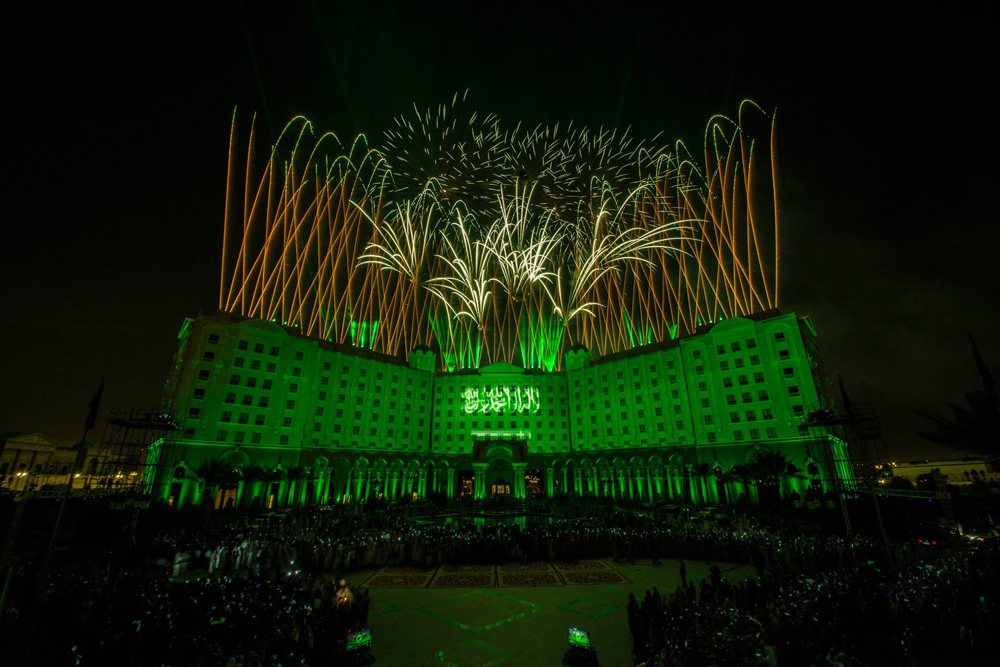
Modern celebrations combine official ceremonies, cultural programs, and entertainment for the general public. In major cities, there are concerts, theatrical performances, festivals, fairs, and various family events. One of the most popular parts of the program is the air show. Military aircraft fly over cities and perform demonstration maneuvers. In 2026, for example, air shows were held in Jeddah on September 19–20 as part of the National Day celebrations.

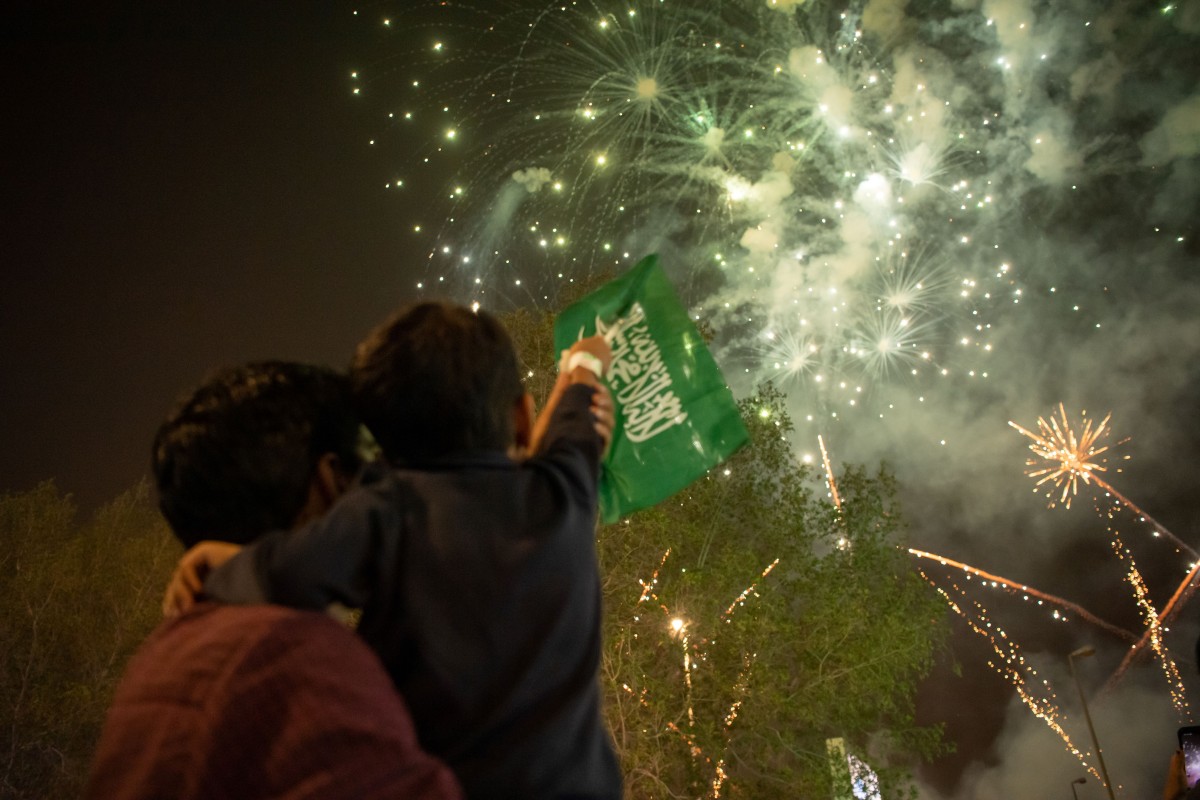
In the evenings, many cities host concerts and other cultural events. Traditional music fills the streets, and local artists perform on stage. Another popular part of the celebrations is the fireworks. They are organized in various cities and have become one of the main attractions of National Day. Saudi Arabia’s tourism portal also lists fireworks, air shows, and concerts among the main types of celebrations. Separate events are organized for children. These may include creative workshops, games, contests, drawing, and educational programs on the country’s history and culture. In 2026, for example, as part of the Sports Boulevard program in Riyadh, face painting, balloon modeling, drawing, and activities about Saudi heritage are planned for children.
Traditional Culture at the Celebration
National Day is not just about concerts and modern shows. Saudi Arabia’s traditional culture plays an important role in the celebrations. One of the symbolic elements is the Saudi Ardah—a traditional dance accompanied by music and the rhythmic movements of the dancers. It is often performed during official and cultural events. Various regions also host performances by folk ensembles, as well as displays of traditional clothing and crafts. The program may include poetry recitals, music, horse shows, and other elements of local culture.
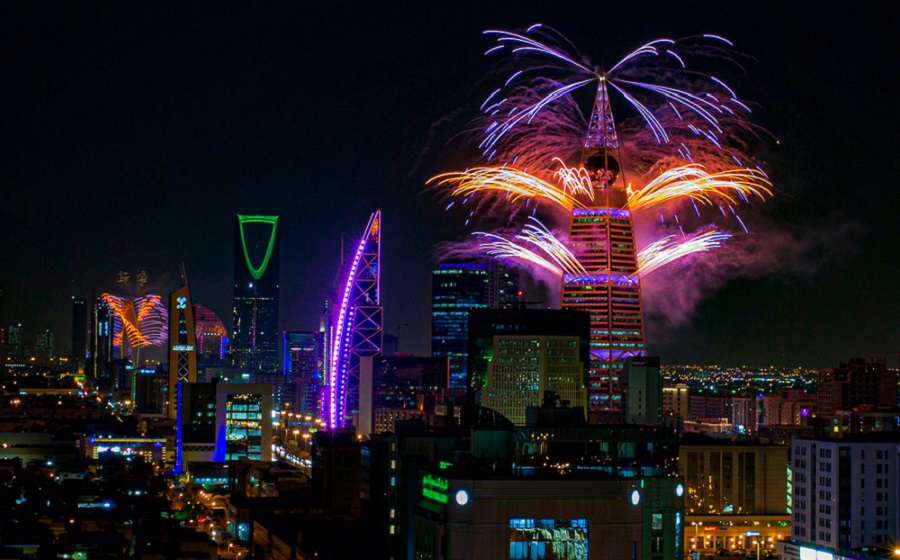
For example, in Turaif, a Saudi Ard, a national operetta, and other cultural programs are planned for National Day 2026. In Riyadh this year, there will also be performances featuring arda, ud playing, orchestral music, and the traditional Najdi samri. Some venues offer workshops on pottery, traditional doll-making, and carving ornamental designs on Najdi doors. Such events help demonstrate that National Day is connected not only to the history of the kingdom’s founding but also to the cultural heritage of its various regions.
What’s Happening in the Cities
In the run-up to the holiday, Saudi Arabia literally transforms the appearance of its cities. Buildings, roads, bridges, squares, and public spaces are decorated with flags and green lighting. Municipalities prepare parks and venues for mass events well in advance. In Buraydah in 2026, 101 parks were prepared, with lighting, playgrounds, walkways, and recreational areas inspected.

In Turaif, more than 500 flags were installed, 35 decorative structures were illuminated, and over 11,000 meters of festive decorations were used. Some government buildings and public facilities were also illuminated in green. Programs vary from city to city. Some focus on concerts, while others emphasize sporting events, family festivals, or traditional performances. As a result, the celebrations take place not in just one location, but effectively throughout the entire country. This is one of the reasons why National Day is considered a nationwide event, rather than a holiday celebrated only in the capital.
What the Celebration Will Look Like in 2026
In 2026, the official theme of National Day is “عزنا بطبعنا,” which translates to “Our Pride Is in Our Nature” in English. In Ukrainian, it can be roughly translated as “Our pride lies in our nature” or “Our pride lies in our traits.” The organizers explain that this year’s concept is linked to traits considered important to Saudi society. Among these are courage, a vision for the future, authenticity, determination, generosity, and hospitality.
This slogan is used in festive decorations, on promotional materials, and during official events. It is to be used by government, private, and public organizations hosting events for National Day. In 2026, the celebrations will begin even before September 23. Some of the concerts, air shows, and cultural events will take place over several days surrounding the main date. For example, in Riyadh, the Sports Boulevard program will run from September 22 to 26. Thus, September 23 is the central date, but the festive atmosphere in cities may last much longer.
Interesting Facts About National Day
The holiday has a specific historical date. September 23 is associated with the proclamation of the Kingdom of Saudi Arabia in 1932. That is why the date remains the same every year.
The modern holiday, as an official day off, emerged much later. Although the country was unified in 1932, a general official day off for National Day was not introduced until 2005.
National Day should not be confused with Founding Day. On February 22, Saudi Arabia celebrates Founding Day, which marks the establishment of the first Saudi state in 1727. September 23 is dedicated to the establishment of the modern Kingdom of Saudi Arabia in 1932.
Almost the entire city turns green. Before the holiday, streets, squares, and buildings are decorated with flags and green lighting. In 2026, some municipalities will install hundreds of flags and thousands of meters of festive decorations.
Air shows have become an important part of the holiday program. Military aircraft demonstration flights take place in various cities. In Jeddah, such performances in 2026 lasted several days in a row.
Children are actively involved in the celebrations. Contests, workshops, creative activities, and entertainment programs are organized for them. In 2026, some events are dedicated to introducing children to the traditional culture and crafts of Saudi Arabia.
How National Day Differs from Foundation Day
In Saudi Arabia, there are two important dates that are sometimes confused with one another. The first is Founding Day on February 22, and the second is National Day on September 23. Foundation Day is associated with the year 1727, when Imam Muhammad bin Saud established the first Saudi state. This holiday commemorates the early history of the dynasty and the kingdom. National Day has a different significance. It commemorates the event in 1932 when Abdulaziz ibn Saud proclaimed the establishment of the Kingdom of Saudi Arabia. In other words, there are more than 200 years of history between the two dates.
This distinction is important for understanding modern Saudi Arabia. Founding Day refers to the earliest phase of the state’s history, while National Day refers to the establishment of the modern kingdom. Both dates are national holidays but have different historical significance.
Why This Holiday Is Important to Saudi Arabia
For Saudi Arabia, National Day is, above all, a day associated with the concept of unity. The theme of a shared history and belonging to a single state is a constant feature of the festive events. On this day, people commemorate the events that preceded the founding of the kingdom, as well as the individuals associated with its formation. At the same time, modern celebratory programs increasingly combine historical remembrance with culture, tourism, sports, and entertainment.
The official 2026 identity also emphasizes national identity, heritage, and the country’s modern development. National Day serves as an occasion not only to commemorate the events of 1932 but also to showcase modern Saudi Arabia. For many people, it is first and foremost a family day. They visit festival venues, concerts, parks, and cultural events, taking photos against backdrops of greenery and flags. That is why September 23 in Saudi Arabia combines historical memory, national symbols, traditional culture, and modern mass entertainment. This is precisely what makes National Day one of the most prominent events of the year in the country.


